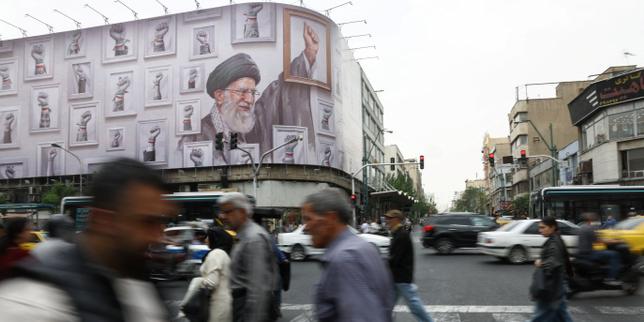
The sirens in Tehran do not wail; they moan. It is a low, bass-heavy frequency that vibrates in the fillings of your teeth before your brain registers the danger. When the sound cuts through the heavy, petrol-soaked air of a Tuesday evening, people do not run. They freeze. A street vendor selling roasted beets pauses, his knife hovering millimeters above the purple skin. A young woman in a loose headscarf adjusts her headphones, her eyes darting toward the northern horizon where the Alborz mountains stand like dark sentinels.
Everyone is waiting for the sky to tear open.
We live in an era where distance has been engineered out of existence. A decision made in a sterile, fluorescent-lit basement room in Washington, D.C., can alter the atmospheric pressure of a neighborhood in Esfahan within minutes. For months, the headlines have maintained a steady, clinical rhythm, tracking the escalation of conflict in the Middle East with the detachment of a ledger. But on the ground, geopolitics is not a ledger. It is the smell of burning rubber, the sudden, terrifying absence of cellular service, and the quiet calculation a father makes about whether his basement is strong enough to withstand a concrete-piercing warhead.
When the Iranian leadership announced that an American strike would trigger a war reaching "well beyond the region," the international community treated it as a predictable piece of rhetorical theater. A tactical chess move. But walk through the markets of the capital, or speak with the merchant sailors off the coast of Bandar Abbas, and you realize that "beyond the region" is not a political slogan. It is a map of global vulnerability written in oil, fiber-optic cables, and human lives.
The world is a web of frail strings. Snap one in the Persian Gulf, and a light goes out in Rotterdam.
The Cost of a Closed Door
To understand how a localized flashpoint becomes a global contagion, look at the Strait of Hormuz. It is a narrow strip of water, a mere twenty-one miles wide at its tightest choke point. Think of it as the jugular vein of the modern global economy. Through this single, heavily monitored corridor passes roughly one-fifth of the world’s petroleum every single day.
Imagine a hypothetical merchant captain named Nikolas. He is fifty-four, has a bad knee, and commands a massive crude carrier registered in Panama. As he guides his vessel through the strait, he is not thinking about ideological supremacy or the historical grievances of the Islamic Republic. He is looking at his radar screen, watching the swarm of small, fast-attack craft belonging to the Islamic Revolutionary Guard Corps darting between the commercial lanes like water striders.
If those waters close, Nikolas does not just turn around. The entire global supply chain stalls.
The immediate result is a math problem with devastating human consequences. If American stealth bombers hit targets inside Iran, the retaliation will not likely be a conventional dogfight in the sky. It will be asymmetric. A handful of naval mines, dropped from unassuming wooden dhows into the shipping lanes, would instantly skyrocket maritime insurance premiums to prohibitive levels. Tankers would anchor in place, refusing to move.
Consider what happens next: within forty-eight hours of a shutdown in Hormuz, the price of crude oil would surge past one hundred and fifty dollars a barrel. For a commuter in Ohio, that means the cost of driving to work doubles overnight. For a manufacturing plant in Bavaria, it means production lines grind to a halt. For a family in a developing nation that relies on imported grain—which is harvested, transported, and processed using diesel—it means the difference between two meals a day and none.
The fire ignited in the Iranian desert does not stay there. It travels along the energy grids, burning through the savings accounts of people who couldn’t find Tehran on a map.
The Architecture of Shadow Wars
There is a common misconception that modern warfare is symmetrical—that army meets army on a defined field. That old world is dead. Iran’s military doctrine is explicitly designed around the concept of "forward defense." It is a strategy born out of the brutal scars of the Iran-Iraq war of the 1980s, a conflict that taught the nation's planners that they could not win a conventional war against a Western-backed power.
Instead, they built an archipelago of influence.
From the shores of the Mediterranean to the mountains of Yemen, a network of allied militias operates under a shared umbrella of logistical and financial support. This is the mechanism through which a war goes "beyond the region." If the United States launches direct kinetic strikes against Iranian soil, the response will ignite across multiple fronts simultaneously.
It looks like this:
- A volley of sophisticated drones launched from the Iraqi desert targeting logistical hubs in the Gulf states.
- Precision-guided missiles fired from southern Lebanon paralyzing the commercial ports of Haifa and Ashdod.
- An intensification of anti-ship missile campaigns in the Red Sea, effectively cutting off the Suez Canal from international transit.
This is not a hypothetical nightmare; it is the operational reality. The architecture is already in place, the coordinates are saved, and the fingers are hovering over the launch buttons. It is an intricate, deadly Rube Goldberg machine. Pull the pin in Washington, and explosions rip through Beirut, Riyadh, and Tel Aviv within the hour.
The fear in the streets of the Middle East is not just about the bombs that might fall tonight. It is about the total collapse of the fragile systems that keep society functioning. In Lebanon, where the economy has been on life support for years, the threat of a wider war means the permanent loss of electricity. It means hospitals running out of fuel for their generators while surgeons are midway through operations. It means the municipal water pumps stopping, leaving millions to rely on contaminated wells.
The true casualty of geopolitical brinkmanship is always the mundane infrastructure of human survival.
The Invisible Frontline
But the most terrifying dimension of this promised expansion of conflict is completely invisible. It moves at the speed of light through underground fiber-optic networks.
For the past two decades, Iran has developed one of the most aggressive and resourceful cyber-warfare programs in the world. They do not need to match the United States hull-for-hull or plane-for-plane when they can compromise the critical infrastructure of Western nations from a server farm in a nondescript building in northern Tehran.
Let us be clear about what a state-sponsored cyber offensive looks like when the gloves come off. It is not about defacing government websites with ideological banners. It is about targeting the industrial control systems that regulate our daily existence.
Consider the vulnerability of a regional water treatment facility in the American Midwest. Or the digital switching stations that manage the electrical grid of a major European metropolitan area. During times of heightened conventional conflict, these civilian systems become frontline targets. A successful intrusion into a major financial clearinghouse could freeze transactions globally, locking millions of people out of their bank accounts and halting the purchase of basic goods.
This is the ultimate democratization of terror. You can be sitting in a quiet café in Copenhagen, utterly disconnected from the ideological disputes of the Levant, and suddenly find your city plunged into a blackout because a digital script was executed thousands of miles away in response to a drone strike you only read about in passing.
The boundaries of the battlefield have dissolved. The front line is now your smartphone, your local power substation, and the supply chain that delivers your groceries.
The Weight of the Unsaid
There is a profound loneliness in watching a crisis unfold from the inside. The international news anchors speak with a crisp, analytical cadence, using terms like "proportional response," "collateral damage," and "deterrence posture." These words are designed to sanitized the reality. They turn the vaporization of human beings and the destruction of ancient cities into an abstract game of risk management.
But there is nothing abstract about the panic buying in the supermarkets of Esfahan. There is nothing abstract about the way mothers look at their children when the evening news mentions the movement of American aircraft carriers into the Eastern Mediterranean.
The human mind is not built to carry the weight of constant, existential uncertainty. It alters the way communities interact. Trust erodes. The future compresses from a horizon of years into a desperate, twenty-four-hour cycle of survival. People stop planning weddings. They stop investing in businesses. They buy canned goods, gold, and black-market antibiotics.
The tragedy of the current impasse between Washington and Tehran is that both sides are trapped in a logic of escalation that neither can easily abandon without losing face. To the American administration, project strength is the only language a theological autocracy understands. To the Iranian leadership, showing weakness is an invitation to regime change.
It is a script written by ghosts, performed by actors who have forgotten why the play began.
The sun sets over the Persian Gulf, casting a long, copper glow across the water. On the horizon, the lights of the oil platforms begin to flicker on, mimicking the stars above. It looks peaceful. It looks like an image from a travel brochure. But beneath that calm surface, the tension is coiled like a spring, compressed to its absolute limit.
A single miscalculation by a twenty-two-year-old radar operator on a destroyer, a lone drone that veers off course due to a software glitch, a stray missile that hits a crowded apartment building instead of a military depot—any of these could be the spark.
And as the leadership in Tehran has made clear, once that spark catches, the resulting fire will care nothing for borders, oceans, or the quiet distance of the Western world. It will burn its way to your doorstep, indifferent to whether you wanted the war or not.