The persistent friction between public health mandates and parental concern regarding Autism Spectrum Disorder (ASD) persists not because of a lack of data, but because of a failure to communicate the structural biology of the condition. While popular discourse often treats autism as a monolithic "injury" caused by external triggers, the molecular reality points to a complex, pre-programmed divergence in neurodevelopment. The correlation between the pediatric vaccination schedule and the age of symptomatic onset is a temporal coincidence that collapses under the weight of genomic sequencing and longitudinal epidemiological modeling.
The Biological Foundation of Neurodivergence
To understand why vaccines are an improbable causal agent, one must first define the biological "Cost Function" of autism. ASD is characterized by a deviation in synaptogenesis—the process by which neurons form connections. This process begins in the second trimester of pregnancy, months before a child receives their first postnatal immunization.
Specific genetic markers, such as those found on the SHANK3 or CHD8 genes, dictate the scaffolding of the brain's architecture. When these genes undergo mutations, the resulting neural network exhibits a specific phenotype: an overabundance of short-range connections and a deficit in long-range functional connectivity. This structural "bottleneck" occurs during the formation of the cerebral cortex in utero. By the time a child is born, the fundamental blueprint of their neurodivergence is already established.
The Three Pillars of Genetic Predisposition
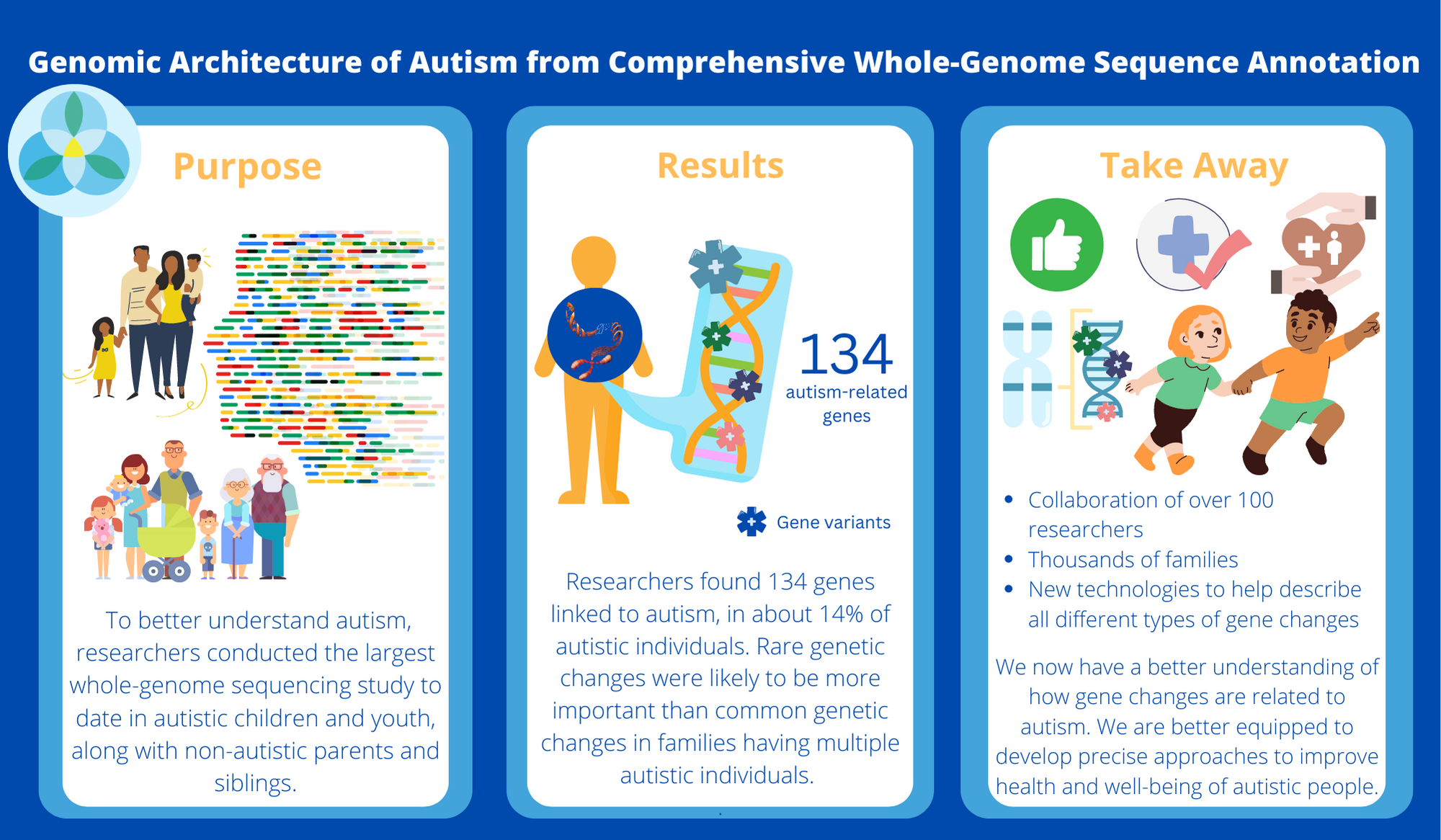
The architecture of ASD risk can be categorized into three distinct genomic tiers. Understanding these tiers eliminates the need for "environmental injury" theories to explain the prevalence of the condition.
- De Novo Mutations: These are spontaneous genetic glitches that occur in the sperm or egg cells of parents or during early embryonic development. These mutations are not inherited from the parents but are present in the child's DNA from conception.
- Common Genetic Variants: These are small differences in DNA that are widespread in the general population. While a single variant might have a negligible effect, a high "polygenic risk score"—the cumulative total of thousands of these variants—can push an individual over the clinical threshold for an ASD diagnosis.
- Inherited Rare Variants: These are high-impact mutations passed down through generations. Often, these variants exist in a "sub-clinical" state in parents (sometimes referred to as the Broader Autism Phenotype) but manifest as clinical autism in the offspring due to specific genetic combinations.
The interplay of these tiers creates a highly individualized risk profile. Large-scale studies, including the analysis of millions of sibling pairs, consistently show that the heritability of autism sits between 80% and 90%. In the world of clinical pathology, this is an exceptionally high figure, leaving very little statistical "room" for a singular environmental factor like a vaccine to be the primary driver.
Deconstructing the Thimerosal and MMR Hypotheses
The two primary arguments used to link vaccines to autism—the presence of mercury-based preservatives (Thimerosal) and the alleged "gut-brain" disruption of the Measles-Mumps-Rubella (MMR) vaccine—fail the test of longitudinal scrutiny and chemical reality.
The Thimerosal Paradox
Thimerosal contains ethylmercury, which the human body clears significantly faster than the methylmercury found in certain fish. When public health officials removed Thimerosal from pediatric vaccines in the early 2000s as a precautionary measure, the "Environmental Injury" model predicted a sharp decline in autism diagnoses. Instead, the prevalence of ASD continued to climb. This divergence between the removal of the supposed toxin and the rising diagnosis rate provides a definitive natural experiment that falsifies the Thimerosal-autism link.
The MMR Temporal Conflict
The MMR vaccine is typically administered between 12 and 15 months of age. This coincides precisely with the developmental window where children are expected to reach significant social and linguistic milestones, such as "pointing" or first words. When a child fails to meet these milestones, or "regresses," the proximity to the vaccination date creates a powerful but false cognitive shortcut known as post hoc ergo propter hoc (after this, therefore because of this).
Clinical observation of "regression" often reveals that subtle developmental delays were present in the first year of life, but only became glaringly obvious as the complexity of required social interactions increased. High-frame-rate video analysis of infants who were later diagnosed with ASD shows diminished eye contact and atypical motor patterns as early as 6 months—half a year before the MMR vaccine is introduced.
The Cognitive Bias of the "Vulnerable Subgroup"
When large-scale data fails to show a link, proponents of the vaccine-autism theory often shift to the "vulnerable subgroup" hypothesis. This suggests that while vaccines are safe for most, they trigger autism in a small, genetically susceptible portion of the population.
From a systems biology perspective, this hypothesis lacks a plausible mechanism. If a child were so biologically fragile that a standard immune provocation (a vaccine) could rewire their entire neural architecture, they would be even more susceptible to the thousands of environmental antigens they encounter daily—from the bacteria on a household floor to common viral infections. The immune challenge posed by a modern vaccine is a fraction of the daily "load" managed by an infant’s immune system.
The Diagnostic Expansion Factor
The perceived "epidemic" of autism is largely a function of shifting diagnostic boundaries rather than a change in biological risk. The criteria for ASD have expanded significantly since the 1980s.
- Diagnostic Substitution: Individuals who would have previously been labeled with "mental retardation" or "language delay" are now accurately categorized under the ASD umbrella.
- Increased Surveillance: Schools and pediatricians are now trained to identify subtle social-communication deficits that were ignored forty years ago.
- Adult Diagnoses: A significant portion of the "rise" in numbers comes from adults realizing their lifelong social struggles fit the modern criteria for autism.
This expansion in the denominator of autism cases creates an illusion of a rapidly spreading condition, which fuels the search for a rapid-onset cause like vaccines. However, when the data is adjusted for these diagnostic shifts, the "epidemic" flattens into a predictable curve of increased clinical awareness.
The Structural Failure of the Wakefield Model
The genesis of the vaccine-autism myth stems from a 1998 paper by Andrew Wakefield, which was later retracted due to data manipulation and ethical violations. The paper suggested a link between the MMR vaccine, "leaky gut" syndrome, and autism.
Modern gastroenterology has failed to find a specific "autistic enterocolitis." While many autistic children do suffer from GI issues, these are often secondary to the sensory sensitivities and highly restrictive diets (selective eating) common in the population, or related to the same genetic mutations that affect both the brain and the enteric nervous system. The "gut-brain" connection is real, but it is a bidirectional system influenced by genetics, not a one-way street paved by vaccines.
Analyzing the Opportunity Cost of Misinformation
The focus on vaccines creates a significant "research bottleneck." Every dollar spent re-litigating the vaccine question is a dollar diverted from:
- Early Intervention Technologies: Developing AI-driven tools to identify motor and visual tracking anomalies in 4-month-olds, allowing for therapy to begin while the brain is at its most plastic.
- Transition Support: Creating infrastructure for autistic adults to navigate employment and independent living.
- Pharmacogenomics: Identifying how specific genetic subtypes of autism respond to different medications, moving toward a "precision medicine" model for symptom management.
The strategic priority for public health must shift from debunking a settled debate to optimizing the lifecycle of autistic individuals. The data is clear: autism is a lifelong, genetically-encoded neurological profile. Treating it as an avoidable injury is not only scientifically inaccurate but also detrimental to the allocation of resources for those who live with the condition.
The most effective path forward involves integrating genomic screening with personalized behavioral therapy. This acknowledges the biological reality of the condition while maximizing the functional outcomes for the individual. The "vaccine debate" is a relic of a pre-genomic era; the future of neurodiversity lies in the code, not the syringe.
To optimize the support system for neurodivergent populations, healthcare providers must transition from a "prevention" mindset to a "functional optimization" framework. This requires leveraging genetic data to predict specific co-morbidities—such as epilepsy or sleep disorders—that often accompany certain ASD genotypes. By addressing these biological hurdles early, we can significantly improve the quality of life without chasing the ghost of a causal agent that has already been mathematically and biologically ruled out.