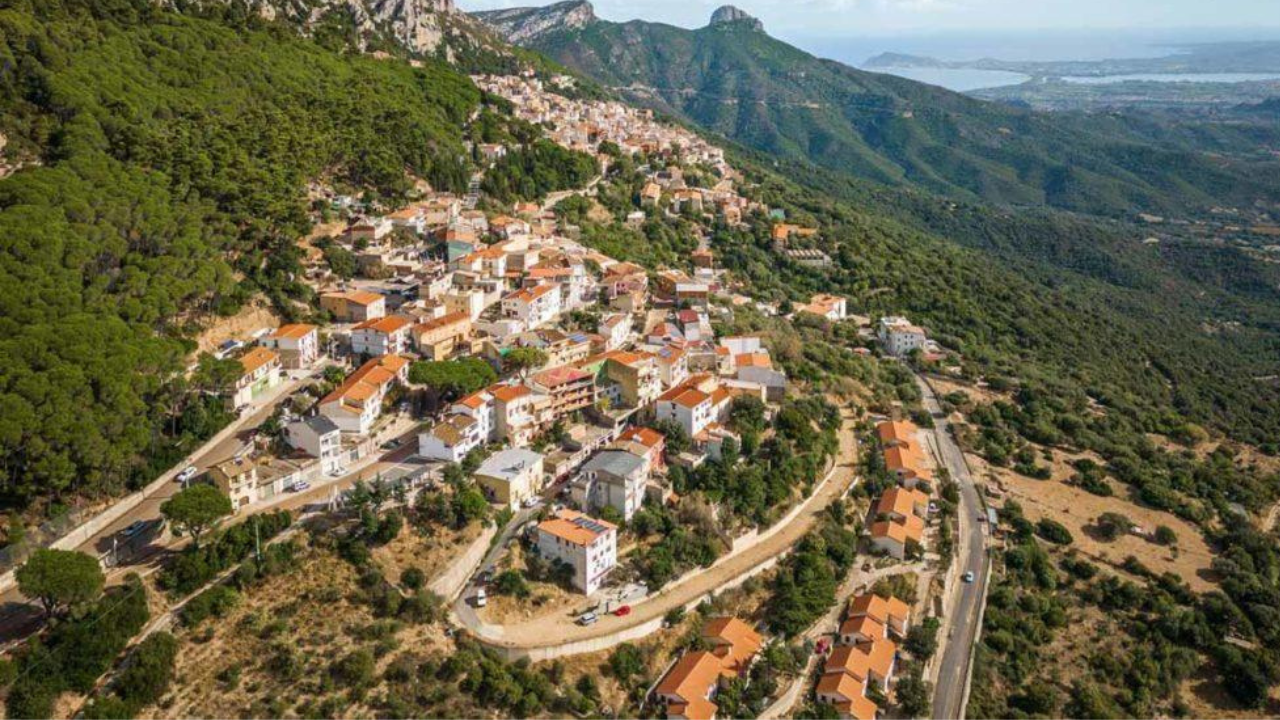
For decades, a remote mountainous enclave in Sardinia has confounded global demographic data by producing centenarians at a rate that defies modern medicine. Specifically, the male-to-female centenarian ratio in this region approaches an astonishing 1:1, completely upending the global norm where women outlive men by wide margins. While wellness influencers and pop-scientists point to the Mediterranean diet or daily walks, the truth is far more complex and far less marketable. The extraordinary longevity in these isolated Italian villages is driven not by lifestyle choices, but by a brutal combination of extreme genetic isolation, evolutionary pressure, and a unique cellular adaptation that protects men from cardiovascular decay.
To understand why men in the Sardinian interior—specifically the Nuoro province and the Ogliastra highlands—live long enough to blow out 100 candles, you have to look past the olive oil. You have to look at the blood.
The Isolation Engine
Global longevity data is remarkably consistent. In almost every industrialized nation, female centenarians outnumber male centenarians by a ratio of roughly four to one. Estrogen provides natural cardiovascular protection, while testosterone often drives risk-taking behavior and higher rates of heart disease in men.
Sardinia shatters this pattern.
In the sub-region known as the Blue Zone, the male-to-female centenarian ratio sits at roughly 1:1. This is not a statistical anomaly born of clean air. It is the direct result of centuries of geographic and cultural isolation.
For over a millennium, the population of these mountain villages remained entirely inward-facing. Invaders conquered the Sardinian coastlines, but the rugged interior remained inaccessible. The people who lived there married within their own valleys, creating a genetic bottleneck.
When a population reproduces in isolation for generations, it undergoes a process known as genetic drift. Harmful mutations can become amplified, but beneficial, rare genetic variants can also become locked into the population's DNA. The men of Ogliastra did not suddenly discover a magical wellness routine. They inherited a highly specific, curated gene pool that lacks many of the common genetic variants associated with early-onset heart disease and arterial clogging.
The Cost of the Bottleneck
This genetic isolation is a double-edged sword. While it has protected the population from the modern killers that claim men in their 50s and 60s, it has also concentrated rare hereditary diseases.
Sardinia has some of the highest rates of beta-thalassemia and favism in the world. Favism is an inherited enzyme deficiency where eating fava beans—ironically a staple of the local diet—can trigger acute hemolytic anemia. The evolutionary trade-off is stark. The exact same genetic landscape that primes these men to survive to 100 also makes them highly susceptible to specific, localized blood disorders. Longevity, in this context, is not a product of pristine health, but of an evolutionary compromise.
The Myth of the Mediterranean Diet
The wellness industry has capitalized heavily on the idea that a simple diet change can replicate these results. This is a profitable lie.
The modern concept of the Mediterranean diet—heavy on fresh fish, avocados, and leafy greens—bears little resemblance to what the oldest men of Sardinia actually ate during their formative developmental years. The individuals hitting 100 today grew up in severe poverty during the early to mid-20th century. Their diet was defined by scarcity, not abundance.
- Carbohydrate reliance: The primary fuel source was pane carasau, a flat, dry bread made from durum wheat that could last for months without spoiling.
- Low animal protein: Meat was a luxury, eaten perhaps once a week or on feast days. It was usually mutton or pork, high in saturated fats, completely contradicting modern low-fat dietary advice.
- Goat's milk and cheese: Instead of cow's milk, they consumed high amounts of pecorino cheese and goat's milk, which are naturally rich in short- and medium-chain fatty acids.
This was a diet born of necessity, not nutrition science. To attribute their survival to a specific food item ignores the metabolic reality of caloric restriction. These men spent the first forty years of their lives under a state of intermittent food scarcity. Cellular biology shows us that mild, chronic caloric restriction activates sirtuins, a class of proteins linked to cellular repair and mitochondrial efficiency. The magic isn't in the ingredients; it is in the history of deprivation.
The Telomere Paradox
If you look at the white blood cells of these elderly Sardinian men, you find something extraordinary. Their telomeres—the protective caps at the ends of chromosomes that shorten as we age—look younger than they should.
Standard Aging:   [Chromosome]=====(Short Telomere) -> Cellular Death
Sardinian Men:    [Chromosome]=========(Long Telomere) -> Continued Replication
In most populations, men's telomeres shorten at a faster rate than women's, partly due to higher oxidative stress and inflammation. In the Sardinian interior, this gap disappears.
Researchers studying the ProgeNIA project, an extensive genetic study of the region, discovered specific variants in the FOXO3 gene that are highly prevalent among the long-lived men of Nuoro. The FOXO3 gene is often referred to as a "longevity gene" because it regulates the expression of genes involved in cellular antioxidant defenses, tumor suppression, and DNA repair.
When a typical male experiences chronic stress or physical trauma, his body triggers a massive inflammatory response. Over time, this inflammation degrades arterial walls, leading to atherosclerosis. Sardinian men carrying these specific genetic variants possess a dampened inflammatory response. Their bodies do not overreact to stress at the cellular level. They do not rust from the inside out.
The Psychological Architecture of the Shepherd
Beyond the laboratory metrics lies a social dynamic that modern Western societies have systematically dismantled. The men who live to 100 in these villages were overwhelmingly shepherds.
This occupation required immense physical activity, but it was fundamentally different from the frantic fitness culture of the 21st century. It did not involve explosive, high-intensity workouts that spike cortisol and strain the heart. Instead, it demanded low-intensity, steady-state movement across uneven terrain for six to eight hours every day.
Physical Activity Profiles
--------------------------------------------------
Modern Executive:  Sedentary (8 hours) + High-Stress Gym Session (1 hour)
Sardinian Shepherd: Low-Intensity Movement + Low Cortisol (8 hours)
This lifestyle maintained skeletal muscle mass and joint mobility into extreme old age without causing the systemic wear and tear associated with heavy lifting or repetitive high-impact sports. More importantly, it shielded them from chronic psychological stress.
The Survival Value of Status
In the West, elderly men often face a rapid decline in social status post-retirement. They become invisible. This social death triggers a cascade of psychological stress that manifests as physical decline.
In the mountain villages of Sardinia, the social hierarchy operates in reverse. The older a man gets, the more authority he commands. He remains the emotional and administrative anchor of the family unit.
Social Dynamics and Health
--------------------------------------------------
Isolation -> High Cortisol -> Immune Suppression -> Accelerated Aging
Integration -> Low Cortisol -> Balanced Immune System -> Longevity
The 98-year-old patriarch does not sit in an assisted living facility staring at a wall. He sits at the head of the table, his advice sought on everything from land disputes to family finances. This structural integration keeps the central nervous system out of a constant fight-or-flight state. By eliminating the profound isolation that characterizes modern aging, these communities remove a major driver of late-stage cardiovascular mortality.
The Illusion of Portability
The ultimate failure of the longevity industry is the belief that this phenomenon can be packaged and exported. You cannot buy a bottle of Sardinian olive oil and expect to override a standard genetic blueprint.
The 1:1 male-to-female centenarian ratio in Sardinia is a closed system. It requires the precise intersection of an isolated genetic pool, a historical period of caloric restriction that primed the metabolism, a geography that enforces low-intensity daily movement, and a tribal social structure that values age over youth.
If you remove any single one of these pillars, the system collapses. In fact, we are seeing this collapse happen in real time.
Younger generations born in these exact same villages are adopting globalized diets, buying cars, and moving away from the communal lifestyle. The genetic advantages remain in their DNA, but the environmental triggers have changed. As a result, the obesity and diabetes rates in Sardinia are rising, and the gap between male and female life expectancy is beginning to widen, slowly aligning with the rest of the Western world.
The centenarians alive today are the last remnants of a specific evolutionary moment. Their long lives are a monument to a world that no longer exists, driven by a genetic luck of the draw that cannot be replicated by any modern supplement, diet, or lifestyle trend.