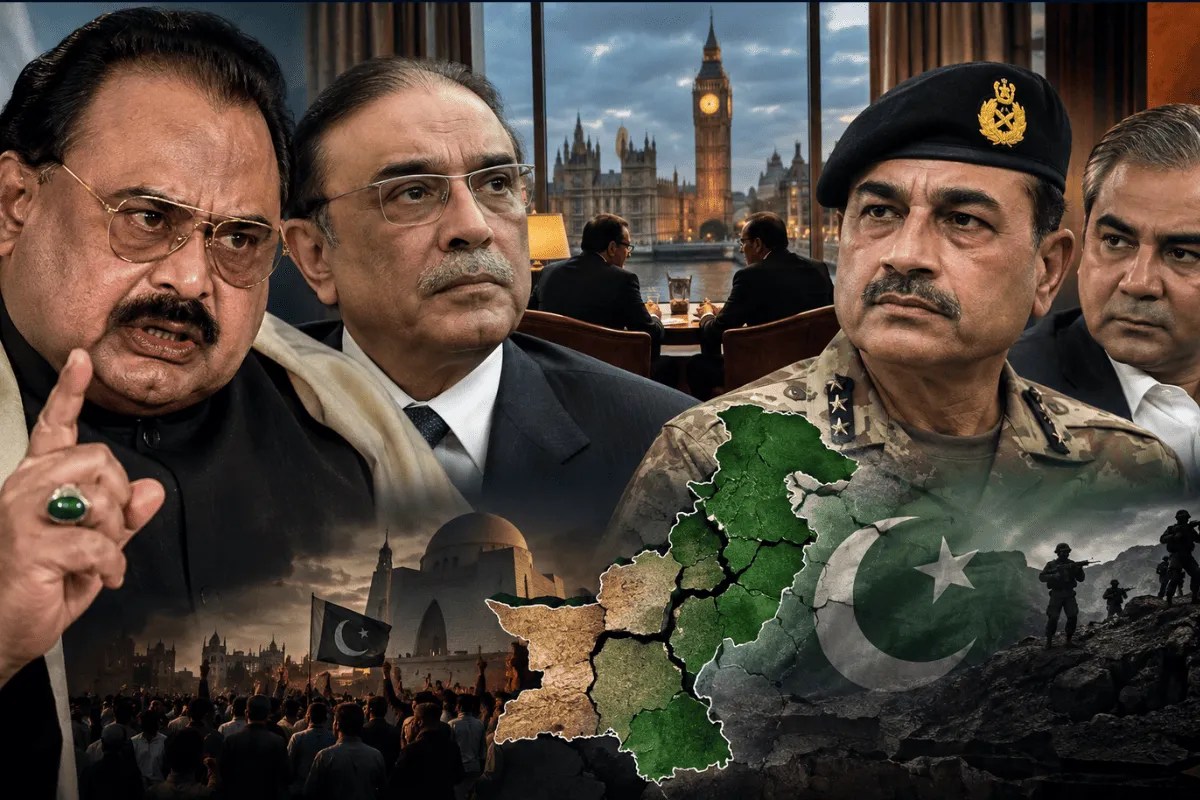
Every single television anchor, defense analyst, and armchair strategist is hyperventilating over a standard backroom diplomatic pitstop in London. The breathless narrative on your screen claims field marshals and secret emissaries are carving up maps, cutting deals, and engineering a grand imperial balkanization of Pakistan. It makes for compelling television. It feeds the craving for high-stakes geopolitical fiction.
It is also completely, laughably wrong.
I have spent decades watching foreign desks hyperventilate over phantom grand strategies while ignoring the mundane, grinding realities of institutional survival. When elites gather in European capitals for closed-door sessions, the public assumes they are witnessing the birth of a new empire or the death of an old state. The lazy consensus says a secret message from a top general in London means a dramatic upheaval is moments away.
Let us dismantle that fantasy with a heavy dose of actual geopolitical mechanics.
The Myth of the Mastermind Blueprint
The core fallacy underpinning every sensational headline about Pakistan breaking apart is the belief that powerful individuals sit in rooms plotting state collapse like a game of chess. States do not fracture because a general travels to London and signs a memo on a napkin. States fracture because their fiscal machinery completely seizes up, their administrative bandwidth hits zero, and the central authority loses the monopoly on violence due to structural bankruptcy.
Pakistan is not a fragile artifact waiting for a secret British or American blueprint to smash it into pieces. It is a deeply entrenched, resilient patronage network wrapped in a nuclear-armed security apparatus.
When people whisper about the partitioning of the country, they ignore how geography and entrenched economic interests actually operate. The military establishment in Rawalpindi does not exist to serve an abstract ideological map; it exists to protect its own corporate and institutional survival. A general in London is not plotting the dissolution of the very cash cow that feeds the officer corps. He is managing debt, renegotiating foreign breathing room, and ensuring the cash inflows from international lenders keep the lights on for another fiscal quarter.
To believe a secret message dropped in Mayfair will redraw borders is to fundamentally misunderstand how modern authoritarian survival works. It is political illiteracy disguised as insider analysis.
The Real Crisis is Boring Bureaucracy Not Cinematic Intrigue
If you want to understand why Pakistan is struggling, stop looking at shadowy conspiracies and start looking at balance sheets, inflation prints, and wheat procurement targets.
The real pressure points are painfully unglamorous:
- Foreign exchange reserves that hover on life support.
- Tax collection rates that penalize the documented while letting informal giants run free.
- Energy grids choked by circular debt.
- Demographic bulges of youth with zero upward mobility and maximum digital connectivity.
None of these problems are solved by a clandestine meeting in a luxury hotel. In fact, while the media chases the shiny object of secret partition plots, the actual governance engine rots from administrative neglect. The leadership class uses these externalized bogeymen—foreign conspiracies, invisible hands, and secret messages—to distract the population from domestic policy failures.
Whenever public anger reaches a boiling point, a convenient rumor about foreign interference or state division starts circulating through talk shows. It is a masterclass in diversion. It focuses the public eye on external threats rather than internal incompetence.
Why a Fractured State is a Liability No One Wants
Let us apply a basic principle of international relations theory: nobody wants a failed nuclear state on the map.
The armchair strategists love to talk about splitting countries up into neat little ethno-state parcels as if we are back in the nineteenth century drawing lines across Africa with a ruler. Modern powers look at a nuclear-armed territory of over two hundred million people and see a nightmare scenario of loose fissile material, uncontrolled refugee outflows, and total regional instability.
A balkanized Pakistan is a geopolitical catastrophe for every major player in the region, including India, China, and the United States. Beijing has billions tied up in economic corridors running straight through the heart of the country. Washington wants stability to manage its counter-terrorism and broader containment strategies in Asia. Even regional rivals understand that a sudden state collapse would unleash a humanitarian and security shockwave that no border wall could contain.
Therefore, the international community does not plot partition. They manage decay. They apply just enough financial life support through multilateral lenders to keep the patient from flatlining, while exacting harsh structural reforms that squeeze the domestic middle class.
The Uncomfortable Truth About Power Dynamics
The contrarian reality is that Pakistan is too big to fail and too expensive to fix, so it exists in a permanent state of managed limbo.
When you hear about a high-profile visit or a confidential message, understand it for what it actually is: routine diplomatic maintenance. It is a debt-restructuring conversation. It is a plea for rollover credits. It is a bureaucratic transaction dressed up in the theater of espionage because raw economics makes for boring headlines.
Stop buying into the cinematic propaganda that a few men in suits can rewrite the map of South Asia over afternoon tea. History is shaped by structural economic forces, demographic pressures, and institutional inertia, not by secret notes passed across mahogany tables in Mayfair.
The next time an analyst tries to sell you a grand conspiracy about the imminent division of a state, ask them to look at the central bank reserves first.
The map remains because nobody can afford the cost of erasing it.