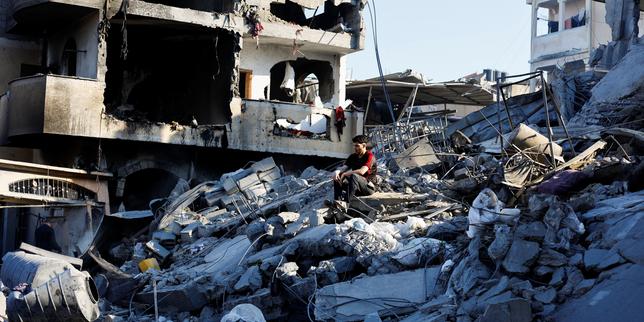
We need to talk about what just happened in the Gaza Strip. International news feeds flash constantly with numbers. Percentages. Tallies of airstrikes. But behind the cold data, real families are vanishing in seconds. The latest Israeli strike hit a residential home, wiping out an entire family. A newborn baby died in the wreckage.
It's a pattern that keeps repeating. Military spokespersons often issue brief statements about targeting specific infrastructure or operational assets. Yet the immediate, undeniable outcome on the ground is the recurring loss of civilian life. Families are gathered inside what they hope are safe structures, only to face total destruction. The reality of this conflict isn't found in abstract strategic briefings. It lives in the rubble of domestic spaces.
The Tragic Reality of Gaza Civilian Casualties
When an airstrike hits a densely populated area, the margin for error is non-existent. Entire multi-generational families live packed together due to displacement and blockades. A single munition doesn't just damage a building. It erases a lineage.
Human rights organizations like Amnesty International and Human Rights Watch have repeatedly documented these outcomes. They point out that using heavy explosive weapons in populated urban centers inevitably leads to disproportionate civilian harm. The death of an infant underscores a brutal reality. In a blockaded territory, there is nowhere truly safe to run, no reinforced bunkers for citizens, and no early warning system that can save a sleeping family.
The argument from military officials usually centers on the concept of human shields or proximity to combatants. But international humanitarian law is clear. The presence of a combatant does not grant a blank check to destroy an entire civilian home. Proportionality matters. The distinction between combatants and civilians must be maintained at all costs. When an entire family, including a newborn, is killed, those legal and moral boundaries have collapsed.
What International Humanitarian Law Actually Says
Many observers look at these tragedies and wonder how they keep happening legally. The truth is, the laws of war are frequently strained past their breaking point by modern military interpretations.
- The Principle of Distinction: Parties to a conflict must always distinguish between civilians and combatants. Attacks can only be directed against military objectives.
- The Principle of Proportionality: An attack is prohibited if it is expected to cause incidental loss of civilian life which would be excessive in relation to the concrete and direct military advantage anticipated.
- Precautions in Attack: Militaries must take all feasible precautions to avoid, or at least minimize, incidental loss of civilian life.
When a home is targeted, the military actor must prove that the civilian harm was heavily outweighed by an immediate, critical military necessity. In case after case in Gaza, independent investigators find it incredibly difficult to see how the total destruction of a family home meets that strict legal threshold. The lack of transparency in military investigations only deepens the crisis of accountability.
The Long-Term Impact on a Fractured Society
The loss isn't confined to the moment of impact. The psychological and societal fabric of Gaza is being permanently altered. Children who survive these strikes grow up with severe trauma, having witnessed the sudden violent erasure of their parents, siblings, and neighbors.
Medical infrastructure in the region is already near total collapse. Hospitals lack basic supplies, clean water, and reliable electricity. When a strike occurs, emergency responders dig through concrete with their bare hands. Survivors often die from preventable infections or blood loss because the medical system cannot cope with the sheer volume of trauma cases.
The international community regularly issues statements of deep concern. Diplomats express regret over the loss of innocent life. Yet, the policy shifts required to stop the bombardment of residential areas rarely materialize. Weapons transfers continue. Diplomatic cover remains intact. The cycle moves forward, and more names are added to the casualty lists.
To understand the scale of this crisis, look at the independent documentation provided by groups like B'Tselem and Palestinian human rights networks. They track the names, the ages, and the locations. They show that these aren't isolated anomalies. They are the predictable results of a military strategy that prioritizes maximum firepower in one of the most crowded places on earth.
The immediate step forward requires an absolute halt to the targeting of residential areas and an independent, international investigation into civilian deaths. Relying on internal military probes has proven insufficient for achieving accountability. True justice requires transparent, external oversight that values civilian lives equally, regardless of geography. Turn your attention to the local journalist collectives and independent human rights monitors on the ground who continue to document these stories under immense risk. Supporting their visibility is the most direct way to counter the normalization of these tragedies.