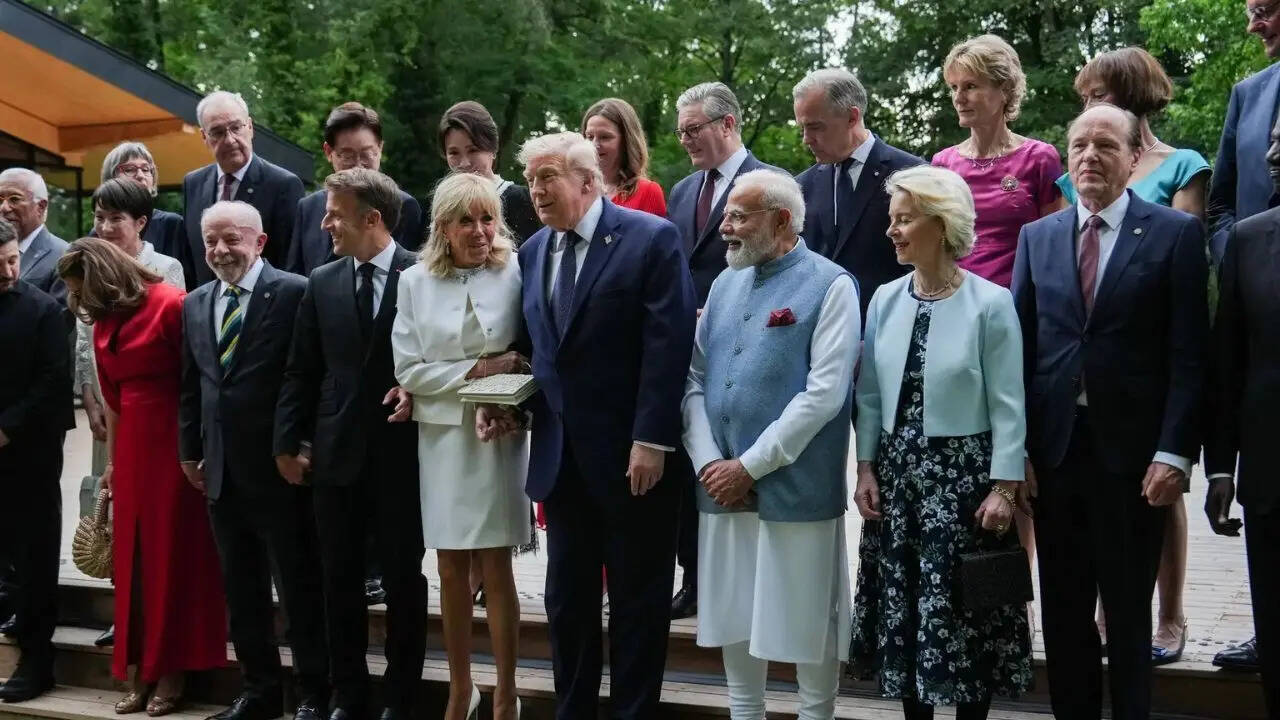
The media loves a "gotcha" moment. When a microphone stays live at a global summit, journalists sprint to their keyboards to dissect the raw, unfiltered reality of geopolitics. They tell you we are finally seeing the real human beings behind the polished diplomatic masks.
They are completely wrong.
The standard narrative surrounding G7 hot mic incidents—like the famous chatter about sports, cigarettes, and buying Greenland—is that these are embarrassing security lapses. We are conditioned to treat them as accidental windows into the souls of the global elite.
In reality, the hot mic is one of the most effective, calculated tools of modern statecraft.
I have spent years analyzing how international communication strategies are constructed. I can tell you that the true "lapse" is believing anything that happens near a microphone at a major summit is an accident. World leaders do not accidentally blurt out state secrets or casually joke about major territorial acquisitions unless it serves a specific, calculated purpose.
The media falls for the theater every single time. Let us dismantle how this performance actually works.
The Illusion of Raw Authenticity
The conventional wisdom dictates that politicians are highly scripted robots, and a hot mic offers a rare glimpse of their authentic selves.
This premise is fundamentally flawed. Modern political authenticity is a manufactured commodity. When a leader is caught on a live microphone discussing mundane topics like sports or personal habits, it achieves something traditional public relations cannot buy: relatability.
Consider the psychology at play. A world leader surrounded by motorcades and military aides feels distant, untrustworthy, and elite. But a world leader whispering about a cigarette craving or a soccer match? Suddenly, they are human. They are just like you.
This is not a security failure; it is strategic humanization.
By allowing these trivial conversations to leak, leaders lower the public's guard. It shifts the media narrative away from complex, highly controversial policy failures—like stagnant economic growth or failed climate targets—and redirects the public conversation toward harmless, folksy gossip. You are busy laughing at a president's sports take while they sign off on multi-billion-dollar corporate subsidies behind closed doors.
The Trial Balloon Strategy
Not all hot mic moments are about trivialities. Sometimes, they touch on massive geopolitical shifts. The media frames these as monumental blunders that destabilize foreign policy.
Take the infamous discussions regarding buying Greenland or sudden shifts in military alliances. The lazy consensus is that a leader spoke out of turn and caused a diplomatic nightmare.
Look closer at how international relations actually operate. Before a state introduces a radical, disruptive policy, they need to test the waters without committing resources or official prestige. If a leader announces a bizarre or aggressive policy in an official press conference, they own it. If it fails or faces massive backlash, they lose face, stock markets plummet, and diplomatic ties snap.
But if that exact same radical idea is "accidentally" picked up by a hot mic during a casual stroll at the G7?
It becomes a perfect trial balloon.
The administration gets to watch the global reaction in real-time. They monitor how foreign adversaries respond, how the markets react, and what the domestic polling looks like. If the reaction is overwhelmingly negative, the administration simply laughs it off as a joke, a misunderstanding, or a casual thought experiment taken out of context. If the reaction is surprisingly favorable, they begin quietly moving the policy forward through official channels.
It is low-risk, high-reward espionage conducted in plain sight of the press corps.
The Controlled Leak as a Power Play
Let us address the "People Also Ask" assumption that dominates search engines during these summits: Do world leaders know the mics are on?
The short answer is yes. They are briefed by teams of signals intelligence experts, counter-espionage officers, and communications directors before they even step foot in the venue. They know exactly where the directional microphones are positioned. They know the range of the press pool's equipment.
When a leader chooses to whisper a piece of critical information to a colleague in a space where media tech is present, it is often a deliberate, controlled leak designed to bypass standard diplomatic channels.
Imagine a scenario where a prime minister wants to send a harsh, unyielding warning to an aggressive foreign adversary, but doing so through an official state memo would escalate military tensions to a dangerous degree. By "secretly" telling an ally on a hot mic that they are losing patience, the message is guaranteed to reach the adversary via global news broadcasts within minutes.
It delivers the psychological blow without the formal declaration. It signals strength to the domestic audience while maintaining plausible deniability on the world stage.
The Downside of the Anti-Theater
To be fair, this strategy carries real risks. Executing a controlled hot mic moment requires flawless acting and precise timing.
If a leader appears too performative, the public detects the manipulation instantly. Furthermore, relying on accidental leaks to communicate policy degrades the formal institutions of diplomacy. When everything becomes a wink and a nod to a live microphone, actual international treaties and bilateral agreements lose their weight.
But leaders take this risk because the current media ecosystem rewards performance over substance. Journalism has shifted from analyzing dense policy documents to chasing viral audio clips. If you want to control the news cycle for forty-eight hours during a crucial summit, you do not publish a three-hundred-page economic report. You whisper a provocative sentence near a television crew.
Stop analyzing the words spoken on a G7 hot mic as if you stumbled upon a diary entry. You are watching a script being read by people who know exactly where the camera is hiding.
Stop looking at the microphone. Start looking at who benefits from you hearing it.