The map on the wall in Kyiv does not bleed anymore; it simply changes colors with the quiet cruelty of a slow leak. Blue markers retreat by centimeters. Red arrows creep forward through the skeletal remains of shelterbelts and blasted orchards. Outside the command bunker, the air smells of wet wool, damp earth, and the distinct, sulfurous copper of a distant detonation. It is October. In this part of the world, October is not a month; it is a countdown.
We forget how long a winter is when we watch it from a heated room three thousand miles away. We see the flash of a diplomat shaking a hand in a gilded hall, and we mistake the gesture for an end. But the men carrying thirty-pound packs through frozen mud do not care about handshakes. They care about socks that stay dry for more than an hour. They care about whether the small, cheap plastic generator behind the cellar stairs has enough diesel to keep the radio alive for another night.
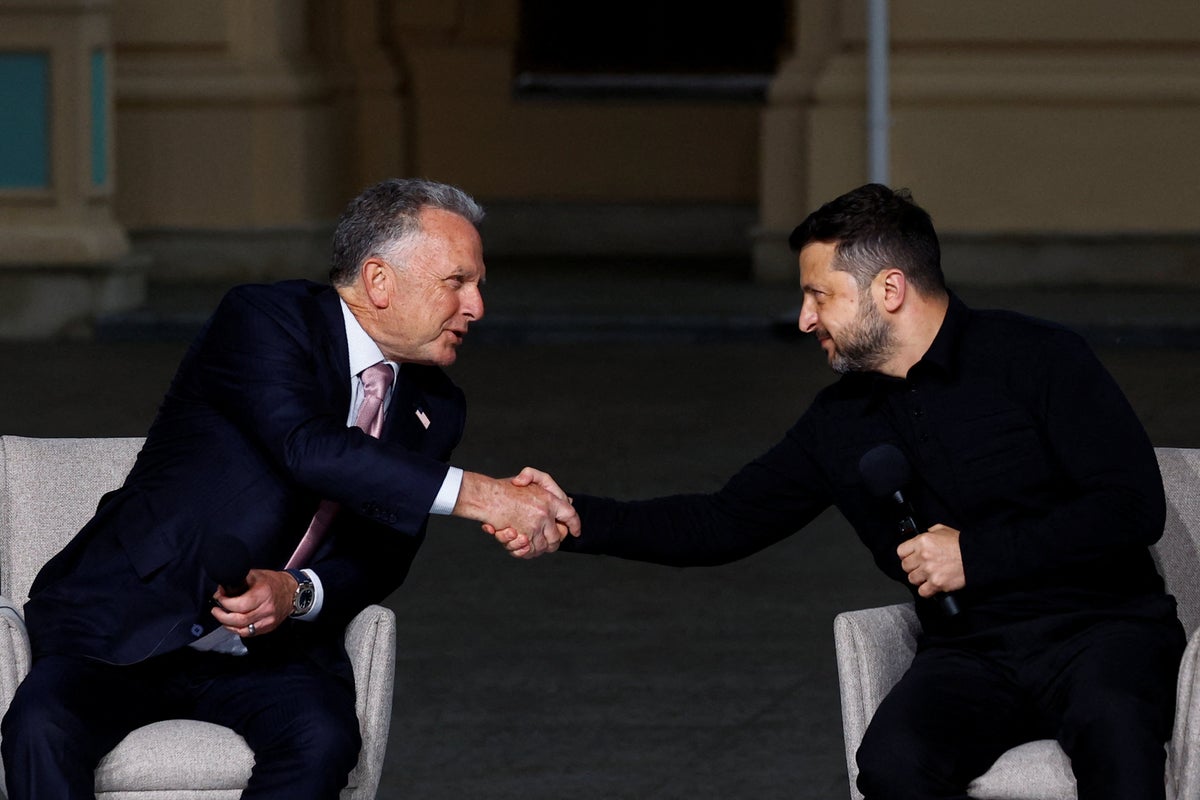
President Volodymyr Zelenskyy stood before his staff last week, his face carved into the expression of a man who has run out of easy answers. He had just finished another round of briefings regarding the quiet, intense shuttle diplomacy conducted by the envoys of Donald Trump. Substantive talks, they called them. Words whispered in quiet corners of European capitals, mapping out lines that do not yet exist, sketching futures on napkins that will likely be torn to shreds by dawn. The diplomats speak of compromises, of territorial adjustments, of security guarantees wrapped in bureaucratic cellophane.
Yet, the forecast remains unchanged. Another winter at war.
Consider what that means on the ground. A hypothetical soldier we will call Dmytro—though he has a thousand faces across the Donbas—sits in a dugout carved three meters deep into the permafrost. He used to be a high school history teacher in Kharkiv. He used to lecture teenagers about the Treaty of Versailles and the catastrophic folly of believing that a piece of paper could ever stop an army with momentum. Now, he listens to the dull thud of glide bombs dropping four miles to his west, wondering if his stove will hold out until morning.
The diplomats talk about peace as if it were a light switch. You flip it, and the room illuminates. But peace in a war of this scale is not a switch. It is a slow, agonizing process of unknotting barbed wire that has grown deep into the flesh of the earth. Every kilometer of front line is saturated with iron, unexploded ordnance, and the bitter memories of ruined villages where no dog barks anymore.
When the Trump envoys sat across the table from Ukrainian officials, the friction was not born of malice, but of two entirely different universes colliding. One universe operates on the clock of election cycles, public approval ratings, and the urgent desire to cut losses and declare a ledger balanced. The other universe operates on the brutal mathematics of survival. To stop fighting without ironclad, generational guarantees is not peace; it is merely an intermission during which the enemy repairs his tracks, refuels his tanks, and buries his dead to make room for new ones.
Zelenskyy knows this better than anyone. He knows the exhaustion of his people is real, thick, and suffocating. You can see it in the eyes of the women volunteering at the soup kitchens in Zaporizhzhia, in the slumped shoulders of the medics working by flashlight, in the quiet desperation of parents trying to explain to a six-year-old why the ceiling of their bedroom is now made of blue plastic tarp. The psychological reserve of a nation is like a deep well during a drought; every bucket drawn brings you closer to the scraping sound of stone on stone.
And still, the talk of negotiations grows louder.
There is a dangerous luxury in believing that because people are tired of a war, the war will simply pack up and leave. Wars do not end because people are tired. They end when one side is broken, or when both sides realize that the cost of continuing infinitely outweighs the bitter pill of a compromise. Right now, neither condition has been fully met. Moscow still believes that time is its most loyal general, that Western resolve will fray the moment the heating bills spike in Berlin and Paris, and that the sheer weight of numbers will eventually grind down the Ukrainian defense. Kyiv knows that to yield without absolute security is to sign the death warrant of the state itself.
So the winter approaches, grey and unyielding.
The frost will lock the mud into place, turning the gray fields into highways of frozen steel. Tanks will roll again with less resistance from the mire. Artillery barrels will crack in the sub-zero temperatures. In the cities, technicians will race against time to patch power substations before the first major freeze, knowing that darkness in January is a weapon as lethal as any shrapnel shell.
Back in the warmth of the capitals, the meetings will continue. Envoys will draft new proposals, adjust percentages of land, and argue over the wording of ceasefire provisions. They will use terms like permanent settlement and strategic stability, words that sound clean and weightless on heavy paper.
But out there, in the trenches where the breath freezes on the rim of a helmet, the reality is much simpler. There is only the cold, the dark, and the endless, quiet waiting for the next horizon to light up.