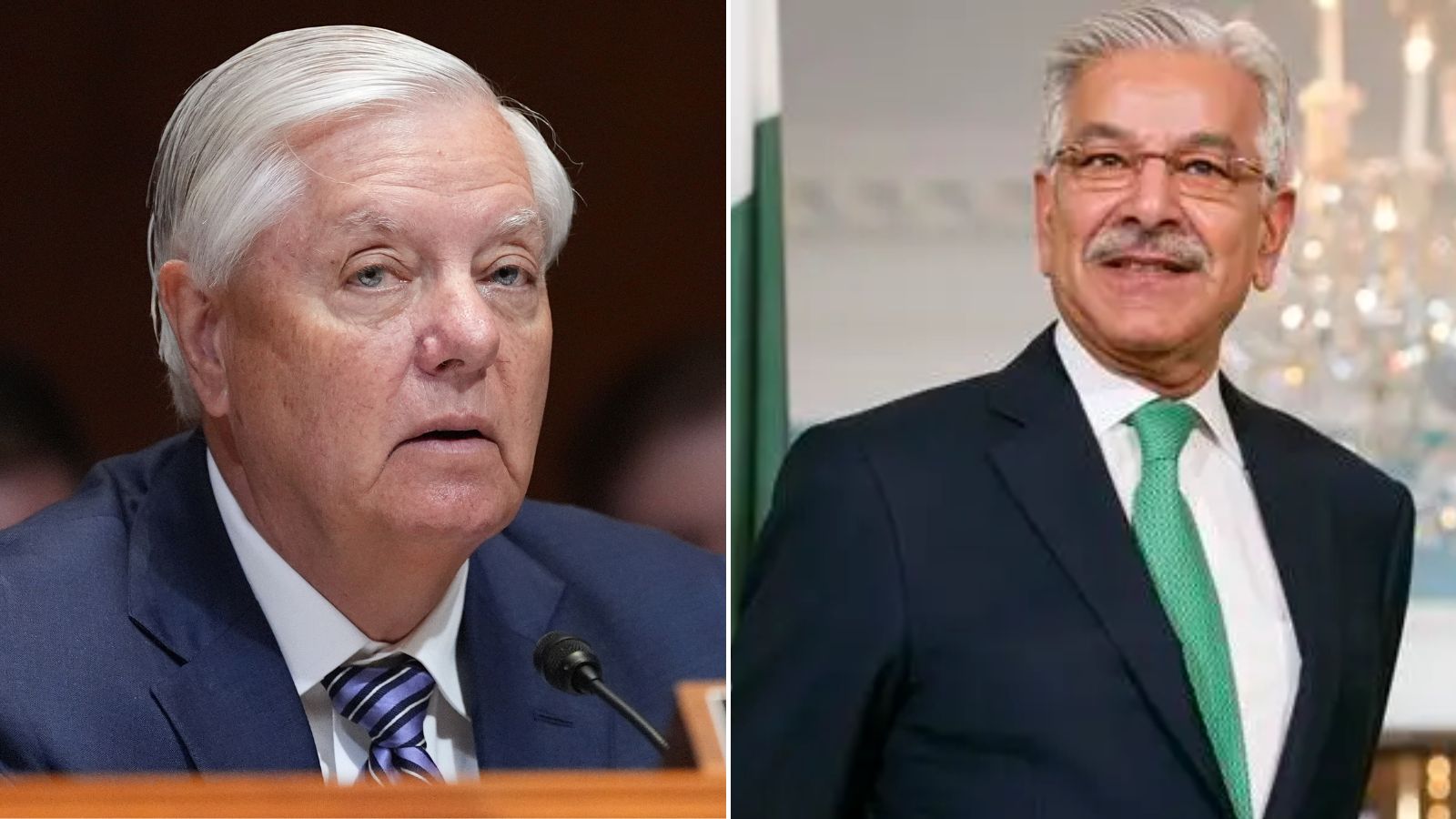
A state cannot operate simultaneously as a neutral geopolitical arbiter and a non-neutral ideological actor within the same conflict vector. This structural contradiction underpins the friction between Washington and Islamabad regarding mediation in the US-Iran conflict. US President Donald Trump’s diplomatic strategy links a potential grand bargain with Tehran to an expansion of the Abraham Accords. This strategy relies on multi-party normalization with Israel.
The baseline assumption that Pakistan could serve as an impartial mediator collapses when evaluated against two operational variables: ideological alignment and military logistics. Pakistan Defence Minister Khawaja Asif recently rejected joining the Abraham Accords, citing conflicts with the country’s fundamental ideologies. US Senator Lindsey Graham identified this stance, along with reports of Iranian military aircraft utilizing Pakistani airbases, as a dual failure of neutrality. For a different perspective, read: this related article.
This analysis models the structural constraints of Pakistan’s foreign policy, evaluates the strategic mechanics of the Trump administration’s regional framework, and projects the geopolitical outcomes of this diplomatic impasse.
The Trilemma of Credible Mediation
To evaluate whether a state can successfully mediate an international conflict, its strategic positioning must be quantified across three distinct axes: Similar coverage on this trend has been provided by NBC News.
                  [Strategic Neutrality]
                           /\
                          /  \
                         /    \
                        /      \
                       /________\
[Ideological Alignment]          [Logistical Independence]
1. Ideological Alignment
A mediator must not possess a fundamental ideological bias that aligns with one party’s existential adversaries. Pakistan’s constitutional and state identity is explicitly tied to a non-recognition policy toward Israel. This is codified by unique passport restrictions explicitly invalidating travel to the state. When the Defence Minister questions whether Israel's word can be trusted, the state signals a permanent ideological alignment with Tehran's regional posture. This rhetoric introduces a systematic bias into any U.S.-led negotiation matrix that treats Israeli security as a non-negotiable variable.
2. Logistical Independence
Operational neutrality requires that a mediator’s territory cannot be leveraged by either combatant for military utility or asset preservation. US intelligence reports indicate that Iranian military aircraft have been housed at Pakistani air installations, including Nur Khan Air Force Base. This security architecture acts as a strategic rear area for the Islamic Republic of Iran Air Force during active conflict. Providing sanctuary for a combatant's hardware invalidates a state’s claim to impartial mediation.
3. Diplomatic Leverage
An effective arbiter must possess tangible carrots or sticks to compel both sides toward equilibrium. Pakistan’s current macroeconomic dependence on international financial institutions, coupled with its internal security challenges, minimizes its external leverage over Washington or Tehran. It cannot guarantee compliance, nor can it absorb the economic or geopolitical penalties of a failed negotiation.
The Abraham Accords as a Condition Precedent
The friction between US legislators and Pakistani diplomats stems from a fundamental divergence in how a US-Iran ceasefire is structured. The Trump administration does not view negotiations with Tehran as an isolated bilateral track. Instead, it employs a regional integration model where a comprehensive deal with Iran is conditional upon an expanded regional security architecture.
+-----------------------------------+
|  Expanded Abraham Accords         |
|  (Saudi Arabia, Qatar, Pakistan)  |
+---------------------------------+-+
                                  |
                                  v
+---------------------------------+-+
|  Regional Normalization Matrix   |
+---------------------------------+-+
                                  |
                                  v
+---------------------------------+-+
|  Sustainable US-Iran Agreement   |
+-----------------------------------+
This model treats the Abraham Accords as a condition precedent for regional stability. By demanding that Pakistan, Saudi Arabia, Qatar, Turkiye, Egypt, Jordan, and Bahrain simultaneously sign or expand normal relations with Israel, Washington seeks to build a security framework that insulates the Middle East against future proxy escalations.
Pakistan’s refusal to participate creates a structural bottleneck in this diplomatic design. Islamabad operates on a traditional two-state solution paradigm, established under its founding tenets in 1947. This framework treats recognition of Israel as the final step of a peace process, whereas the current US strategy treats normalization as the baseline requirement for entering negotiations. This conceptual mismatch prevents Pakistan from participating in the broader regional arrangement.
Strategic Implications of the Mediation Impasse
The breakdown of Pakistan's role as a mediator shifts the diplomatic and military calculus across three primary operational areas.
The first limitation is the inevitable relocation of the diplomatic track. If Washington concludes that Islamabad lacks the institutional neutrality required to manage sensitive communications with Tehran, the mediation architecture must pivot to alternative channels. States like Oman, Qatar, or Switzerland offer established, structurally neutral frameworks that do not carry the ideological baggage or logistical complications seen in South Asia.
This creates a secondary bottleneck for Pakistan's economic diplomacy. Islamabad has historically leveraged its geostrategic position to secure financial concessions, energy corridors, and diplomatic cover from Western powers. Disqualifying itself from this high-stakes mediation track reduces its geopolitical utility to Washington. This shift occurs at a time when the country requires international support to manage its debt obligations and balance its relationship with Beijing.
Finally, this impasse accelerates tactical alignments on the ground. As Senator Graham noted, the presence of Iranian military assets on Pakistani soil signals a shift from passive diplomatic engagement to active logistical cooperation with Tehran. This development forces US defense planners to re-evaluate the western flank of the South Asian theater, transforming a traditional counter-terrorism partner into a factor in the Persian Gulf security equation.
Tactical Reconfiguration and Regional Playbook
Because the standard metrics of diplomatic mediation have broken down in this context, the parties involved are forced into a definitive, multi-layered strategic play:
- Washington’s Externalization Play: The United States will phase out Pakistan from the active US-Iran negotiation loop. Washington will likely pivot to Muscat or Doha to finalize the terms of the deal that President Trump noted are "proceeding nicely." Simultaneously, US congressional committees will link future security assistance to verifiable guarantees regarding the removal of foreign military assets from Pakistani installations.
- Islamabad’s Ideological Consolidation: Pakistan will maintain its historical stance on Israel to preserve internal political stability and prevent domestic unrest. To offset any resulting friction with the West, Pakistani diplomats will try to uncouple their role in the "Board of Peace" for regional truces from the formal framework of the Abraham Accords. They will emphasize that humanitarian facilitation does not equal diplomatic recognition.
- Tehran’s Strategic Depth Strategy: Iran will continue to utilize its eastern border as a diplomatic and logistical buffer zone. By dispersing secondary military assets into Pakistani territory, Tehran complicates Western target planning and creates a shared security stake with Islamabad, ensuring that Pakistan cannot fully align with a US-led maximum pressure campaign.
The current diplomatic impasse confirms that regional peace deals cannot be built on ambiguous mediation. When a candidate mediator's ideological positions and territorial usage clash with the strategic goals of a primary superpower, the mediation framework fails. The ongoing shift toward explicit normalizations and verifiable military neutrality will replace old-school, ambiguous diplomacy with a more transactional, realpolitik approach to regional security.
I Don't Trust Pakistan: Lindsey Graham Accuses Islamabad Of Helping Iran
This video provides the direct context and footage of Senator Lindsey Graham's public statements regarding his lack of trust in Pakistan's neutrality and the reports of Iranian military aircraft on Pakistani airbases.