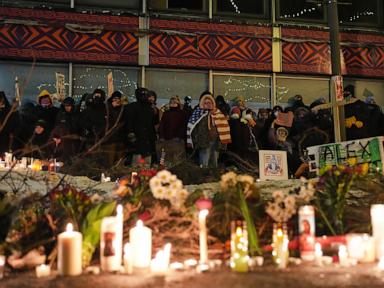
The fatal shooting of Lorenzo Salgado Araujo by a federal immigration officer in Houston establishes a critical baseline for analyzing the operational risks of accelerated interior enforcement campaigns. This incident marks at least the eighth fatality linked directly to tactical immigration sweeps since early 2025. When federal enforcement agencies scale up the velocity and volume of targeted operations without adjusting local coordination protocols, the probability of lethal escalation increases non-linearly.
Evaluating these outcomes requires moving past rhetorical debates and analyzing the systemic friction points within interior enforcement mechanics. The escalating fatality rate is driven by two core operational variables: the breakdown of tactical communication during high-velocity vehicle stops, and an asymmetric information lag between federal field narratives and empirical video evidence. Meanwhile, you can read other events here: The Geometry of Gulf Diplomacy: India and Kuwait Deconstruct the Strategic Partnership.
The Tactical Escalation Mechanics of Mobile Enforcement
Interior immigration enforcement relies on highly dynamic operational environments that differ fundamentally from controlled border checkpoint environments. Analyzing the eight documented fatalities reveals that vehicle-centric interactions represent the highest-risk operational vector.
The structural breakdown of these operations follows a specific, repeatable sequence: To see the bigger picture, we recommend the recent analysis by The Guardian.
[Unmarked/Low-Profile Vehicle Intercept]
                  │
                  ▼
[Asymmetric Information State: Subject Fleeing vs. Evading Arrest]
                  │
                  ▼
[Kinetic Resistance: Vehicle Use as a Shield or Weapon]
                  │
                  ▼
[Lethal Force Deployment under Self-Defense Mandates]
This structural failure occurs because of a mismatch in situational awareness. In the Houston deployment, Immigration and Customs Enforcement (ICE) personnel operated in unmarked or low-profile configurations during a targeted enforcement operation. When Salgado Araujo attempted to drive away, agents interpreted the movement as an active vehicular assault, while family accounts indicate the subject believed he was escaping an ambiguous, hostile threat on his commute to a construction site.
This asymmetry creates a cognitive bottleneck:
- The Federal Operational Mandate: Field personnel are trained to interpret vehicle acceleration within a hot-zone as a lethal threat. Under the Department of Homeland Security (DHS) use-of-force framework, an accelerating vehicle targeting an officer's position justifies the deployment of service weapons.
- The Subject Risk Profile: Individuals lacking legal status or operating under intense psychological duress exhibit high flight-or-fight responses. When intercepted by non-uniformed or covert units, their immediate priority shifts to evasion, often utilizing the vehicle as an immediate path of egress rather than an intentional weapon.
This tactical loop explains multiple recent fatalities. In March 2025, Homeland Security Investigations (HSI) personnel stopped Ruben Ray Martinez, a 23-year-old U.S. citizen, during a late-night traffic stop near South Padre Island, Texas. The official agency narrative asserted that Martinez deliberately ran over an agent, prompting defensive gunfire.
A parallel failure occurred in September 2025 in suburban Chicago, where ICE agents shot Silverio Villegas González during a traffic stop, claiming the subject dragged an officer with his vehicle. In both instances, the initial tactical assessment framed the vehicle as an active kinetic weapon, triggering an immediate escalation to lethal force.
The Evidence Discrepancy Equation and Institutional Lag
A significant vulnerability in the current execution of mass enforcement sweeps is the persistent verifiability gap between initial field reports and objective sensor data. The integrity of federal law enforcement operations relies on a transparent verification loop. However, recent data points demonstrate a systemic pattern where independent video documentation directly challenges initial agency narratives.
The variance between reported actions and verified sensor data can be quantified through an institutional friction model. In the case of Villegas González, the initial DHS report claimed the field agent sustained serious injuries from being dragged. Subsequent local police dashcam video dismantled this assertion, showing the agent ambulatory and dismissing the injuries as minor.
An even sharper divergence occurred during the January 24, 2026, Metro Surge operation in Minneapolis. Border Patrol personnel fatally shot Alex Pretti, a 37-year-old licensed nurse and U.S. citizen, initially reporting him as an active, armed agitator who posed an imminent, lethal threat. Bystander video later proved that Pretti was already pinned to the ground holding only a mobile device when the lethal sequence commenced.
The institutional lag in these investigations introduces severe systemic instability:
| Incident Date | Location | Subject Status | Initial Federal Account | Contradictory Evidence Matrix |
|---|---|---|---|---|
| March 15, 2025 | South Padre Island, TX | U.S. Citizen | Subject intentionally ran over an HSI agent during a traffic stop. | Texas Rangers investigation noted state video files directly challenged the federal narrative. |
| January 7, 2026 | Minneapolis, MN | U.S. Citizen | ICE officer faced an imminent vehicular threat from an SUV driver. | Multi-angle video established the driver was turning wheels away from the officer's path. |
| January 24, 2026 | Minneapolis, MN | U.S. Citizen | Border Patrol targeted an armed, active threat during a civil disturbance. | Bystander footage confirmed the subject was prone on the ground holding a phone. |
| September 12, 2025 | Suburban Chicago, IL | Mexican National | Subject dragged an officer with his vehicle, causing severe injuries. | Local municipal dashcam video showed the agent uninjured and walking freely. |
This data lag undermines the operational legitimacy of federal sweeps and drives a wedge between federal field units and local jurisdictions. The refusal of the U.S. Department of Justice to share raw investigative files regarding the January 7 shooting of Renee Good with Minnesota state authorities illustrates a growing structural bottleneck: federal insulation vs. local accountability.
Collateral Escape Dynamics and Perimeter Volatility
The expansion of enforcement sweeps scales up risk not only at the immediate point of contact but also across the broader perimeter of the operation. When federal sweeps target fixed economic infrastructure, such as agricultural facilities or commercial hubs, they trigger uncoordinated flight vectors among non-targeted individuals. This perimeter volatility accounts for a distinct subset of the current fatality count.
During a July 2025 tactical raid at Glass House Farms in Camarillo, California, ICE personnel focused on arresting dozens of agricultural laborers. The unexpected introduction of tactical units into a high-density workplace caused immediate panic. Jaime Alanis, a ten-year employee of the facility, attempted to evade detection by ascending a greenhouse infrastructure, resulting in a fatal 30-foot fall.
A similar outcome occurred in August 2025 in Monrovia, California, when ICE agents initiated a sweep outside a commercial home improvement retail center. Roberto Carlos Montoya Valdez fled the perimeter on foot and was struck by a civilian SUV while attempting to cross Interstate 210.
These incidents demonstrate that the risk function of a mass deportation sweep extends far beyond the primary target. The introduction of high-stress tactical presence into civilian spaces creates secondary hazards:
- Structural Failure of Local Transit Corridors: Fleeing subjects treat high-speed transit networks (such as interstate freeways) as viable escape routes, transferring the risk directly to civilian motorists.
- Industrial Site Hazards: Workplace environments are not configured for tactical maneuvers. Evading subjects regularly encounter fatal falls, heavy machinery hazards, or structural collapses while attempting to hide.
Operational Redesign for Interior Enforcement
To mitigate the escalating fatality rate and stabilize the widening compliance gap between federal agencies and municipal authorities, the Department of Homeland Security must transition from high-impact tactical sweeps to a data-verified, low-friction enforcement matrix. The current operational model relies heavily on surprise and localized overwhelming force, which maximizes adrenaline and elevates the probability of lethal miscalculations.
First, federal agencies must implement a mandatory body-worn camera (BWC) integration policy that syncs directly with local law enforcement networks during joint operations. The current practice of withholding federal video captures or delaying record releases for up to a year—as seen in the Ruben Ray Martinez case—creates an information vacuum that degrades public trust and prevents rapid tactical course corrections. Real-time data streaming to independent state-level repositories would eliminate the narrative discrepancies that routinely follow vehicle-centric escalations.
Second, the tactical framework for mobile intercepts must be altered to prohibit low-profile or unmarked vehicle stops unless a verified felony warrant for a violent offense is active. Intercepting individuals on their daily commutes using unmarked units introduces an unacceptable level of ambiguity. Clear, high-visibility marking of enforcement vehicles reduces the cognitive dissonance that causes subjects to flee out of fear of criminal victimization rather than legal evasion. By aligning tactical visibility with strict de-escalation protocols, the operational risk to both field agents and the public can be managed effectively without compromising systemic legal mandates.