The air inside Milan Central station smells of burnt ozone, espresso, and the frantic energy of three thousand people trying to be somewhere else. It is a cathedral of movement. Here, the platform is the altar. For decades, if you wanted to slice through the Lombardy plains toward Rome or skim the Venetian lagoon, you had two choices: the sleek, red arrogance of the state-owned Frecciarossa or the punchy, private alternative of Italo.
That duopoly just cracked.
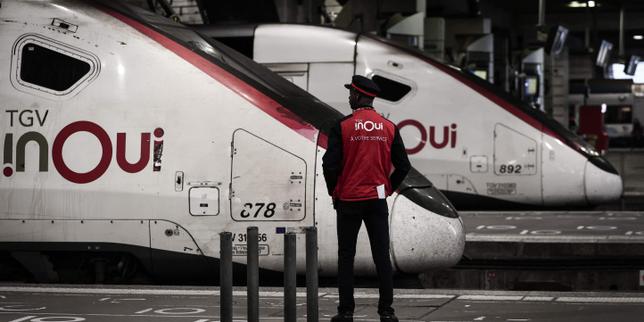
A quiet administrative green light in Rome has effectively invited a third player to the table. SNCF, the French rail giant, is no longer just a neighbor peering over the fence. They are moving in. By 2026, the TGV—that iconic silver and blue needle—will start claiming its share of the Turin-Milan-Venice and Turin-Rome corridors.
This isn't just a corporate expansion. It is a border war fought with seat pitch, Wi-Fi reliability, and ticket pricing.
The ghost in the ticket office
Consider a traveler named Marco. Marco lives in Turin but works in Rome. Every Tuesday, he plays a high-stakes game of digital poker with booking apps. He knows the exact moment prices spike. He knows which trains have the broken air conditioning in Carriage 7. To Marco, the entry of the French isn't a headline in a financial paper. It is the hope of a seat that doesn't cost a week's groceries.
The Italian high-speed market is already one of the most competitive in the world. When Italo launched years ago to challenge the state's Trenitalia, prices plummeted and ridership soared. It was a textbook victory for the consumer. But markets have a way of calcifying. Eventually, the two giants found a rhythm, a comfortable stasis that left room for a new disruption.
SNCF is that disruption. They aren't coming with a humble offering. They are bringing fifteen specially adapted TGV M trainsets, the "Avelia Liberty" models. These are double-decker behemoths designed to swallow crowds and spit them out across the peninsula.
The mechanics of an invasion
Winning a spot on the Italian rail network isn't as simple as driving a train across the border. The tracks are owned by RFI (Rete Ferroviaria Italiana), and they guard their "slots"—the specific times a train is allowed to run—with the jealousy of a Borgia.
SNCF had to prove more than just technical competence. They had to navigate a labyrinth of Italian bureaucracy that would make Daedalus weep. They committed to a ten-year framework agreement. That is a decade-long vow of presence. They aren't testing the waters; they are building a pier.
The technical hurdles are immense. Imagine trying to plug a French toaster into an Italian socket while traveling at 300 kilometers per hour. The signaling systems, the voltage transitions, and the safety protocols all require a seamless digital handshake between French engineering and Italian infrastructure. If a TGV stops dead on the tracks near Florence because it can't "talk" to the local computer, the dream dies before the first espresso is served.
Why the French are obsessed with the Boot
You might wonder why the French are so eager to jump into a crowded Italian market when their own domestic lines are already legendary. The answer lies in the map.
The "Milan-Rome" line is the golden goose of European rail. It is a straight, high-demand shot that connects the financial heart of the north to the political soul of the center. It is profitable. It is consistent. For SNCF, which has seen its domestic margins squeezed by rising energy costs and social strikes, Italy represents a fresh frontier where the tracks are already laid and the customers are already waiting.
There is also a sense of poetic justice at play. Trenitalia has already planted its flag in France, running Frecciarossa trains between Paris and Lyon. The French are simply returning the favor. It is a continental chess match where the pawns are commuters and the board is made of steel.
The invisible stakes for the planet
We often talk about high-speed rail in terms of business "synergy" or "market penetration." We should be talking about it in terms of kerosene.
Every time a TGV fills a double-decker carriage between Turin and Rome, a short-haul flight becomes less viable. The real loser in this French-Italian skirmish isn't Trenitalia or Italo; it’s the airlines. High-speed rail is the only genuine weapon we have against the carbon footprint of middle-distance travel.
When the French bring their capacity to the Italian line, they aren't just adding seats. They are adding "mass." The sheer volume of a double-decker TGV changes the math of travel. If you can move 600 people at once with the energy efficiency of a train, the luxury of a private jet looks increasingly like a relic of a selfish age.
The friction of reality
It won't be easy. The Italian public is fiercely loyal to their "Red Arrow" (Frecciarossa). There is a cultural pride in Italian design—the leather seats, the sleek nose of the train, the specific bitterness of the on-board coffee. Can a French operator capture the Italian "vibe"?
The French approach to rail is often seen as utilitarian and hyper-efficient. The Italian approach is about the experience. To succeed, SNCF cannot just be a French train in Italy. It has to become an Italian service that happens to be run by Frenchmen. They need to understand that a thirty-minute delay in Italy isn't just a logistical failure; it’s a personal affront to a passenger’s lunch plans.
The end of the monopoly of two
Competition is a cold word for a very warm human reality. It means the student can afford to go home for the weekend. It means the small business owner can reach a meeting in Naples without vibrating with stress over the cost of the ticket.
As the first French technicians begin testing the lines and the "Avelia" sets are prepped in the workshops, the landscape of the Mediterranean is shifting. The Alps are no longer a wall; they are a gateway.
We are entering an era where the nationality of the company matters less than the frequency of the departures. On the platform at Milan Central, the departure board is about to get a lot more interesting. The colors on the side of the train might change, but the rhythm of the rails remains the same: a low hum, a sudden rush of wind, and the blur of the Italian countryside disappearing into the wake of a machine that refuses to slow down.
The French are coming. The Italians are waiting. And the tracks, indifferent to flags, are ready to carry them both.
Think about the next time you stand on a platform, ticket in hand, watching the heat haze rise off the metal. You aren't just waiting for a ride. You are witnessing the final dissolution of the old borders, replaced by a single, high-speed network that cares more about where you're going than where you started.