When a head of state rolls into Paris with an entourage of cardinals, popemobiles, and tens of thousands of cheering faithful, you expect a Catholic country to roll out the red carpet. But France isn't just any country. It's a republic built on a strict, unyielding doctrine of state secularism known as laïcité.
Watching the French state manage a high-profile papal visit is like watching someone thread a needle during an earthquake. On one hand, you have a deeply rooted Catholic cultural matrix—complete with gothic steeples piercing the skyline of nearly every village. On the other hand, you have a constitutional mandate that insists the government treat all religions with absolute neutrality, keeping God strictly out of the affairs of the Republic.
Every time a pope crosses the border, it forces the entire nation to look in the mirror and argue about what secularism actually means. Does it mean locking faith out of the public square entirely, or does it mean protecting everyone's right to practice out in the open?
The 1905 Firewall
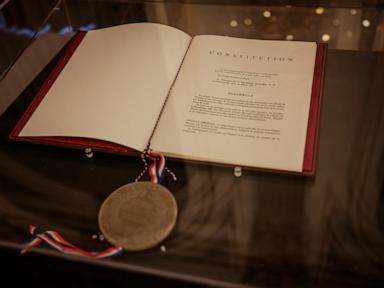
To understand why a papal visit causes such administrative and ideological gymnastics, you have to look back at the 1905 law on the separation of church and state. This wasn't a gentle handshake. It was a messy, hard-fought divorce born out of the French Revolution's bitter hostility toward the Catholic Church's historical grip on political power.
The rules laid down then still dictate modern life. The state owns and maintains thousands of historic religious buildings—including iconic structures like Notre-Dame—while local religious groups are left to finance their own newer places of worship.
Because of this rigid legal fence, welcoming a pope requires walking a tightrope of state protocol. When French presidents meet the pontiff, they have to carefully balance diplomatic courtesy with political survival. When Emmanuel Macron met with the Vatican or attended historic masses during papal stops, domestic critics were instantly primed to scream that he was breaching the sacred walls of laïcité. The defense is always the same: the president is there as a head of state greeting another head of state, or attending out of civic respect, not kneeling as a devotee.
Public Spaces and Political Friction
The tension spikes when millions of euros and massive public spaces are involved. Open-air masses held in the heart of cities like Paris—transforming iconic zones usually reserved for national military parades or soccer victories into massive altars—draw immediate pushback.
Critics argue that giving the Catholic Church exclusive, high-visibility access to national monuments elevates one tradition above the strict neutrality the republic preaches. Yet security forces must step in to protect and fund these massive gatherings because public safety remains a state obligation. It creates a glaring contradiction: a secular government spending taxpayer money and police resources to secure a massive religious spectacle.
Historians at the Sorbonne point out that France is trapped in its own historical paradox. Even the French president holds the ancient, honorary title of canon of the Basilica of St. John Lateran in Rome. You cannot strip centuries of Catholic history out of French identity just by passing a law, no matter how hard radical secularists try.
Why the Tension is Shifting
The cultural landscape is changing fast. With roughly half of the population reporting no religious affiliation and Islam representing a vibrant minority, the debate over laïcité isn't just about Catholicism anymore. It is constantly invoked in political fights over clothing, schooling, and public funding.
Yet when a pope visits, the reaction from the younger generation often surprises the cynics. Tens of thousands of young French citizens flood stadiums and torchlight processions not out of rigid political conformity, but because traditional consumer culture leaves them feeling hollow. In a hyper-secularized society, active faith has paradoxically become countercultural.
France will keep arguing over its boundaries. Politicians will keep tripping over protocol, and intellectuals will write endless columns about the soul of the republic. But the enduring dance between a fiercely secular state and an ancient religious tradition proves that laïcité isn't a dead rulebook—it's a living, breathing argument that flares up every single time a pope comes to town.