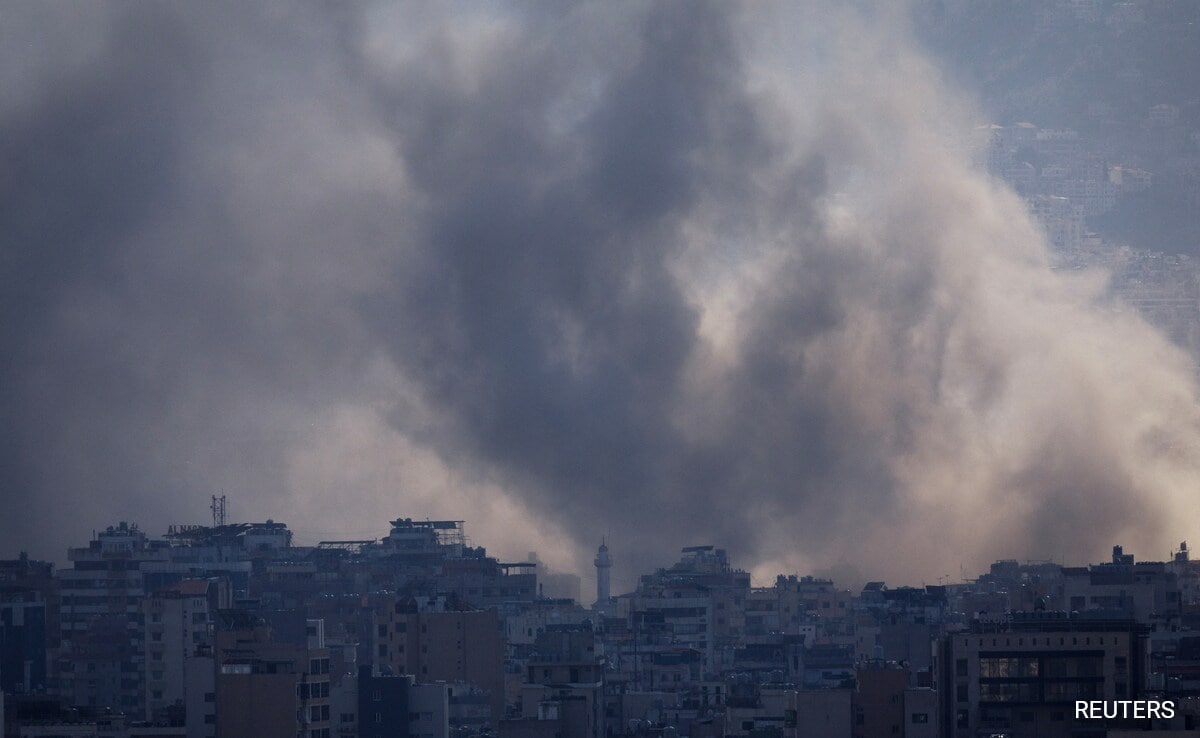
The recent signal from Beirut that Hezbollah has accepted a United States-backed proposal for a mutual halt to hostilities with Israel marks a seismic shift in the Levant, but it is not a guarantee of peace. For over a year, the border between southern Lebanon and northern Israel has functioned as a high-stakes laboratory for attritional warfare. This acceptance represents a tactical pivot born of necessity rather than a sudden conversion to diplomacy. By agreeing to the framework, the group seeks to stem the physical devastation of its southern strongholds while navigating an internal Lebanese political environment that is increasingly hostile to a never-ending war.
The core of the deal hinges on the enforcement of UN Resolution 1701, which mandates the removal of armed personnel from the region between the Blue Line and the Litani River. While the paperwork suggests a return to the status quo, the reality on the ground has changed fundamentally since 2006. Israel is no longer content with "quiet for quiet" if it means allowing a sophisticated arsenal to sit just meters from its northern communities. Hezbollah, conversely, cannot appear to be retreating under fire without losing its primary claim to "resistance" legitimacy.
The Litani Equation and the Enforcement Gap
The most significant hurdle remains the mechanism of verification. In previous years, the United Nations Interim Force in Lebanon (UNIFIL) acted as a buffer that frequently lacked the mandate or the will to confront armed units in the south. This proposal introduces a more muscular oversight role, reportedly involving a monitoring committee led by the United States and potentially France.
The strategic problem is simple. Hezbollah’s infrastructure is not just a collection of tents and trucks; it is an integrated network of tunnels, hidden launch sites, and civilian-embedded depots. Clearing this area requires more than a signature in Beirut. It requires a Lebanese Armed Forces (LAF) capable of exercising sovereignty in places where it has historically deferred to the "resistance." For the LAF to do this, it needs massive international financial support and a political green light from a Lebanese cabinet that remains deadlocked.
Israel’s demand for "freedom of action" remains the ultimate poison pill. Jerusalem insists on the right to strike if it detects a breach of the agreement. To Hezbollah and the Lebanese government, this is a non-starter that violates national sovereignty. The current proposal attempts to bridge this by emphasizing Lebanese state authority, but the ambiguity of what happens during a violation is exactly where the next conflict will likely ignite.
Why Hezbollah is Folding Now
Hezbollah’s decision to engage seriously with the American proposal is a reflection of intense pressure on three fronts. First, the military cost has been staggering. The loss of high-ranking commanders and the systematic destruction of its communication networks during the late summer left the organization reeling. While it remains a potent fighting force, the "command and control" layer has been thinned.
Second, the displacement crisis in Lebanon is a ticking time bomb. Over a million Lebanese, many from the group's own support base, are homeless. These people are not just collateral damage; they are the group’s social foundation. If they cannot return to their homes, the group’s domestic standing will continue to erode.
Third, Tehran is recalibrating. Iran’s broader regional strategy often involves "tactical flexibility" when its primary assets are at risk of total degradation. By allowing Hezbollah to step back from the brink, Iran preserves its most important deterrent on the Mediterranean for a future, perhaps more existential, confrontation. It is a preservation play.
The Internal Lebanese Friction
Inside Beirut, the mood is one of exhausted skepticism. Political rivals of Hezbollah, particularly the Christian and Sunni blocs, are wary of any deal that leaves the group’s weapons intact outside of the south. They fear that a ceasefire with Israel will simply allow Hezbollah to turn its focus back toward internal Lebanese politics, using its remaining military might to dictate the selection of a new president.
There is also the matter of the economy. Lebanon is a bankrupt state. Its infrastructure is crumbling, and its currency is a memory. The prospect of an expanded war promised total annihilation of what little remains. The acceptance of the US proposal is, in many ways, a plea for air.
The Role of the United States
The Biden administration has pursued this deal with a sense of urgency, viewing it as a necessary firewall to prevent a regional conflagration. By involving France, the US is trying to leverage historical ties to Lebanon to create a sense of international legitimacy. However, the American role is complicated by its total military support for Israel. In the eyes of many Lebanese officials, the US is not a neutral mediator but an active participant.
To make this work, the US has to provide more than just diplomatic cover. It must guarantee that the Lebanese army becomes a credible force. This means equipment, training, and—most importantly—paying the salaries of soldiers who currently earn less than a hundred dollars a month. Without a stable LAF, the south will remain a vacuum that Hezbollah will inevitably fill.
The Intelligence Shadow War
Even if the rockets stop falling, the intelligence war will continue. Israel has spent nearly two decades mapping southern Lebanon with a level of granularity that was previously unthinkable. The recent precision strikes against Hezbollah leadership show that the border is now transparent to Israeli sensors and cyber capabilities.
Hezbollah knows this. Any "withdrawal" will likely involve a transition to more clandestine operations. They will trade visible bunkers for deep-cover assets. This creates a permanent state of tension for the residents of northern Israel. Can they trust that the "halt to attacks" includes a halt to the digging of tunnels or the smuggling of components for precision-guided munitions?
The Risk of the "Silent" Breach
Ceasefires in this region rarely die in a single explosion. They die through a series of small, unpunished violations. A single drone flight. A small arms shipment hidden in a vegetable truck. A new observation post disguised as a civilian structure. If the monitoring committee does not have the teeth to call out these infractions immediately, the agreement will become another piece of paper that only serves to delay the inevitable.
The tragedy of the current framework is that it addresses the symptoms of the conflict—the rockets and the shelling—without touching the root cause. The root cause is a heavily armed non-state actor that operates independently of the government it ostensibly serves. As long as Hezbollah maintains an independent military wing capable of dragging the country into war, any peace will be an intermission.
Strategic Realignment in the Middle East
This ceasefire attempt also happens against the backdrop of a changing Middle East. The Abraham Accords and the potential for Saudi-Israeli normalization continue to loom over the region. Hezbollah’s primary function for its patrons in Iran is to disrupt this integration. By accepting a ceasefire, the group is signaling that it is currently too weak to lead the "Unity of Fields" strategy that Hamas hoped would ignite a total regional war.
This is a moment of profound vulnerability for the "Axis of Resistance." If the border goes quiet, the narrative of inevitable victory against Israel takes a massive hit. It suggests that there are limits to what asymmetric warfare can achieve when faced with a technologically superior adversary willing to use maximum force.
The coming weeks will reveal if the "mutual halt" is a genuine de-escalation or a tactical reload. History in Lebanon suggests the latter. The soldiers in the south are not packing their bags yet. They are watching the skies and waiting for the first sign that the diplomacy has failed, as it has so many times before. The silence on the border is not the sound of peace; it is the sound of two exhausted giants catching their breath. Small incidents will now carry the weight of national survival. A single stray shell or a misunderstood movement in the brush could collapse the entire diplomatic architecture in minutes. Everyone is waiting for the other side to blink. The reality is that both sides have already blinked, but neither wants to be the first to admit it.