The sirens in Kyiv do not sound like they used to. In the first terrifying weeks of the invasion, they were a raw, piercing howl of collective survival, a sound that forced millions into the damp embrace of concrete subway stations and bound a fractured society into a singular, unyielding fist. Today, the sirens are still there, slicing through the gray morning air, but the city has learned to live around them. People rush for coffee. Trams clank down the asphalt. The rhythm of daily life persists with a stubborn, desperate normalcy.
Yet, beneath that veneer of endurance, another kind of siren has begun to wail. It is silent, institutional, and infinitely more dangerous to the survival of the state than any incoming missile.
It is the sound of trust eroding from the inside out.
Imagine walking through a neighborhood where every single building bears the scars of shrapnel and blast waves. Now imagine learning that the foundation of those buildings was quietly hollowed out by termites long before the first shell ever fell. That is the reality facing Volodymyr Zelensky’s administration. While soldiers hold the line in the freezing mud of the Donbas, enduring artillery barrages that defy human imagination, the political architecture in the capital is trembling.
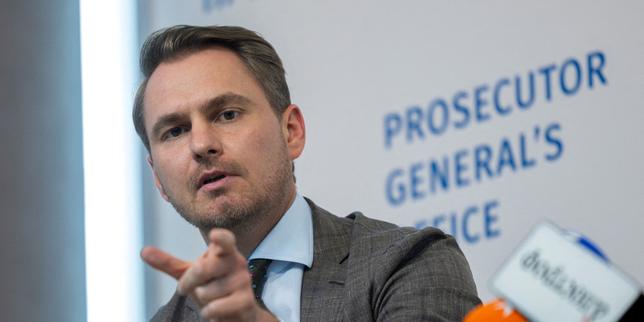
The immediate catalyst is simple on paper, yet seismic in practice. The prosecutor general has fallen.
In a functioning democracy during peacetime, the departure of a high-ranking legal official is a political earthquake. In a nation fighting an existential war for its very right to exist, it is a structural tremor that threatens to bring down the entire house. This was not a quiet resignation tucked away in a bureaucratic gazette. It was a violent collision between the desperate need for absolute unity and the chronic, cancerous rot of corruption that Ukraine inherited from its Soviet past—a ghost it has been trying to exorcise while simultaneously fighting off an empire.
To understand why this matters, you have to look past the sanitized language of diplomatic cables and international press briefings. You have to look at the ordinary citizen standing in a chilly kitchen in Dnipro, rationing electricity, wondering if the donation they sent from their meager savings actually bought body armor or ended up in the offshore account of some untouchable bureaucrat.
Corruption in wartime is not merely a financial crime. It is treason with a ledger.
When a prosecutor general steps down or is pushed out amid swirling scandals, it sends a chilling message to the trenches: We are bleeding so that others may steal. That thought is more corrosive than any Russian propaganda broadcast. It is a slow-acting poison that targets the nervous system of national morale.
For months, the Western allies who bankroll the state apparatus and supply the heavy weaponry have held a magnifying glass over Kyiv. Every euro, every dollar, every pallet of 155mm shells comes with an unspoken condition written in invisible ink: Clean your house, or we cannot justify defending it. It is a brutal paradox. A nation cannot fight a total war effectively with one hand tied behind its back, nor can it reform its entire judicial and prosecutorial culture overnight while rockets rain down from the sky.
Yet, the demands for accountability are non-negotiable.
Consider what happens next in the quiet offices of government ministries. The departure leaves a vacuum. Every appointment becomes a high-stakes chess match between factions desperate to protect their interests and reformers desperately trying to prove that the old ways died with the old regime. Zelensky built his entire political identity on being the outsider who would slay the dragon of systemic graft. He rode into office on a wave of popular fury against the elite, promising a clean break from decades of oligarchic plunder.
For a long time, the war shielded his administration from the harsher domestic criticisms. In the face of external annihilation, internal squabbles were shelved. The nation rallied behind the flag because the alternative was extinction.
But war does not suspend human nature; it magnifies it. The temptation to profit from chaos remains as old as humanity itself. When billions of dollars in international aid flow into a country fighting for survival, the gravitational pull on opportunistic actors is immense. The removal of the prosecutor general is a stark admission that the cancer is still spreading, and that even the inner sanctum of power is not immune to its reach.
This is where the human element breaks your heart.
Think of a thirty-year-old infantry commander named Oleksiy, currently holding a shattered treeline outside Bakhmut. He has lost half his platoon. He sleeps in a dugout filled with freezing mud, eating cold rations out of a tin. When he scrolls through his phone during a rare lull in the shelling, he reads about political infighting in Kyiv and high-level resignations over embezzlement schemes.
What goes through his mind is not strategic analysis. It is a cold, blinding rage.
That rage is the real threat to the political edifice. Volodymyr Zelensky knows this better than anyone. He is not just a wartime commander-in-chief managing generals and frontlines; he is a tightrope walker balancing on a frayed wire suspended over an abyss. On one side lies military defeat at the hands of an invading army that respects no borders and no laws. On the other side lies moral defeat from within—the realization that the country won the war against an external enemy only to lose its soul to internal corruption.
The departure of the prosecutor general is a symptom of a systemic fever. It proves that the cleansing fire of war has not yet burned away all the impurities. But it also proves something else, something vital. It shows that the system is still capable of rejecting the poison, even if the process is agonizingly public and profoundly destabilizing.
Democracies at war are messy. They leak. They argue. They tear themselves apart in broad daylight while authoritarian regimes hide their rot behind iron curtains of state media and silent purges. That messiness is a weakness, yes. It creates vulnerabilities that enemies can exploit. But it is also the ultimate source of strength. It means the citizens and the institutions still care enough to fight over the truth.
The political edifice is shaking, yes. The mortar is cracking under the immense weight of old habits and new temptations. Yet, in that violent stress test, the true contours of the nation are revealed. Not as a monolith, but as a living, breathing collection of flawed human beings desperately trying to build a future out of the ruins of the past.
The sirens will sound again tomorrow morning. The trams will run. And somewhere in a damp trench, a soldier will look up at the gray sky, wondering if the people back home are finally fighting the right war.