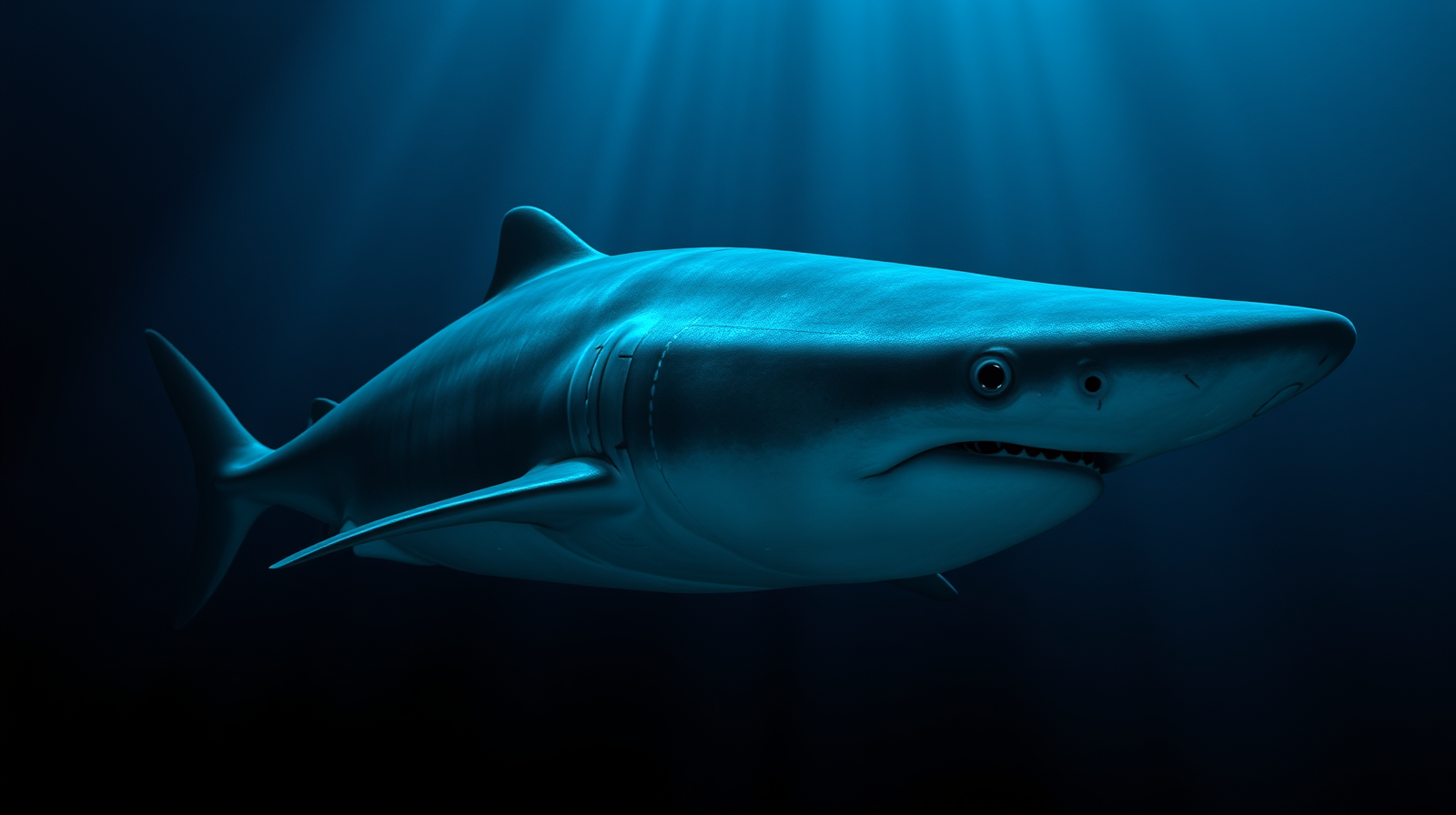
The secret to preventing human blindness is swimming slowly through the freezing waters of the North Atlantic. Marine biologists have discovered that the Greenland shark can live for more than four centuries, maintaining pristine ocular clarity without the cellular degradation that causes blindness in aging humans. By studying how these creatures prevent the proteins in their eyes from clumping together over hundreds of years, biomedical researchers are developing new therapies to halt cataracts and macular degeneration. This deep-sea anomaly provides a direct blueprint for overriding the biological clock of the human eye.
The Longest Lived Lens on Earth
To understand human vision failure, one must look at the bottom of the Arctic ocean. The Greenland shark grows at a rate of less than one centimeter per year, reaching sexual maturity only after a century of existence. Radiocarbon dating of their eye lenses has revealed specimens that have survived since the era of Galileo.
The vertebrate eye lens is a strange biological structure. The cells at the core of the lens are formed before birth and never get replaced. They do not regenerate. They have no blood supply and no genetic machinery to manufacture new proteins. The proteins you are born with are the exact same proteins you will use to read this sentence.
In humans, these proteins, known as crystallins, slowly unravel over several decades. They bump into each other, misfold, and stick together. This creates microscopic clumps that scatter light instead of letting it pass through smoothly. The result is a cataract, a cloudy film that eventually darkens the world entirely.
The Greenland shark solves this problem through an extraordinary feat of structural biochemistry. Its crystallin proteins remain perfectly folded, perfectly spaced, and completely translucent for four hundred years in near-freezing water.
The Chemistry of Eternal Clarity
Biochemists examining these sharks have isolated specific molecular chaperones that protect the eye from degradation. The extreme pressure and cold of the deep ocean usually cause proteins to denature, flattening out into useless, sticky strings. The Greenland shark counteracts this environmental hostility by maintaining high concentrations of a stabilizing compound called trimethylamine N-oxide, or TMAO.
TMAO acts as a chemical shield. It alters the behavior of surrounding water molecules, forcing the delicate crystallin proteins to stay tightly packed in their native, functional shapes.
But TMAO is only half of the story. The primary sequence of the shark’s crystallin proteins contains distinct structural variations compared to mammalian equivalents. Evolutionary pressure stripped these proteins of vulnerable sites where oxygen molecules could bind and cause damage. Because the deep-sea environment contains very little dissolved oxygen and the shark operates at a sluggish metabolic pace, the rate of oxidative stress is practically zero.
Humans live in an oxygen-rich environment, walk in intense ultraviolet light, and maintain a high body temperature. This accelerates the destruction of our eye proteins. By comparing the specific amino acid sequences of human crystallins with those of the Greenland shark, geneticists have mapped out the precise locations where human eye proteins are most likely to fail.
Transforming Marine Biology into Human Medicine
Pharmaceutical laboratories are using these marine discoveries to design a new class of small-molecule drugs. The objective is simple. Scientists want to mimic the stabilizing effects of the shark’s biochemistry inside the human eye.
Current treatments for cataracts are purely surgical. An ophthalmologist cuts into the eye, vacuums out the degraded, cloudy lens, and replaces it with a synthetic plastic disc. While highly successful, this intervention requires sterile surgical infrastructure, expensive medical hardware, and trained specialists. In developing nations, millions of people remain blind simply because they lack access to a clean operating room.
A topical eye drop that delivers synthetic protein stabilizers could eliminate the need for surgery entirely. These experimental compounds penetrate the cornea and bind directly to human crystallin proteins, mimicking the protective behavior of the shark’s natural compounds. Early laboratory trials on mammalian lenses show that these drops can actually reverse early-stage protein clumping, restoring transparency to a lens that has already begun to cloud over.
The Underfunded Frontier of Ocular Longevity
Progress remains slow due to logistical hurdles. Acquiring tissue samples from a creature that lives thousands of feet below Arctic ice sheets is an immense challenge. Researchers must collaborate with traditional fisheries or deploy specialized deep-sea research vessels to study specimens that have died inadvertently as bycatch.
The medical establishment has historically favored lucrative surgical solutions over preventative biochemical therapies. The global market for intraocular lenses and cataract surgery equipment generates billions of dollars annually. Introducing a low-cost, self-administered eye drop threatens established economic models within vision care networks.
Yet, the scientific imperative is undeniable. The global population is aging rapidly, and the incidence of age-related blindness is projected to triple over the next three decades. The economic burden of vision loss destroys productivity and places an immense strain on public healthcare systems.
Beyond Cataracts to Macular Protection
The benefits of this research extend beyond the lens to the retina itself. The back of the human eye relies on specialized photoreceptor cells that consume vast amounts of energy. As we age, metabolic waste accumulates behind these cells, leading to macular degeneration.
Greenland sharks possess a specialized metabolic pathway that allows them to process metabolic byproducts without generating toxic waste material. Their cells utilize a highly efficient waste-disposal mechanism known as autophagy, which breaks down cellular garbage before it can accumulate and cause damage.
Applying these metabolic insights to human retinal health could unlock methods to accelerate waste clearance in human photoreceptors. Preventing the accumulation of cellular debris would effectively halt the progression of dry macular degeneration, a condition that currently has no definitive cure.
The answers to human ocular decay do not lie in complex digital hardware or synthetic implants. They are written into the ancient DNA of an apex predator that has spent centuries navigating the dark, frozen trenches of the world. Understanding how this animal preserves its vision is the most direct path to ensuring humans can protect their own for a lifetime.