Silence.
In an airport terminal, silence is never peaceful, because an airport is a machine built entirely out of kinetic noise—the rhythmic thud of rolling luggage over terrazzo tile, the pressurized hiss of espresso machines, the endless, hollow chime of gate announcements bleeding into one another like static. When that machine suddenly stops humming, the quiet hits your eardrums like a drop in cabin pressure.
I remember standing near Gate B14 at Chicago O’Hare during a similar nationwide freeze a few years back, holding a lukewarm paper cup of coffee and watching the departure boards flicker. One by one, rows of crisp white destination cities turned amber, then red. No thunder rattled the terminal windows. No blizzard choked the runways outside. The sky above Illinois was a flat, innocent blue, yet forty-five thousand feet of airspace had just been locked from the outside.
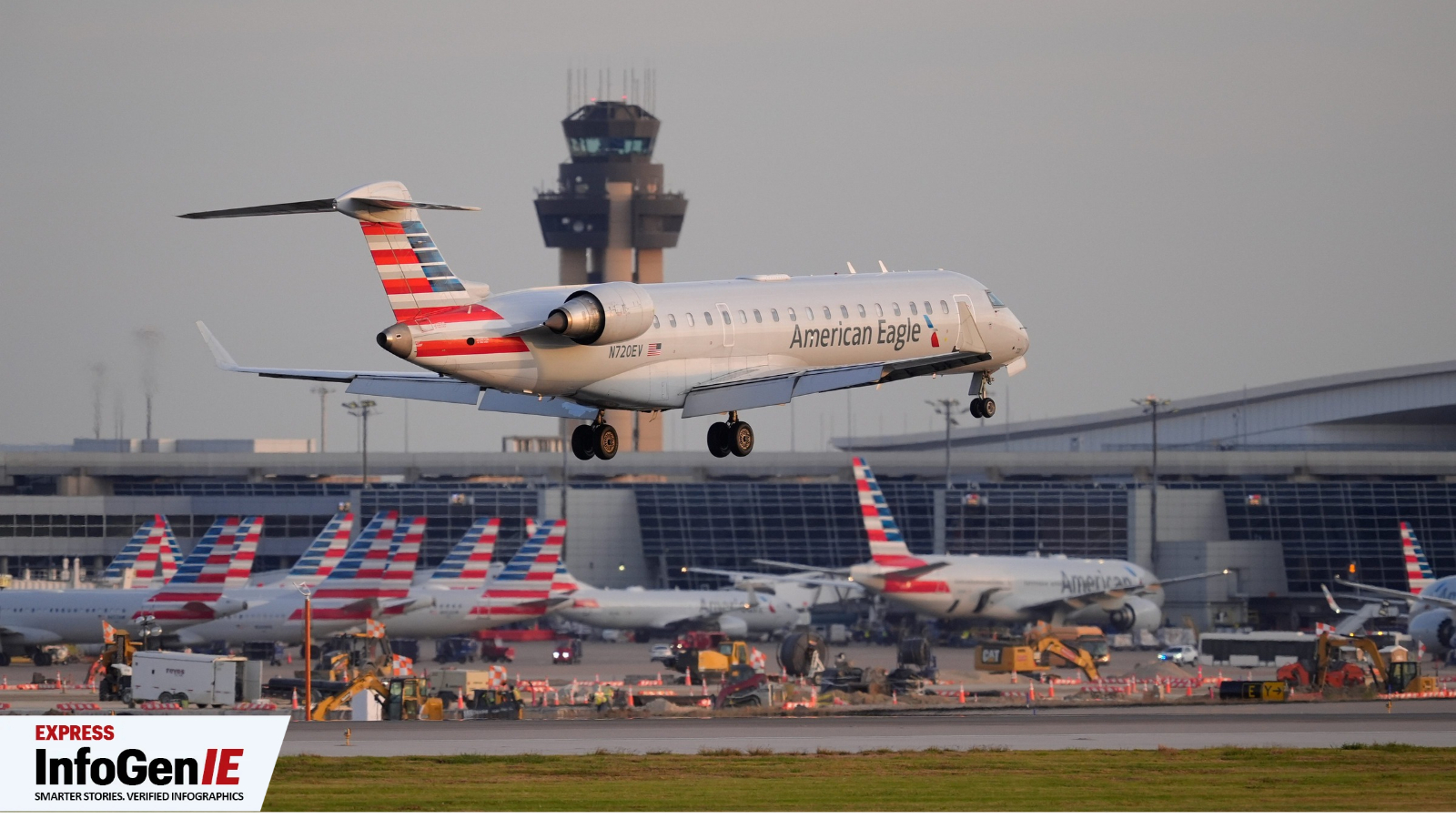
When the Federal Aviation Administration lifted its four-hour nationwide ground stop, the headlines treated the event like a cleared traffic jam on an interstate highway. Planes were grounded; systems were rebooted; departures resumed. Neat. Tidy. Resolved.
That clinical summary misses the entire point of what happened during those two hundred and forty minutes. A nationwide ground stop is not merely a scheduling inconvenience for airline executives or a statistical blip in on-time performance metrics. It is a sudden, terrifying x-ray of the invisible nervous system holding modern civilization together—and a stark reminder of how little margin for error we have left ourselves.
The Anatomy of a Four-Hour Freeze
To understand why a four-hour halt sends shockwaves across an entire continent for days, you have to stop thinking of commercial aviation as a collection of individual flights and start seeing it as a single, continuous clockwork mechanism.
Every commercial jet in the United States is essentially a flying relay baton. A Boeing 737 does not simply fly from Dallas to Denver and call it a day. It wakes up in Miami, hops to Atlanta, turns around in forty-five minutes for Chicago, pushes on to Seattle, and finishes its shift in Phoenix past midnight. The pilots, the flight attendants, the catering trucks, the de-icing crews, and the gate agents are all choreographed to that exact, unforgiving rhythm.
Now consider a hypothetical traveler—let’s call her Elena—sitting at Gate C22 in Charlotte, clutching a garment bag holding a navy suit for a residency interview in Boston. Her flight is scheduled to leave at 7:15 AM. Across the aisle sits Marcus, a biomedical courier with a temperature-controlled cooler strapped to his wrist, transporting harvested bone marrow destined for a pediatric transplant ward in Minneapolis.
At 6:50 AM, the FAA issues a nationwide ground stop.
For the first twenty minutes, nobody panics. People check their watches, sigh, and open their laptops. An hour passes. The gate agent’s microphone clicks on with that familiar, practiced cadence of corporate reassurance, offering no concrete timeline because the agent in Charlotte knows no more than the passenger in seat 14F. By hour two, the terminal carpets are covered in sitting bodies. Outlets become contested territory. By hour three, the air in the concourse smells faintly of stale sweat, cooling pretzels, and rising dread.
During those four hours, thousands of flights across the country remained pinned to the tarmac or locked at their gates. Planes already in the air were permitted to land safely, guided down by air traffic controllers working with heightened vigilance, while every outbound aircraft stayed frozen in place. Why? Because when the central nervous system of the National Airspace System falters—whether due to a corrupted database file, a telecommunications failure, or a critical software outage—safety demands an immediate, total stop. You do not drive a car at seventy miles an hour while the dashboard gauges are flickering out. You pull onto the shoulder until the instruments tell the truth again.
The Invisible Dominoes Behind the Curtain
People often ask why a four-hour delay can ruin travel plans for an entire weekend. Why doesn't the system simply pick up right where it left off once the FAA gives the all-clear?
Think of the sky not as an open ocean, but as a narrow, multi-lane highway made of invisible corridors, altitude slots, and strict separation rules. When the FAA lifts a ground stop, they cannot simply wave a green flag and launch four thousand jets simultaneously. Air traffic control centers have to meter the flow, releasing aircraft in carefully spaced waves so the skies over New York, Atlanta, and Los Angeles do not become dangerously congested.
Meanwhile, a quieter crisis unfolds inside the airline operations centers.
Federal law strictly regulates how many hours pilots and flight attendants can remain on duty without rest. Those rules exist for an obvious, vital reason: exhausted crews make fatal mistakes. While Elena and Marcus waited in the Charlotte terminal, the clock on their flight crew’s legal workday kept ticking. Even though the plane never moved an inch, the pilots were burning through their duty window.
Fifteen minutes after the ground stop was finally lifted, the gate agent picked up the microphone again. The flight wasn't delayed anymore. It was canceled. The crew had "timed out."
That is the hidden math of aviation disruption. A four-hour system outage does not create a four-hour delay; it triggers a cascading collapse of crew schedules, maintenance windows, and airport gate availability. Planes end up in cities where they aren't supposed to be. Pilots are stranded in hotels three states away from the jets they are scheduled to fly the next morning. For Elena, the cancellation meant missing the residency interview she had spent four years of medical school preparing for. For Marcus, it meant scrambling onto a regional commuter prop plane and a frantic, siren-escorted ambulance transfer across Minnesota to beat the biological expiration clock on the cooler handcuffed to his wrist.
Why Our Sky Runs on Borrowed Time
It is tempting to look at an event like this and blame a single glitch, a lone software engineer, or an unlucky morning at headquarters. That comfort is an illusion.
For decades, the American aviation infrastructure has operated like an aging Victorian mansion that someone keeps retrofitting with smart-home thermostats and fiber-optic cables. Beneath the sleek mobile boarding passes and real-time flight-tracking apps lies an astonishing amount of legacy architecture—mainframes running code written when cassette tapes were cutting-edge consumer electronics, stitched together with modern patches and redundant workarounds.
Every year, air traffic volume climbs higher. Airlines pack schedules tighter, trimming turnaround times between flights down to thirty-five or forty minutes to squeeze maximum utilization out of billion-dollar fleets. When everything runs smoothly, the efficiency is breathtaking. Roughly forty-five thousand flights move nearly three million people across the United States every single day with a safety record that would have seemed miraculous a century ago.
Yet hyper-efficiency has a dark twin: brittleness.
When you remove all the slack from a rope, any sudden tug snaps it. By optimizing every gate, every runway slot, and every crew rotation to run at ninety-eight percent capacity, the industry eliminated the buffer that used to absorb minor shocks. Thirty years ago, if a system hiccuped for four hours, airlines had spare aircraft sitting idle at major hubs and reserve crews waiting on standby. Today, spare planes sit in desert storage facilities because an airplane on the ground loses money every minute its wheels aren't spinning.
I admit, whenever I board a flight now, I feel a strange split-screen sensation. Part of me marvels at the sheer human ingenuity required to lift two hundred tons of aluminum and composite fiber into the stratosphere and set it down softly three time zones away. Another part of me stares at the tiny blinking cursor on the gate agent’s terminal screen and wonders how many lines of thirty-year-old code stand between an ordinary Tuesday and total paralysis.
What Happens When the Ground Stop Lifts
The moment the FAA lifts a nationwide ground stop, a strange choreography begins across hundreds of control towers.
Inside darkened radar rooms, controllers lean forward over glowing green and amber scopes, their voices clipped, calm, and remarkably steady as they begin threading thousands of aircraft back into the sky. Out on the tarmac, ground crews in neon vests hurry toward nose wheels with tow bars. Inside the cabins, the overhead bins slam shut in a wave rolling from first class to the back row, followed by the unmistakable, welcome whine of turbine engines spooling up.
For passengers, the relief is visceral. Strangers who spent three hours guarding adjacent electrical outlets suddenly trade wry smiles and help hoist each other’s carry-on bags into tight compartments. The machine is waking up again.
Yet if you want to survive the next time the sky goes quiet—and given the strain on our aging infrastructure, there will be a next time—you cannot rely on airline customer service desks to rescue you when the boards turn red. When four thousand flights freeze at once, five hundred people will stand in a single rebooking line while the airline’s phone hold times stretch past four hours.
The travelers who make it home during a systemic meltdown understand three quiet truths before they ever pack a bag:
- First, book the earliest flight of the morning whenever stakes are high. The aviation network starts each day clean, with planes parked at their intended gates and crews rested. Disruptions compound exponentially after noon; a 7:00 AM flight has a fighting chance of recovering from a ground stop, while a 6:00 PM flight is almost always the first sacrificial lamb canceled to reset the schedule for tomorrow.
- Second, treat airline apps as dispatch consoles, not boarding pass holders. The second a ground stop is announced, open the app and look for alternative routings through secondary hubs before the general crowd realizes the flight will likely cancel. By the time the gate agent announces a cancellation over the intercom, the remaining seats on later flights have already been claimed by passengers staring at their screens.
- Third, never check anything inside a suitcase that you cannot afford to lose for seventy-two hours. When planes and crews scatter out of position across the country, luggage carts sit exposed on tarmacs and routing tags detach in the chaos. Medications, critical documents, chargers, and one change of clothes belong on your back, never in the cargo hold.
The Sound of Engines Returning
Hours after the FAA lifted the hold, the departure boards across the country slowly bled back from red to green. The delayed flights pushed back from their gates, lined up nose-to-tail along the taxiways like patient silver whales, and lifted off one by one into the afternoon haze.
Down on the ground, terminals emptied out. Cleaning crews swept up discarded coffee cups and crumpled snack wrappers. By the following morning, the news cycle had already moved on to other crises, filing the four-hour ground stop away as an inconvenience endured and forgotten.
Still, if you ever find yourself sitting beside a floor-to-ceiling terminal window, watching dozens of massive jets sit completely motionless on a clear, windless afternoon, pay attention to that sudden, unnatural quiet. Look at the thousands of strangers around you staring at their glowing phones, waiting for permission to move. You are looking at the exact boundary between human mastery and human fragility—a reminder that the entire modern world stays aloft only so long as the invisible threads holding it together do not snap.