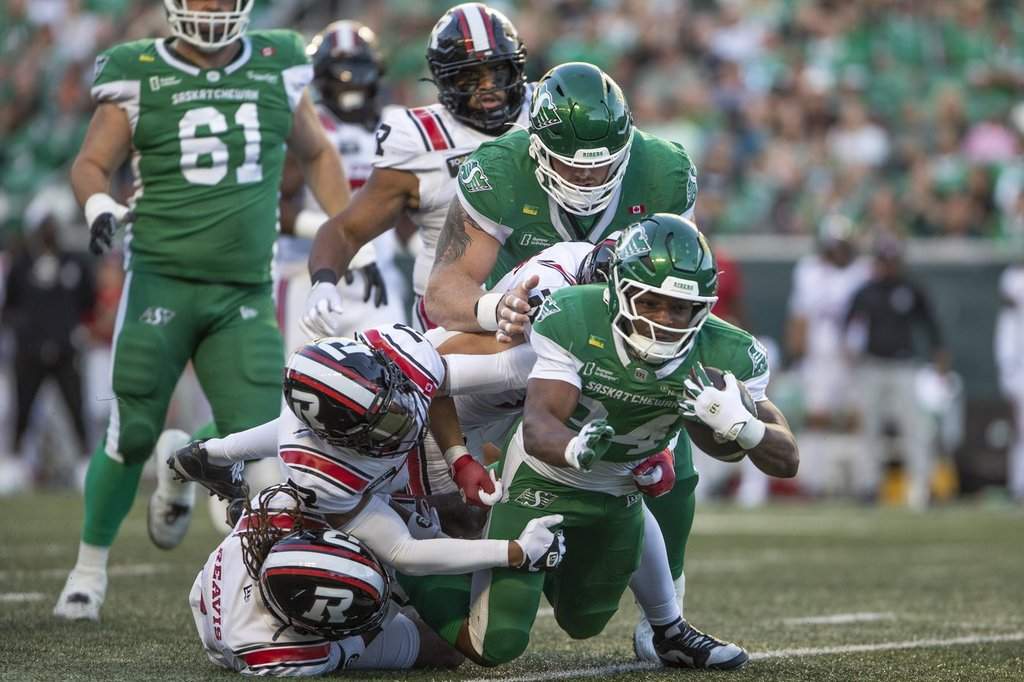
The box score tells a comforting bedtime story. Saskatchewan hangs forty-two points on Ottawa, cruises to a twenty-two-point margin of victory, and the casual observers pencil them in as legitimate contenders. Everyone looks at the final tally and nods along with the standard media narrative. The Roughriders rolled. The Redblacks are winless. Case closed.
Except anyone who actually spent the three hours watching the mechanics of that football game knows the truth. That blowout was a mirage.
I have spent over a decade watching front offices panic over superficial box scores while ignoring the underlying metrics that actually predict November success. When a team wins by twenty-two points and the local pundits pop champagne, my internal alarm bells ring. Wins hide flaws. Blowouts against hapless opponents hide fatal flaws under a mountain of garbage-time points and unsustainable variance.
Stop looking at the forty-two points. Start looking at how those points were manufactured.
The Myth of the Dominant Blowout
Let us clear up the basic misconception right out of the gate. A win is not a win. That is a cliché invented by coaches who need to protect fragile egos during Monday film sessions. In professional football, margin of victory against bottom-feeders tells you almost nothing about a roster's championship equity.
Against Ottawa, Saskatchewan benefited from short fields gifted by turnover regression, defensive busts that belong in a comedy reel, and a defensive line that feasted on an offensive front that was missing half its starters. If you take away the two explosive plays that came on blown coverages, the Riders' offensive efficiency metrics drop down to league average.
Imagine a scenario where the Roughriders play a disciplined defense that does not gift them forty yards of field position via undisciplined penalties. That forty-two-point explosion shrinks to twenty-four very quickly.
When you evaluate a team, you do not evaluate the peak of their performance against a zero-win disaster. You evaluate their floor. And Saskatchewan's floor in this game was horrifyingly porous. They allowed an Ottawa offense that has looked entirely inert all season to sustain drives, convert on third-and-long, and rack up yardage between the hashes that better teams will turn into touchdowns instead of field goals.
The Ottawa Trap
Let us talk about the Redblacks for a moment, because the narrative surrounding them is just as lazy. The consensus view is that Ottawa is a broken franchise from top to bottom, drifting aimlessly toward another lost winter.
That view is entirely superficial.
Ottawa is not failing because of a lack of talent. They are failing because of structural variance and terrible situational playcalling in the red zone. In the first half of this specific game, the Redblacks moved the chains effectively. They out-gained Saskatchewan in early-down efficiency for long stretches. But when you have a quarterback playing tentative football behind a makeshift protection scheme, every drive eventually stalls when the field shrinks.
The mistake analysts make is looking at the final score and assuming Ottawa was non-competitive. They were competitive until fatigue and self-inflicted wounds cracked the dam in the fourth quarter. If you are a Saskatchewan fan, walking away from this game thinking your team solved its pass-protection issues is malpractice.
The Metrics That Actually Matter
Let us break down what a real contender looks like compared to what the Roughriders put on display.
- Net Efficiency on First Down: Championship teams dictate terms on first down. Saskatchewan lived in second-and-long situations for much of the first half, relying on individual brilliance from playmakers to bail out stagnant play design.
- Pressure Rate Without Blitzing: If your front four cannot generate consistent disruption against a bad offensive line without selling out with extra rushers, good quarterbacks will dissect you in the playoffs.
- Red Zone Conversion Rate: Settling for field goals against Ottawa is a mild annoyance. Settling for field goals against Winnipeg or Toronto is a death sentence.
The Roughriders converted yards into points at an unsustainable rate in this matchup. Regression is coming for them, and it is going to be violent.
The Danger of Believing Your Own Press Release
Coaches love to talk about momentum. It is the great security blanket of professional sports. Win ugly, win pretty, just stack the wins.
This is a trap.
When you blow out a winless team while committing mental errors, missing assignments in the secondary, and losing the time-of-possession battle for three quarters, your coaching staff faces a massive psychological hurdle. How do you correct mistakes after a forty-two-point win? You do not. Players tune out the film room critique when the scoreboard says they crushed the opponent.
I have seen locker rooms rot from the inside out because a blowout win masked systemic rot. Players stop communicating on defense because they got away with blown switches. Receivers run lazy routes because the defensive back bit on a double move against a secondary that quit in the fourth quarter.
Saskatchewan did not roll past Ottawa. They survived an untidy mess, capitalized on the opponent's catastrophic collapse, and slapped a coat of paint over a crumbling foundation.
If you are betting on this team to make a deep postseason run based on what happened on Saturday night, you are looking at the scoreboard instead of the sport. The real test is coming, and when it arrives, those hidden cracks are going to widen into canyons.
Fix the trench play, clean up the secondary communication, and stop pretending a blowout against a winless roster proves anything at all.
Until then, enjoy the hollow numbers.