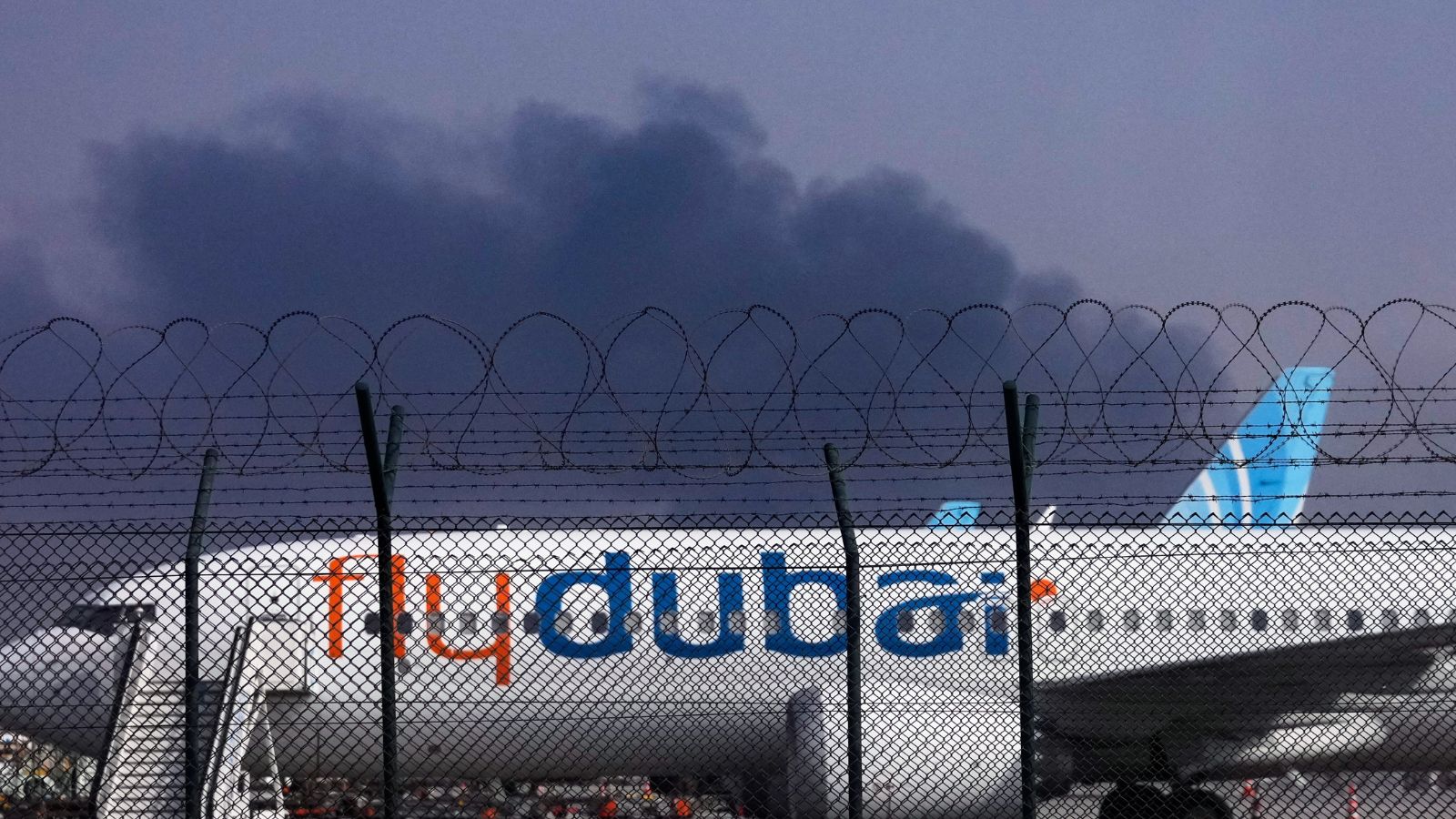
Commercial aviation safety operates on the assumption of redundancy, yet modern flight decks remain vulnerable to the convergence of human physiological breakdown, digital system confusion, and complex procedural anomalies. The incident involving flydubai flight FZ1073 serves as a diagnostic case study in how multiple low-probability failure modes can cluster into a high-threat environment. Deconstructing events like a declared Squawk 7500 emergency, crew incapacitation, and unusual vertical flight profiles requires isolating the operational layers: human factors, autoflight automation governance, and emergency response protocols under cognitive overload.
The Taxonomy of Cockpit Emergencies: Squawk 7500 and Crew Integrity
A transponder code of 7500 is universally designated to communicate unlawful interference or hijacking. However, operational protocols dictate that this code is frequently utilized, or evaluated for utilization, during extreme internal security breakdowns where a crew member or unauthorized individual compromises physical access to the flight deck. You might also find this related article useful: Why Every Panic Headline About Cabin Depressurization is Completely Wrong.
When an active threat manifests internally—such as the violent incapacitation or stabbing of a pilot—the immediate operational priority shifts from standard route navigation to a triadic survival framework:
- Aviate: Maintaining aircraft energy state via manual or automated flight director commands.
- Navigate: Preserving terrain clearance and avoiding restricted or congested airspace.
- Communicate: Transmitting intent silently via transponder squawk codes and discrete communication channels without escalating the threat environment inside the cockpit.
The presence of a wounded or incapacitated crew member fundamentally degrades the two-person flight deck verification loop. Commercial transport category aircraft are certified under the premise of cross-monitoring: Pilot Flying executes while Pilot Monitoring verifies instrument cross-checks, altitude calls, and checklist execution. When one pilot is physically removed from the operational loop due to trauma or medical emergency, the surviving pilot experiences an immediate spike in cognitive load, moving from a supervisory management role back to single-pilot task execution while simultaneously managing a severe cabin or cockpit crisis. As reported in recent coverage by Lonely Planet, the results are widespread.
Automation Governance During High-Stress Flight Profiles
A sudden nosedive or extreme vertical speed excursion—whether induced by manual inputs during a physical struggle or by aberrant autopilot behavior following sensor disruptions—tests the structural limits of transport category aircraft. Modern fly-by-wire architectures incorporate flight envelope protections designed to prevent overspeed, high angle of attack stalls, and excessive structural load factors.
However, these protections assume rational inputs or standard system degradation. If a physical altercation occurs on the flight deck, control column inputs can conflict with automation modes. A classic failure mode in such scenarios is the phenomenon of control forces fighting the autopilot or inducing mode disconnects without immediate crew awareness.
When an aircraft transitions rapidly from cruise altitude into an uncommanded or recovery-driven descent profile, the immediate kinetic challenge involves managing Mach limits and dynamic pressure. The structural integrity of a narrow-body aircraft, such as a Boeing 737 variant, is governed by V-speeds and operational g-load limits. An abrupt nose-down pitch input requires immediate recognition, positive kinetic energy management, and smooth control application to avoid exceeding structural flutter margins or overstressing the airframe during recovery.
The Decision Matrix for Diversion and Air Traffic Management Integration
When a flight declares an emergency or exhibits erratic telemetry over regions with complex geopolitical and airspace architectures, such as Saudi Arabia, air traffic control (ATC) units face a specialized coordination challenge. The standard operating procedure for an aircraft squawking 7500 involves clearing surrounding airspace, granting priority routing, and avoiding intercept vectors unless hostile intent is definitively confirmed by state military authorities.
The operational friction points in such a scenario include:
- Radio frequency congestion and the transition between VHF and satellite communications.
- Ambiguity regarding whether the transponder code represents an active hijacking, a rogue actor, or a severe medical/security emergency contained within the flight deck.
- Coordination between civilian area control centers and military defense networks regarding intercept protocols and safe corridors for emergency landing.
An emergency descent over regional airspace necessitates rapid altitude reassignment, coordination with descending traffic, and the pre-positioning of emergency medical and security services at the designated diversion airfield. The success of this operational pipeline depends entirely on the clarity of non-verbal signals—such as transponder manipulation—when voice communication is compromised or unavailable due to cockpit hostilities.
Systemic Vulnerabilities and Mitigation Vectors
The flydubai FZ1073 event highlights enduring vulnerabilities in commercial aviation security and crew resource management. While fortified cockpit doors introduced after historical security paradigms successfully prevent unauthorized external entry, they simultaneously create an internal containment zone. If a threat originates from within or if a rogue element breaches the barrier—or if a crew member suffers a sudden medical or behavioral crisis—the physical architecture of the modern flight deck impedes external assistance.
Mitigating these systemic risks requires evaluating three structural adjustments:
- Enhanced psychological and physiological screening frameworks for flight crew to identify acute behavioral anomalies before flight departure.
- Improved internal cockpit monitoring and override protocols that allow ground operations or unaffected crew members to diagnose physical struggles via cabin-to-cockpit visual feeds without compromising flight deck security.
- Refined single-pilot cockpit resource management training, acknowledging that the sudden loss or incapacitation of a co-pilot demands automated checklists and simplified flight path recovery modes that minimize cognitive burden during an active crisis.
The resilience of commercial aviation relies not on eliminating anomalies, but on designing systems that maintain structural and operational integrity when the human-machine interface breaks down under extreme operational pressure.