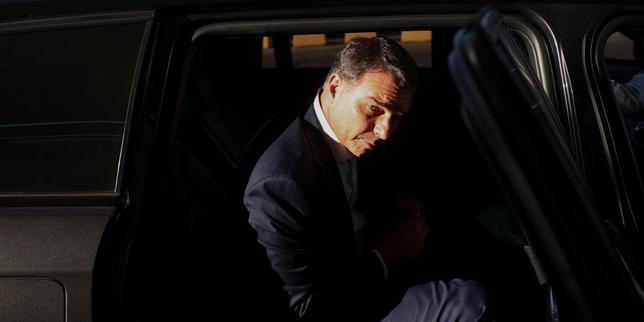
You can't build a clean presidential run on dirty laundry. Flávio Bolsonaro, the eldest son of Brazil’s former right-wing president, is learning this lesson the hard way. While his inner circle pushes him toward a 2026 presidential bid, a fresh wave of financial scrutiny has effectively stalled his momentum. The market is nervous, and the public isn't buying the selective amnesia.
The strategy was simple. His legal team managed to get the infamous rachadinha (salary-splitting) evidence thrown out on technicalities in 2021. They thought the ghost was busted. Instead, recent financial developments and resurfaced investigations are reminding voters that legal technicalities don't equal innocence. If you want to run for the highest office in Latin America’s largest economy, you need more than a dismissed court case. You need trust. Right now, Flávio has empty pockets in that department.
The Fraud Case That Refuses to Stay Buried
The political strategy of the Bolsonaro clan usually involves aggressive counter-attacks and media smoke screens. That tactic isn't working as well this time around. LatinFinance recently highlighted a sprawling fraud scandal linking the business-friendly presidential hopeful to a disgraced rogue banker. The fallout shook Brazilian markets, proving that the business sector remains highly sensitive to stability and transparency.
To understand why this matters, look at the scale of the original allegations. The Rio de Janeiro public prosecutor's office initially pegged the rachadinha scheme at over 6 million reais in diverted public funds. The mechanics were brutally basic. Pocketing parts of the salaries of your own legislative aides is a terrible look for a family that swept into power on a fierce anti-corruption platform.
The primary operator of this scheme was Fabrício Queiroz, a former military police officer and long-time fixer for the family. Millions of reais moved through accounts in fragmented, small cash transactions. This wasn't a one-off mistake. Investigators mapped out a decade-long pattern running from 2007 to 2018 while Flávio served as a state deputy in Rio. When the Federal Supreme Court (STF) and the Superior Court of Justice (STJ) annulled the prosecution's evidence due to jurisdictional and procedural errors, the family celebrated. They declared total vindication.
They were wrong. Legal technicalities don't wipe away the paper trail in the court of public opinion.
Unanswered Questions and the Money Trail
The political damage doesn't stem from what the courts decided, but from what the public now knows. The formal closure of the case left massive, glaring holes in Flávio's financial narrative. Any serious journalist or political opponent will weaponize these gaps during a live debate. In fact, it's already happening.
During an appearance on the Inteligência Ltda. podcast, Flávio appeared visibly blindsided when pressed on the mechanics of his past finances. If you're planning a run for the presidency, you should probably have a better answer for your sudden wealth than claiming to be a generic car salesman.
Consider the hard numbers that the defense never actually disproved:
- The Cash Purchases: Between 2007 and 2009, Flávio acquired 12 commercial properties in the upscale Barra da Tijuca neighborhood of Rio. The total price tag hovered around 297,000 reais, almost entirely settled in physical cash.
- The Missing Withdrawals: Bank records showed that Flávio didn't make equivalent cash withdrawals from his personal accounts to fund these purchases. He had no declared outside income during this window. Where did the duffel bags of cash come from?
- The First Lady's Check: The financial web extended directly into the presidential palace. Queiroz transferred a 24,000-reais check to the former First Lady, Michelle Bolsonaro. Jair Bolsonaro claimed it was just a repayment for a personal loan. Nobody believed it.
This isn't just old news. It is a live political liability. The market's allergic reaction to recent reports linking Flávio to disgraced financial operators shows that investors are exhausted by the baggage. Brazil’s economic sector wants a predictable, right-wing reformer, not a walking subpoena.
The Real Cost of Political Baggage
I talk to voters who are desperately looking for an alternative to the current administration. They want fiscal conservatism, safer streets, and reduced state intervention. Flávio should be their natural choice. He has the name recognition and the institutional backing of the Liberal Party (PL).
The problem is the hypocrisy. You can't mimic your father's campaign gimmick of making gun gestures with your hands while promising to lock up criminals if your own history is tied to alleged salary theft. It dilutes the message. Even worse, early investigative threads linked the rachadinha proceeds to real estate developments controlled by Rio’s notorious paramilitary militias. That is a toxic association for a candidate running on a law-and-order platform.
Allies within the PL are quietly sounding the alarm. They know that running a candidate with this much structural damage is a massive gamble. The opposition doesn't need to prove guilt in a court of law. They just need to keep repeating the word rachadinha until the middle-class voters who swung the 2018 election decide to stay home.
Where the Bolsonaro Strategy Goes Next
If you are watching the Brazilian political landscape, don't expect Flávio to bow out gracefully. The family playbook relies on staying in office to maintain political immunity and leverage.
Watch the legislative maneuvers in Brasília over the next few months. Flávio will likely double down on his Senate duties, attempting to burnish his credentials as a serious policymaker while using his platform to attack the judiciary. The clan will try to frame any new financial inquiry as a coordinated witch hunt by political enemies.
Pay close attention to internal party polling. If the numbers show that his high rejection rates are dragging down down-ballot conservative candidates, the party leadership might force a pivot. They have other names on the bench who don't carry a decade's worth of financial baggage.
If you want to track how this plays out, watch the market indicators and the independent political polls out of Rio and São Paulo. The financial sector's nervousness is the real metric to follow. When the money gets scared, the political elite usually follows suit.