The old Lok Ma Chau crossing always smelled of exhaust and anticipation. If you stood there at three in the morning, under the harsh fluorescent lights that buzzed like angry hornets, you were trapped in a twilight zone between two worlds.
Consider a commuter like David. He is a fictional composite, but his routine is a reality shared by thousands. David lives in Shenzhen's Futian district because the rent does not swallow his salary whole, but his tech consulting job sits in the neon canyons of Central, Hong Kong. Every day, his life is chopped into fragments by geography, paperwork, and the stubborn friction of history.
Under the old system, David’s morning was a disjointed ritual. He would line up on the mainland side, present his papers, walk through a cavernous hall, board a yellow shuttle bus, cross the bridge over the Shenzhen River, disembark, and queue all over again under the jurisdiction of Hong Kong customs. Thirty minutes on a good day. An hour or more if a holiday weekend choked the veins of transit. Two distinct borders. Two separate sets of laws. One exhausting, repetitive headache.
That reality is dissolving.
On Friday, July 17, 2026, the Hong Kong Legislative Council passed a piece of legislation that sounds deceptively dry on paper: the Huanggang Port Hong Kong Port Area Bill. It is a title only a bureaucrat could love. Yet, hidden beneath the legal jargon is a profound rewrite of how human beings move between two of the most powerful economic engines on earth.
The core of the change is something called "co-location". It is a logistical sleight of hand, a legal fiction that bends geography to serve human efficiency.
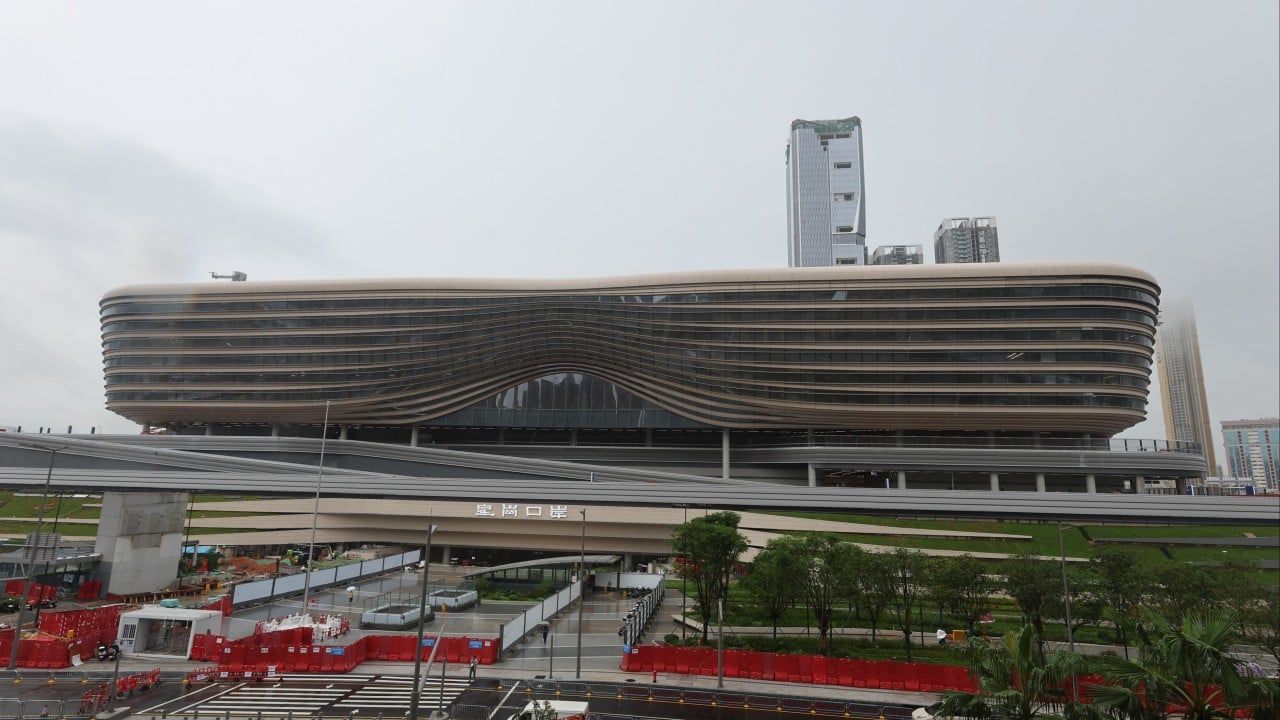
Starting July 31, 2026, the redeveloped Huanggang Port will officially house a designated "Hong Kong Port Area" right inside the physical structure located on the Chinese mainland. By a stroke of legislative pens, a slice of Shenzhen will operate under the jurisdiction of Hong Kong law.
The practical result? The dreaded double-clearance ritual is dead.
Instead, the new facility introduces a "collaborative inspection and joint clearance" model. You walk up to a single integrated checkpoint. Your documents are processed once. You step forward, and you are through.
The math of this shift is staggering. The average transit time is projected to plummet from thirty minutes down to just five. Five minutes. That is less time than it takes to order a latte at a busy coffee shop.
But numbers alone fail to capture the emotional reality of time returned to a human life. For someone like David, saving twenty-five minutes each way adds up to nearly four hours a week. That is four hours not spent shuffling between stanchions, four hours not staring at the brake lights of a shuttle bus, four hours reclaimed for sleep, for family, or for a quiet breakfast.
The sheer scale of this architectural and political jigsaw puzzle is immense. The new Huanggang Port spans nearly 700,000 square meters. The superstructure is largely complete, a massive monument of glass and steel where contractors from both sides of the river are currently installing the digital nervous system of the border—the servers, the biometrics, the communication networks that must bridge two complex administrative bureaucracies.
The facility is designed to swallow crowds, built to handle an initial flow of 200,000 passenger trips a day. When the future Northern Link Spur Line of the MTR eventually connects to it, that capacity will swell to 300,000. It will operate 24 hours a day, a sleepless gateway for a region that never turns off its lights.
It is easy to get lost in the triumphalism of infrastructure, to view this purely as a victory for the Greater Bay Area's economic integration. It is certainly that. But as a traveler who has watched these two cities evolve, I know the transition is also accompanied by a quiet, lingering anxiety.
The blurring of boundaries can feel disorienting. The idea that Hong Kong law applies inside a building sitting on mainland soil is a complex legal tapestry that requires an immense amount of trust and precise execution. The legislation explicitly handles everything from traffic management to the designation of local detention facilities within that specific zone. It is a stark reminder that borders are not just lines on a map; they are living institutions that dictate what you can carry, what you can say, and which court holds power over your actions.
Secretary for Security Chris Tang noted that before the public is allowed inside, the two governments will run exhaustive joint stress tests and emergency drills. They are searching for the friction points, ensuring that the transition from one jurisdiction to the other happens invisibly, without a single glitch in the code or a single misunderstanding between officers.
They must get it right. Because when the official opening date is finally announced, the thousands of people who walk through those doors will not be thinking about the constitutional mechanisms or the 15th Five-Year Plan.
They will be thinking about getting home.
They will walk into a mega-structure in Futian, scan their ID, step across a sleek gray floor, and suddenly find themselves legally standing in Hong Kong before they have even crossed the river. The border, once a physical wall that dictated the rhythm of their day, will become nothing more than a momentary pause in a unified stride.