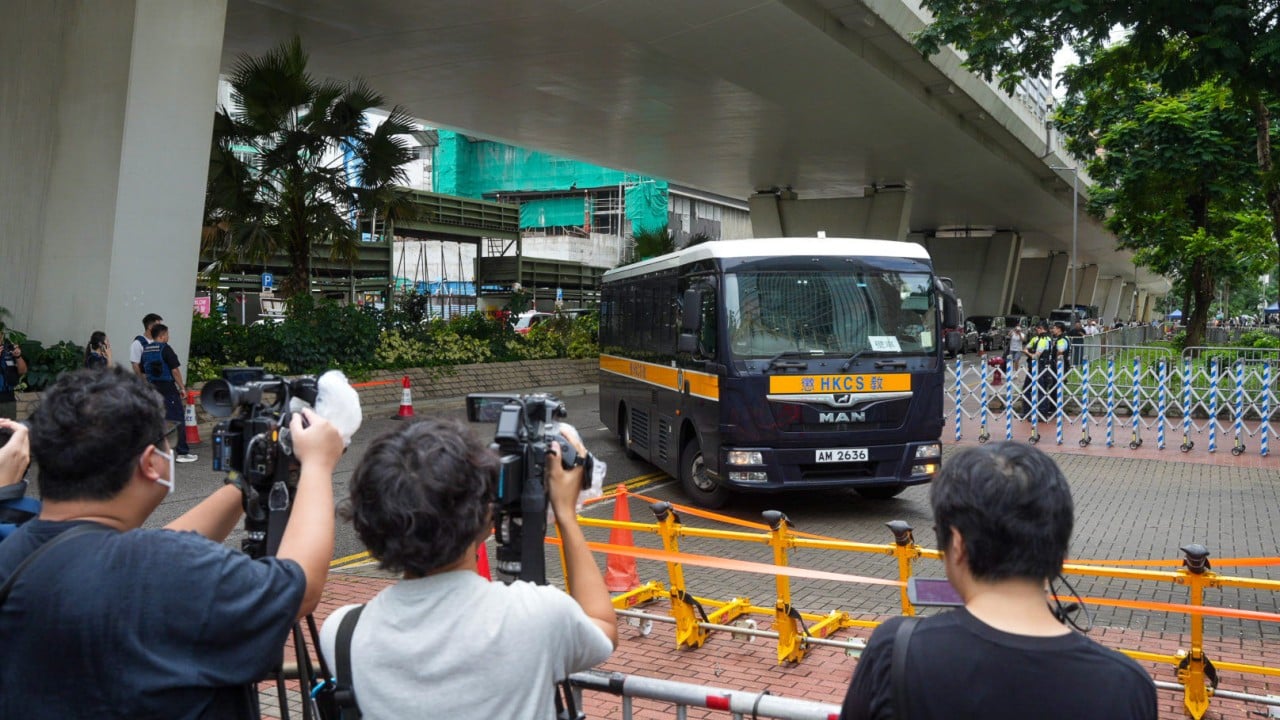
Hong Kong’s High Court recently delivered a landmark verdict convicting prominent pro-democracy activists Chow Hang-tung and Lee Cheuk-yan of inciting subversion under the Beijing-imposed National Security Law. The court targeted the former leaders of the Hong Kong Alliance in Support of Patriotic Democratic Movements of China for their peaceful decades-long advocacy, including their signature slogan seeking to end one-party rule. Western capitals immediately denounced the ruling as a fatal blow to freedom of expression, while local authorities hit back against what they termed foreign slander, insisting that national security enforcement is an internal matter. Beneath the diplomatic crossfire lies a fundamental reengineering of Hong Kong's legal DNA, transforming historical memory into an existential threat.
For thirty years, Victoria Park stood as an annual sanctuary. Tens of thousands gathered under the glow of candlelight to mark the 1989 Tiananmen Square crackdown, turning the former British colony into the sole place on Chinese soil where such remembrance was permitted. When the National Security Law arrived in 2020, that sanctuary was dismantled piece by piece. Banners were torn down, museum exhibits seized, and organizers placed behind bars. The recent trial of Chow, Lee, and co-defendant Albert Ho—who pleaded guilty earlier—did not center on violent insurrection. Instead, the prosecution rested on intent, ideas, and political vocabulary. Building on this idea, you can find more in: Why Vivek Ramaswamy is Winning Over Ohio.
The government-appointed panel of judges ruled that the peaceful slogan urging an end to one-party dictatorship inherently contravened the Chinese Constitution. The court argued that even without weapons or violent coordination, the defendants intended to undermine public confidence in the ruling party by drawing ideological parallels between historical crackdowns and contemporary governance. Legal analysts note that this sets a profound precedent. Moderation of method offers zero judicial protection if the underlying objective itself is classified as unconstitutional by a national security court.
Western governments framed the verdict as proof that the city's autonomous legal framework has been hollowed out. Statements from Washington, London, and Berlin emphasized that peaceful human rights advocacy should never constitute a crime. Local officials countered swiftly, rejecting outside interference and accusing foreign critics of hypocrisy and political bias. This rhetorical standoff reflects a deep structural split in how the city's evolution is interpreted globally versus locally. Observers at NBC News have also weighed in on this matter.
To international observers, the trial marks the death of pluralism in an Asian financial hub built on the rule of law. To Beijing and the administration in Hong Kong, the ruling represents a necessary stabilization effort, clearing away what they view as lingering subversion planted by external forces. The legal mechanics deployed here demonstrate that the boundary between dissent and sedition has been permanently erased.
As mitigation hearings and sentencing loom, the implications stretch far beyond the fate of aging activists and labor leaders. The courtroom doors have closed on an era where historical grievances could be openly debated. The lingering echoes of candlelight are now met with strict penal codes, leaving a silent city to navigate its new reality.