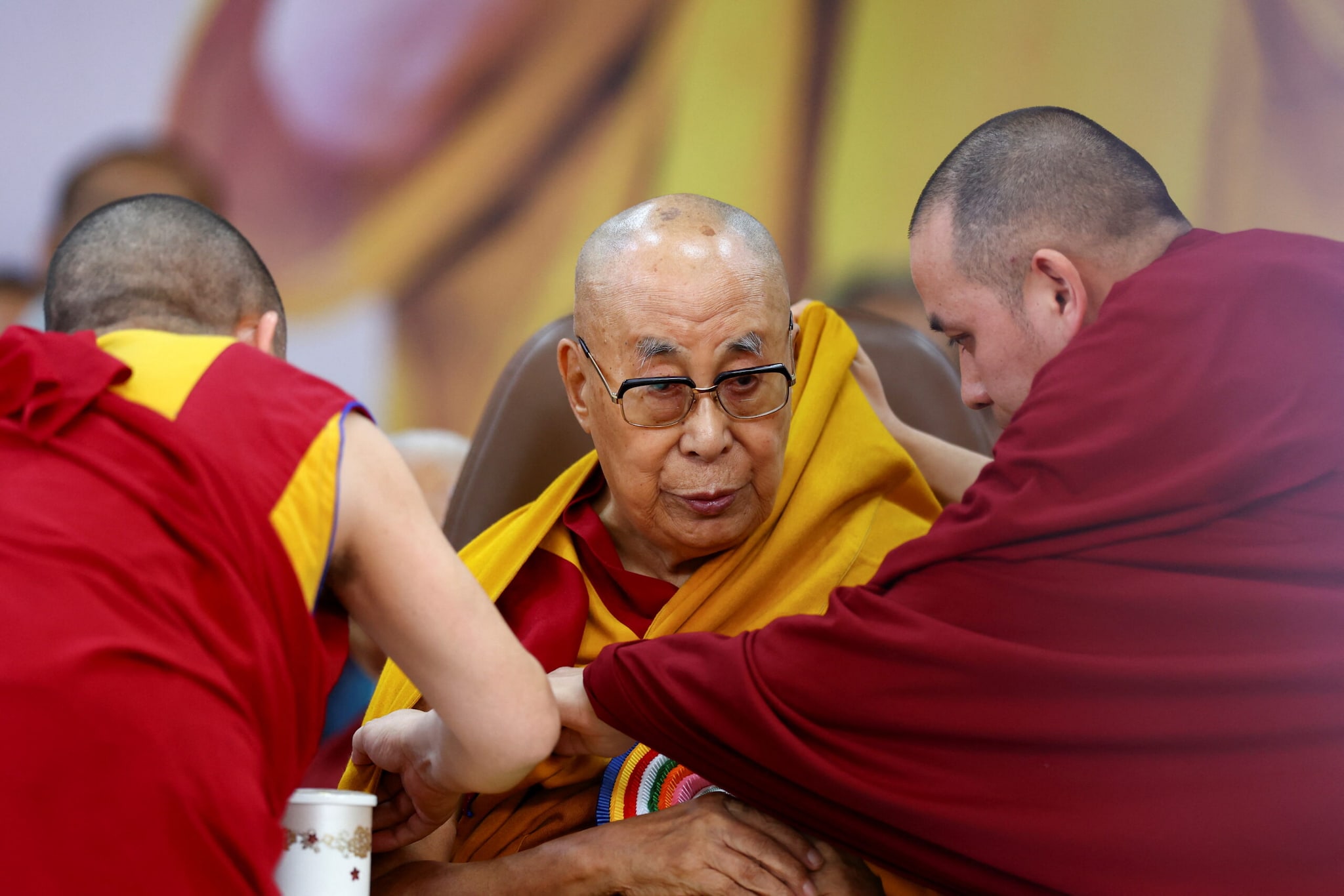
The battle for the soul of Tibetan Buddhism is turning into a cage match between Beijing and New Delhi. For decades, the question of who succeeds the 14th Dalai Lama was treated as a deeply spiritual, almost mystical issue. Not anymore. Today, it's a high-stakes geopolitical chess game that could fundamentally reshape Asian security.
When the Dalai Lama laid out his definitive succession plans, it triggered an immediate, furious response from Beijing. China wasted no time warning India to stay completely out of the reincarnation process, telling New Delhi to "act cautiously" or risk permanently tanking bilateral relations.
But here's what most mainstream news reports miss. This isn't just a boilerplate diplomatic spat over a religious figure. It's a fight over legitimacy, sovereignty, and who gets to control the future of a strategically critical Himalayan frontier.
The Reincarnation Tug of War
Let's look at what actually sparked this latest blowup. The 14th Dalai Lama, Tenzin Gyatso, made a massive announcement regarding his future reincarnation. He declared that the institution of the Dalai Lama will definitely continue, but with a massive catch for Beijing. Only the India-based Gaden Phodrang Trust, which he established in 2015, holds the legitimate authority to recognize his next incarnation.
Basically, he took the keys to his spiritual legacy and placed them firmly outside of China's reach.
Beijing's reaction was swift and aggressive. Chinese Foreign Ministry spokesperson Mao Ning fired back, claiming that any future Dalai Lama must comply with Chinese laws, historical conventions, and religious rituals. Specifically, Beijing insists on using a state-controlled search process that culminates in drawing lots from a "golden urn" before securing official approval from the central government.
Think about the sheer irony of this. You have an explicitly atheist communist party insisting it has the sole authority to regulate cosmic rebirth.
China's ambassador to India, Xu Feihong, even took to social media to double down on this stance. He claimed that while Beijing technically exempted the current Dalai Lama from the golden urn process back in the day, the 15th Dalai Lama absolutely must follow Chinese domestic regulations.
India Caught in the Crosshairs
The diplomatic friction escalated rapidly when Union Minority Affairs Minister Kiren Rijiju publicly backed the Dalai Lama. Rijiju, a practicing Buddhist from the border region of Arunachal Pradesh, openly asserted that the choice of the next incarnation belongs solely to the leader of Tibetan Buddhists and his designated institution.
Predictably, China lost its mind. Beijing viewed the minister's statement as a direct violation of India's long-standing commitments regarding Tibet, which China calls Xizang.
What happened next shows just how delicate this tightrope walk is for New Delhi. Recognizing the explosive nature of the issue, India's Ministry of External Affairs quickly tried to lower the temperature. MEA spokesperson Randhir Jaiswal issued a classic diplomatic pivot, stating that the Government of India doesn't take any position on matters of faith and religious practices. Rijiju himself had to walk back his comments slightly, clarifying that he was speaking strictly as a personal devotee and follower, not on behalf of the government.
This bureaucratic dance matters because New Delhi and Beijing are currently trying to patch up a deeply fractured relationship. Ever since the deadly 2020 border clashes in Eastern Ladakh, ties have been frozen solid. It took a high-profile meeting between Prime Minister Narendra Modi and Chinese President Xi Jinping at the BRICS Summit in Kazan to finally kickstart a fragile normalization process.
With both nations just beginning to pull back troops and even restarting the historic Kailash Mansarovar Yatra for pilgrims, New Delhi doesn't want a massive spiritual crisis to derail its hard-won border stability.
The Panchen Lama Blueprint
To understand why China is so obsessed with controlling this process, you have to look at their playbook from the 1990s. This isn't the first time Beijing has hijacked Tibetan reincarnation, and the precedent is terrifying for the Tibetan diaspora.
In 1995, the Dalai Lama recognized a six-year-old boy named Gedhun Choekyi Nyima as the 11th Panchen Lama—the second-highest priest in Tibetan Buddhism. The Panchen Lama plays a crucial role because he is traditionally part of the committee that identifies the reincarnation of the next Dalai Lama.
Within days of the announcement, Chinese authorities forcibly disappeared the young boy and his family. He hasn't been seen in public since, making him one of the world's longest-serving political prisoners. In his place, Beijing installed its own state-approved Panchen Lama, Bainqen Erdini Qoigyijabu, who routinely delivers speeches praising the Communist Party's rule over Tibet.
Human rights organizations, including Amnesty International, point to this historical abduction as absolute proof of Beijing's long-term strategy. By controlling the Panchen Lama, and by passing strict domestic laws like Order Number 5 in 2007, China has built a legal mechanism to legally manufacture its own puppet 15th Dalai Lama.
Two Dalai Lamas
We are looking at a highly probable future where the world will end up with two competing Dalai Lamas.
On one side, you'll have a child discovered by the Gaden Phodrang Trust, likely born in India, Nepal, Mongolia, or somewhere else in the free world. This child will be recognized by the Tibetan Central Tibetan Administration in Dharamshala and backed by Western democracies and India.
On the other side, Beijing will stage a highly choreographed ceremony with their golden urn, pull out a name, and declare a Chinese-born child as the official state-sanctioned Dalai Lama. They will control his education, his surroundings, and his public statements.
Penpa Tsering, the political leader of the Central Tibetan Administration, recently pointed out that Beijing doesn't care about the spiritual essence of "Living Buddhas." They only care about using the succession as a tool for political coercion.
This creates a massive logistical nightmare for India. Hosting a rival, legitimate Tibetan government-in-exile is already a permanent thorn in Sino-Indian relations. If the legitimate 15th Dalai Lama is born and raised on Indian soil, the geopolitical pressure on New Delhi will be immense. China will view every teaching, every public appearance, and every statement by that child as an existential threat to its sovereignty over Tibet.
The Real Stakes for Global Security
Stop looking at this as a purely religious disagreement. The succession crisis is directly tied to the militarization of the Himalayan borders. Tibet acts as a massive geographic buffer zone between the world's two most populous nuclear powers. By locking down the spiritual leadership of Tibet, China hopes to permanently legitimize its annexation of the region, effectively erasing Tibetan identity and solidifying its military footprint right up to India's northern borders.
India's strategy has always been to play the "Tibet card" carefully. New Delhi grants sanctuary to the Dalai Lama and over a hundred thousand Tibetan refugees, but officially recognizes Tibet as part of China. This ambiguous status quo is rapidly approaching its expiration date as the current Dalai Lama enters his 90s.
If you want to track where this conflict is heading next, look past the formal press releases from Beijing and New Delhi. Keep a close eye on the Gaden Phodrang Trust's upcoming global tours. Watch how countries like the United States and various European nations formalize their legal frameworks regarding Tibetan religious freedom. The US has already passed legislation stating that any Chinese official who interferes in the succession process will face economic sanctions.
The immediate next step for international observers is to monitor whether India quietens its public support to protect the current border disengagement, or if it quietly helps the Tibetan leadership secure international consensus before the transition period begins. The spiritual succession of Lhasa is no longer confined to the monasteries; it is being negotiated in the war rooms of Beijing and New Delhi.