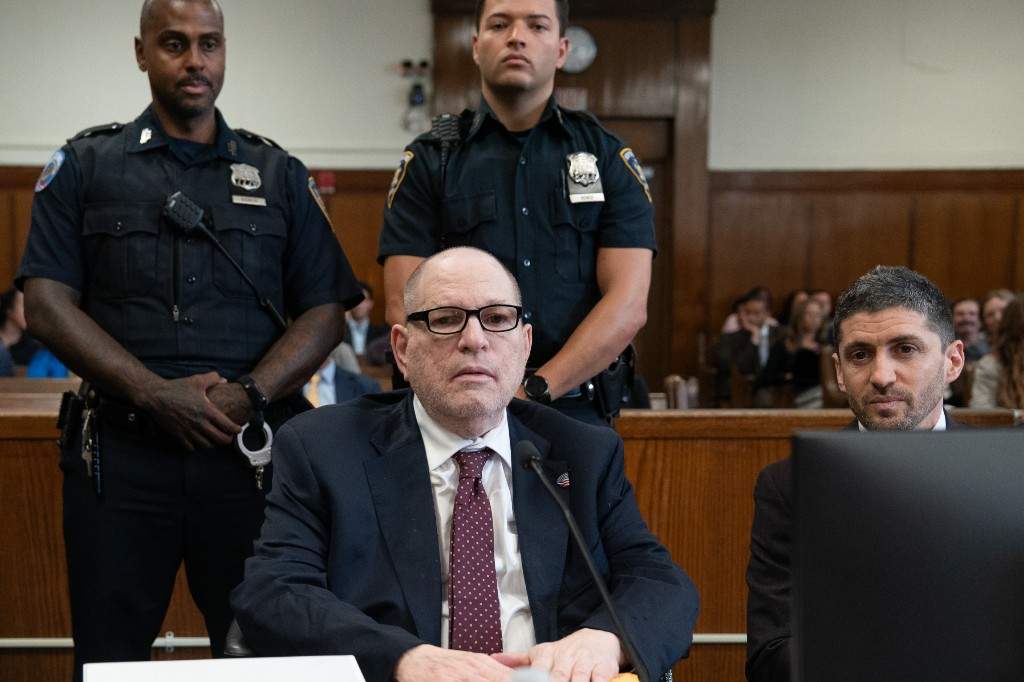
Fifteen years. In the machinery of New York state sentencing, a term of fifteen years for a 2006 sexual assault is less a definitive closure than a protracted legal compromise. Harvey Weinstein, once the omnipotent gatekeeper of modern cinema, received this additional prison sentence following a partial verdict in Manhattan, compounding an earlier conviction in Los Angeles that effectively guaranteed a life behind bars. Yet, looking past the courtroom theater and the predictable press statements, this specific number reveals a great deal about how the justice system struggles to reckon with historic abuses of power. The legal architecture that sustained Weinstein for decades did not simply rely on intimidation; it relied on the quiet complicity of an entire industry that traded silence for access.
When prosecutors stood before the Manhattan court, they were not just trying a man for an assault that took place in a midtown hotel room nearly two decades prior. They were attempting to pierce an institutional armor built on nondisclosure agreements, private investigators, and a Hollywood hierarchy where dissent was met with professional exile. For years, the studio model functioned with absolute impunity. Independent producers and major distributors alike knew the cost of crossing the executive. Consequently, when the New York appellate courts later scrutinized the original 2020 trial, focusing on whether prior bad-act testimony should have been admitted, they exposed the fragile boundary between conventional criminal procedure and the public reckoning of the MeToo movement. The fifteen-year sentence handed down in this proceeding reflects a calculated legal maneuver to preserve accountability while weathering the inevitable appeals process that challenges the handling of systemic misconduct in courtrooms. If you liked this piece, you might want to look at: this related article.
The mechanics of institutional protection require a closer look. Power in the entertainment industry has always been centralized, but the particular brand of dominion Weinstein exercised relied on financial leverage and cultural gatekeeping. If an actor or a journalist questioned the prevailing narrative, the retaliation was swift and unrecorded. Phone records vanished. Legal threats silenced publications before stories reached the printing press. This environment fostered a culture where victims felt entirely isolated, knowing that the institutional apparatus of the studio system would protect its chief asset above all else. When that apparatus finally fractured in late 2017, the shockwave was immediate, but the legal catch-up has been agonizingly slow. Statutes of limitations expired. Memories faded. Physical evidence became impossible to recover. The fact that prosecutors secured any prison time for acts committed in 2006 is a testament to the tenacity of a handful of survivors who refused to let the clock run out on their history.
Critics of the trial process often point to the complexity of prosecuting decades-old offenses as a flaw in the judicial response. They argue that when trials center on events that occurred twenty years ago, the search for objective truth becomes clouded by the passage of time and the evolution of public sentiment. However, this perspective ignores the reality of how predatory behavior operates within high-status environments. Predators who maintain control through employment contracts and systemic fear do not leave paper trails for investigators to find the next morning. Their victims carry the burden of proof in their memories and their trauma, often locked away for years by professional survival instincts. The fifteen-year sentence, while substantial on paper, is fundamentally an acknowledgment of a compromised evidentiary landscape. It represents the maximum possible accountability within a penal code that was never originally designed to address institutionalized coercion on this scale. For another look on this development, check out the recent update from NPR.
Beyond the courtroom walls, the cultural landscape of film production has undergone a forced modernization, though skepticism remains warranted. Compliance departments have expanded. Mandatory training seminars now occupy the calendar of every major studio. Yet, the underlying economic incentives that concentrate power in the hands of a few financiers and studio heads remain entirely intact. Real reform requires more than updated human resources policies or public relations statements expressing dismay at past behavior. It demands a decentralized model of production where independent creators have genuine recourse against abusive behavior without risking their livelihoods. Until the financial structures supporting unchecked authority are dismantled, the removal of one individual, regardless of how notorious, serves primarily as a cosmetic correction rather than a structural cure.
The legal saga surrounding these convictions will continue to wind through appellate courts, testing the limits of evidentiary rules and the endurance of those who brought the initial complaints. Every motion filed and every brief submitted serves as a reminder that accountability in cases of elite impunity is rarely clean or immediate. As the prison term runs its course, the broader question for the cultural industries is not whether another predator will be caught, but whether the infrastructure that allowed such behavior to flourish for forty years has genuinely been dismantled, or if it has simply adapted to a more cautious era.


