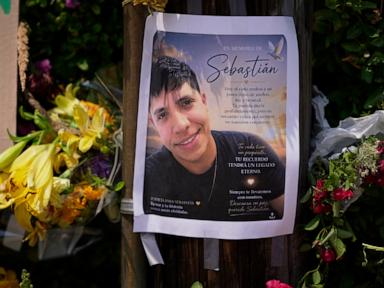
The death of Johan Sebastián Durán Guerrero is not merely a tragedy of misplaced identity. It is a damning indictment of an enforcement apparatus operating in the dark. On July 13, 2026, the 25-year-old Colombian national was shot and killed by an Immigration and Customs Enforcement agent in Biddeford, Maine. New information provided by Representative Chellie Pingree confirms that the individual agents were actually seeking—the owner of the vehicle Durán Guerrero was operating—did not have a final order of removal.
This revelation shatters the internal logic ICE used to justify the operation. If the intended target was not subject to a final deportation order, the agency’s rationale for the surveillance and the subsequent escalation collapses. Durán Guerrero himself was also not subject to a removal order; he held a valid work permit and had a pending asylum case. He was, by all administrative metrics, legally present and authorized to work. He should have been at his job, not in the morgue.
The Fog of Enforcement
The Department of Homeland Security continues to defend its posture, citing the protection of sensitive intelligence and operational methods. They maintain that the agent acted out of fear for public safety, claiming Durán Guerrero attempted to flee the scene. This narrative of a "fleeing suspect" is a well-worn script in law enforcement encounters, but here, it obscures a deeper, institutional rot.
Why was a tactical operation launched against an individual who did not even meet the federal threshold for a final deportation order? The discrepancy between the agency’s public statements and the ground truth suggests a dangerous disconnect between administrative policy and field execution. When an agency operates on faulty, outdated, or mismanaged intelligence, the margin for human error disappears. In this case, that error manifested as a lethal discharge of a weapon.
The Vetting Deficit
The scrutiny now directed at the involved agent raises questions about recruitment and oversight. Reports indicate that the officer involved had a history of violent behavior and documented mental health issues prior to this incident. If an agency tasked with high-stakes domestic enforcement fails to filter out individuals with these red flags, the resulting tragedies are not "accidents." They are the predictable output of a broken hiring and vetting chain.
The oversight failure is two-fold. First, there is the intelligence failure—targeting someone without a removal order. Second, there is the personnel failure—placing a weapon in the hands of an officer with a questionable background. When these two systemic weaknesses converge, violence becomes a statistical inevitability rather than a remote possibility.
A Policy of Contradiction
The fallout from this shooting triggered a brief, internal shift in ICE policy: a suspension of most vehicle stops. This move was a tacit admission that the tactics used in Maine were flawed, reckless, or both. However, the policy was met with immediate, vocal opposition from the White House. This tug-of-war between federal administrative agencies and the executive branch leaves field agents in a state of operational confusion.
When political directives override risk-mitigation strategies, those on the ground are left to navigate a vacuum of accountability. The agents are not just enforcing immigration law; they are acting as the tip of a spear in a broader, highly charged political agenda. When the goal is volume of enforcement rather than precision, mistakes are ignored until they become public relations crises.
The Cost of Silence
The investigation by the Maine Attorney General continues, but the window for genuine accountability is closing. Transparency in these scenarios is rarely a gift provided by the agency itself; it is usually the result of sustained pressure from legislators and a public that refuses to accept "law enforcement sensitive" as a blanket excuse for negligence.
The documents and administrative records that would clarify why these specific individuals were targeted remain locked away. Unless there is a full disclosure of the surveillance data used to authorize this operation, the cycle of miscalculation will continue. For the family of Johan Sebastián Durán Guerrero, no report or policy adjustment will restore what was lost. For the rest of the community, the silence from federal authorities regarding the vetting of the agent and the error in intelligence is a warning. The machinery of enforcement is not calibrated for accuracy. It is calibrated for a mission that, as demonstrated in Biddeford, is drifting further away from its stated purpose. There is no remedy for a system that mistakes its own incompetence for duty.