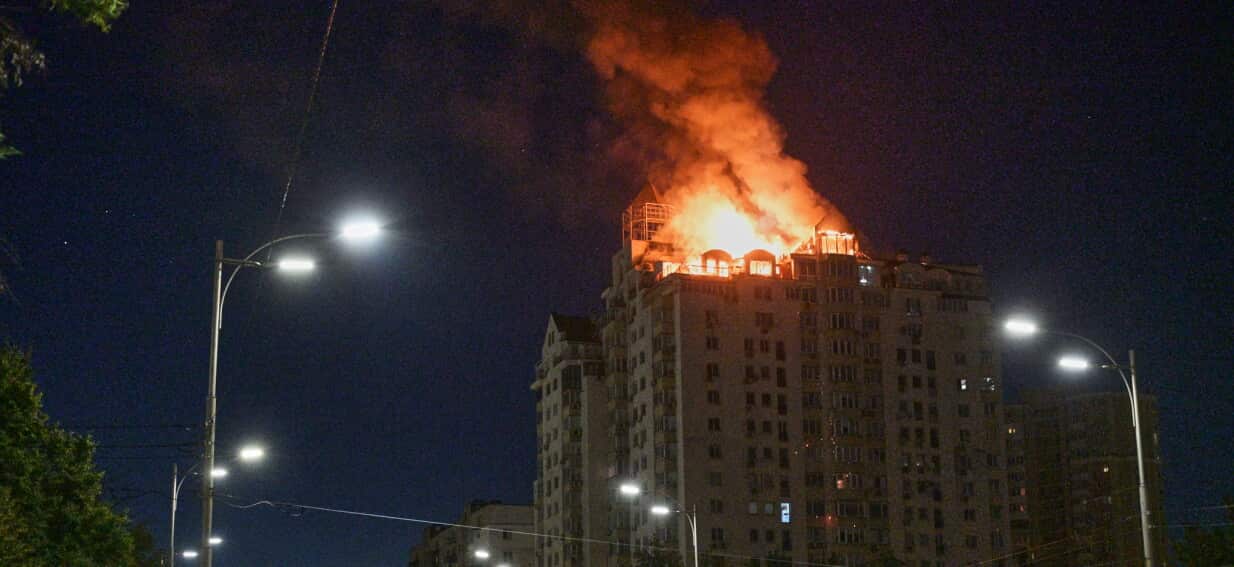
The Predictable Theater of Missile Diplomacy
Every time a Russian missile barrage strikes Kyiv, the mainstream press rolls out the exact same script. The headlines focus entirely on the tragic civilian body count, the immediate terror on the ground, and the implied desperation of a Russian military supposedly running out of high-precision munitions.
This analysis is not just lazy. It is dangerously wrong. Meanwhile, you can explore related stories here: Why the India Japan Strategic Alliance Just Shifted Into High Gear.
By treating these devastating strikes as random acts of terror or emotional outbursts from the Kremlin, Western analysts miss the cold, calculated logistics driving the conflict. Russia is not throwing multi-million-dollar Kh-101 cruise missiles at apartment buildings because it is throwing a tantrum. It is executing a long-term, attrition-based strategy designed to achieve a single, overriding objective: the systematic depletion of Ukraine’s air defense architecture.
If you want to understand where this war is actually headed, you have to stop looking at the wreckage and start looking at the radar screens. To see the complete picture, we recommend the excellent report by The New York Times.
The Economics of Attrition
The standard narrative suggests that every successful Ukrainian interception is an unmitigated victory for the West. When Kyiv’s air defense forces report a 90% intercept rate using Patriot, NASAMS, or IRIS-T systems, the media celebrates.
They are celebrating a math problem that Ukraine is currently losing.
Consider the brutal economic asymmetry of modern air defense:
| Weapon Type | Estimated Cost Per Unit | Target Type |
|---|---|---|
| Geran-2 (Shahed-136) Drone | $20,000 – $50,000 | Infrastructure / Decoy |
| Kh-101 Cruise Missile | $1.2 Million – $13 Million | High-Value Targets |
| Patriot PAC-3 Interceptor | $4 Million – $8 Million | Incoming Ballistic/Cruise |
When Russia launches a swarm of cheap, Iranian-designed drones mixed with older Soviet-era Kh-55 decoys (which carry no explosive payload but look identical on radar), they are forcing Ukraine's hand. Kyiv cannot afford to let a drone hit an electrical substation, so they fire a multi-million-dollar Western interceptor to bring it down.
I have spent years analyzing military procurement and defense logistics. The hardest truth to swallow in modern warfare is that you can win every tactical engagement and still lose the war if your replenishment cycle cannot match your enemy's burn rate.
Russia is out-producing the West in raw ammunition volume. While Western defense contractors spend years debating budget allocations and corporate supply chains to manufacture a handful of highly complex interceptors, Russian factories in Yelabuga have scaled up mechanized production lines running 24/7. They are treating missile production like an automotive assembly line.
The Real Target is the Grid, Not the City
When Western media outlets report that a strike "targeted a residential neighborhood," they frequently ignore the radar-reflecting military logistics nodes, power transmission substations, or rail junctions located mere hundreds of meters away. Russian missiles miss. Air defense interceptors malfunction or collide with buildings after a successful deflection.
To claim the intent of a 50-missile salvo is simply to terrorize citizens is to fundamentally misunderstand the doctrine of strategic deep strikes.
The goal is structural paralysis.
- Logistical Strangulation: Ukraine's military movement relies heavily on an electrified rail network. By knocking out the substations that feed the trains, Russia slows down the deployment of Western armor to the Donbas front lines.
- Air Defense Suppression (SEAD): By forcing Ukraine to concentrate its limited Patriot and NASAMS batteries around Kyiv to protect civilians and critical infrastructure, Russia creates massive blind spots along the actual front line.
This creates a brutal dilemma for Ukrainian commanders. Do they protect the children in Kyiv, or do they protect the soldiers holding the trenches in the east from devastating FAB-3000 glide bombs? You cannot do both with a dwindling stockpile of interceptors.
Dismantling the PAA Fallacies
Why doesn't the West just send more Patriot systems?
The common assumption is that Washington or Brussels can simply cut a check and ship fifty more air defense batteries to Ukraine. They cannot. The limitation is not money; it is physical industrial capacity.
Lockheed Martin and Raytheon cannot magically produce ten years' worth of highly specialized radar arrays and guidance systems in a fiscal quarter. The global supply chain for rare earth elements, specialized semiconductors, and solid-rocket propellants is heavily bottlenecked. Furthermore, Western nations cannot completely strip their own domestic defenses without leaving gaps in regions like the Indo-Pacific or the Middle East.
Is Russia running out of missiles?
We have seen this headline every month since March 2022. It remains a fantasy.
Russia has successfully circumvented Western sanctions through third-party transshipment hubs, acquiring the commercial-grade microelectronics required to sustain cruise missile production. By adapting their military doctrine to utilize a high-low mix—using cheap drones to map out radar signatures and expensive ballistic missiles like the Iskander-M to exploit the gaps—they have managed to sustain a high operational tempo indefinitely.
The Dark Reality of Defensive Success
There is a profound downside to the current Western strategy of drip-feeding military aid. By providing just enough air defense to prevent total collapse, but not enough to establish comprehensive air superiority, the West has locked Ukraine into a war of attrition it is structurally unsuited to win over a multi-year horizon.
Every headline celebrating a high intercept rate masks the bleeding out of Ukraine’s strategic reserves. The focus on civilian casualties, while humanly tragic, serves as an emotional shield that prevents Western policymakers from asking the hard, necessary questions about real capability ratios, manufacturing capacity, and the actual territorial endgame.
Stop counting the missiles intercepted over Kyiv. Start counting the empty launcher tubes that cannot be replaced. That is where the war is being decided.