The media is running its standard disaster playbook. A massive 7.8-magnitude earthquake strikes off Mindanao in the southern Philippines, and within minutes, the headlines scream about apocalyptic walls of water. Sirens wail. Evacuation orders flash across screens. Governments from Manila to Tokyo issue urgent warnings, telling millions of people to run for high ground to escape a Looming Oceanic Catastrophe.
It is a spectacular display of misplaced priority.
While the world fixated on the Pacific Tsunami Warning Center data and monitored minor sea-level fluctuations, the actual tragedy was already over. It happened in seconds, not hours. It happened on land, not at sea. The fixation on tsunami warnings represents a profound, systemic misdirection of emergency attention that consistently costs lives.
The Mirage of the Deep Blue Terror
Every single time an undersea subduction zone slips, the collective knee-jerk reaction is to look at the water. We are conditioned by cinematic images of giant waves swallowing cities. Yet, the physics of the Mindanao event tell a completely different story.
The quake hit near Maasim and General Santos City at a shallow depth. The immediate result? A maximum recorded wave of 1.4 meters. A little over four feet. That is a heavy swell, not an civilization-ending deluge. Five hours later, the tsunami threat had completely passed with zero reported casualties or damage caused by the actual water.
Yet, the media spent the morning tracking whether a one-meter wave might ripple past Indonesia, Malaysia, or Taiwan.
This is the lazy consensus: treating every major marine seismic event as a potential replay of 2004. By treating the tsunami threat as the primary villain, we ignore the immediate, brutal killer right under our feet.
The Jollibee Metric: Code Enforcement is the Real Lifesaver
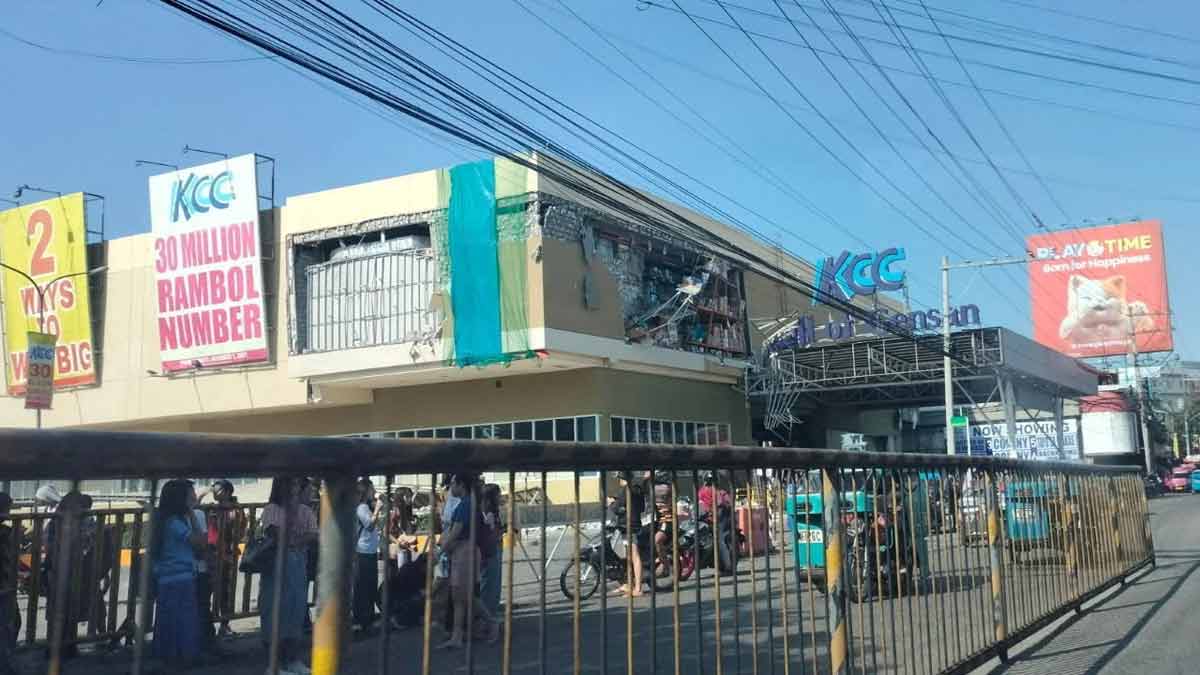
While sirens were telling people on the coast to run, structures in General Santos City were pancaking. A multi-story shopping center housing a Jollibee fast-food restaurant collapsed into rubble. Commercial buildings crumbled. Roads cracked open, and a major access bridge sustained dangerous structural failure.
I have spent years looking at post-disaster data. The pattern is always identical. We treat natural disasters as acts of God that cannot be mitigated, focusing all our technological muscle on sensor networks that tell us a wave is coming at 500 miles per hour. But we refuse to address the mundane, corrupted, and poorly managed reality of local building code enforcement.
An earthquake of magnitude 7.8 is incredibly powerful, but a modern city built to rigorous seismic standards should not see commercial centers reduced to dust. When a building collapses during a morning earthquake, it is not a natural disaster. It is a regulatory and engineering failure.
Consider the timing. The quake struck at 7:37 a.m. Local schools were just opening for the morning after summer break. Hundreds of children were gathered for outdoor flag-raising ceremonies. If that quake had struck two hours later, with thousands of students packed inside poorly reinforced, multi-story concrete classrooms, the death toll would not be in the dozens. It would be in the thousands.
We got lucky. The infrastructure did not.
The Flawed Premise of Universal Evacuation
When the state tells an entire coastline to flee, it assumes evacuation is a risk-free maneuver. It isn't.
Mass panic in a developing urban center kills. When President Ferdinand Marcos Jr. tells coastal residents to "move to higher ground now," it triggers immediate chaos. Thousands of people jump onto motorbikes, cram into jeepneys, and clog narrow, poorly maintained coastal roads.
What happens when those roads are already compromised by landslide debris or structural cracks from the initial tremor? You create a trap. You herd thousands of terrified citizens into dense bottleneck zones where emergency vehicles cannot move, medical access is cut off, and the risk of stampedes or traffic fatalities skyrockets.
We are asking the wrong question. The question shouldn't be "How do we get everyone out faster?" The question must be "Why are our coastal cities so poorly built that a four-foot wave requires total abandonment?"
Realism Over Rhetoric
To survive the reality of the Pacific Ring of Fire, we must abandon the comforting illusion that advanced warning systems save us. They don't. They merely document our vulnerabilities in real time.
If we want to stop writing these obituaries, the strategy must pivot entirely:
- De-escalate the Tsunami Hype: Stop treating every offshore M7+ event as an automatic coastal execution. Refine the automated warning systems to account for rapid bathymetry and displacement realities before triggering mass urban flight.
- Weaponize Building Inspections: The money spent on maintaining massive deep-ocean buoy networks would save far more lives if reallocated to independent, unbribable structural audits of public schools, hospitals, and commercial hubs in high-risk zones like Mindanao.
- Accept the Trade-Off: Building resilient infrastructure costs immense amounts of capital. It means slower development and higher upfront costs for a population already struggling with economic volatility. But the alternative is continuing to allow fast-food joints and schools to serve as structural Russian roulette.
The sirens have stopped wailing in Mindanao, and the ocean is flat. The dead are not being pulled from the sea; they are being dug out from under tonnes of cheap concrete. Stop looking at the horizon. The danger is right beneath your feet.