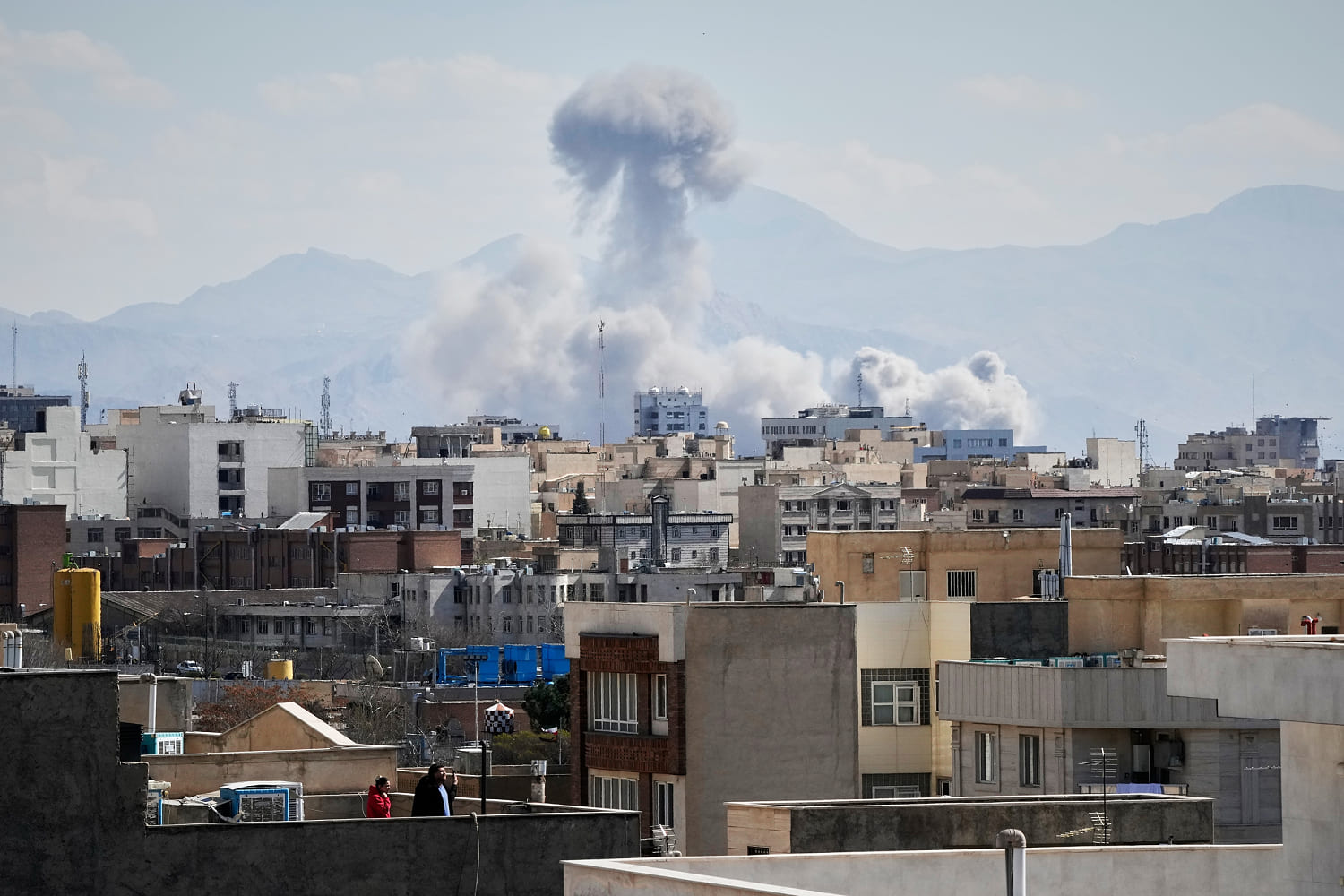
Lindsey Graham is playing a dangerous game of rhetorical chicken. By suggesting it isn’t the "job" of the United States to determine Iran’s next leader, he’s leaning into a comfortable, bipartisan myth: the idea that the U.S. can ever truly be a neutral observer in the Middle East.
It sounds noble. It sounds like "lessons learned" from Iraq. It’s also a total fantasy. If you liked this article, you should read: this related article.
In geopolitics, there is no such thing as a vacuum. When the world’s largest economy and most powerful military "decides not to decide," it is making a choice. That choice has a body count, a price tag, and a long-term strategic cost that most politicians are too cowardly to admit to their constituents. Graham’s stance isn’t restraint; it’s a managed retreat disguised as moral humility.
The Myth of the "Clean Hands" Policy
The prevailing wisdom suggests that if we just step back, the "will of the people" in Iran will magically manifest. This ignores forty years of history. The Islamic Republic isn't a book club; it’s a sophisticated security state that has perfected the art of domestic suppression. For another perspective on this event, refer to the latest coverage from The New York Times.
When Washington says, "It’s not our job to pick the leader," what the regime in Tehran hears is: "The status quo is acceptable."
I have watched policy analysts in D.C. blow through millions of dollars in grant money trying to find a "moderate" path forward. They look for ghosts. They want a "seamless" transition that doesn't exist. There is no middle ground when you are dealing with a theocracy that views your very existence as a theological error.
By refusing to articulate what a post-Mullah Iran should look like, we aren't being "respectful of sovereignty." We are subsidizing the longevity of a regime that uses every minute of our indecision to advance its centrifuge count.
The Invisible Thumb on the Scale
Every time the U.S. Treasury issues a waiver, every time a diplomat refuses to meet with secular opposition leaders, and every time a Senator says "it’s not our job," we are intervening. We are intervening in favor of the incumbent.
Look at the mechanics of the Iranian Power Structure. Power flows from the Supreme Leader down through the Islamic Revolutionary Guard Corps (IRGC). This isn't a democracy in waiting; it’s a military-industrial complex with a turban.
- The IRGC controls roughly 20% to 40% of the Iranian economy. From construction to telecommunications, they are the board of directors.
- The "Shadow" Budget. The regime doesn't need a popular mandate when it has a diversified portfolio of illicit oil sales and regional proxies.
- The Proxy Paradox. While we talk about "not picking leaders," Tehran is busy picking leaders in Lebanon, Iraq, and Yemen.
To suggest that the U.S. shouldn't have a preference is like a casino owner saying he doesn't care who wins at the poker table while he’s the one charging the rake and controlling the lights. We are already the house. Pretending we’re just another player is a lie designed for Sunday morning talk shows.
The "Organic Revolution" Fallacy
People love to cite the 1979 Revolution as a reason for the U.S. to stay out. They argue that any leader "made in America" will be rejected by the Iranian street.
This is a lazy reading of history. The 1979 Revolution succeeded not because the U.S. stayed out, but because the Carter administration’s mixed signals paralyzed the existing security apparatus. Vacuum, meet chaos.
If you want an "organic" movement to succeed against a modern surveillance state, it needs more than Twitter hashtags and "moral support." It needs a logistical and financial architecture that can rival the state's. By refusing to provide that architecture under the guise of "non-interference," we are essentially telling the Iranian protesters to go bring a knife to a drone fight.
The Cost of Indecision
| Scenario | U.S. Stance | Result |
|---|---|---|
| Active Neutrality | "Not our job" | Regime consolidates; IRGC expands regional hegemony. |
| Strategic Support | Explicitly backing secular alternatives | High initial friction; potential for long-term stability. |
| Managed Collapse | Sanctions without a political goal | Economic misery for the public; elite remains wealthy. |
The "Active Neutrality" Graham is selling is the most expensive option on the menu. It leads to a slow-motion collision where the U.S. eventually has to intervene anyway—only under much worse conditions, against a nuclear-armed opponent.
Why "Wait and See" is a Death Sentence
The "People Also Ask" section of the internet is filled with queries like, "Can Iran's government be overthrown from within?"
The honest, brutal answer? Not without a defection of the armed forces. And the armed forces won't defect as long as they believe the United States is more interested in "not determining the next leader" than it is in seeing the current one gone.
Military officers in autocratic regimes don't jump ship for democracy. They jump ship when they realize the current ship is sinking and the guys with the lifeboats—that’s us—have a better offer. Graham’s rhetoric removes the lifeboat. It tells the wavering IRGC colonel that there is no alternative waiting in the wings, so he might as well keep shooting protesters.
The Business of Regime Change
Let’s talk about the "Business" cross-over. A stable, secular Iran would be the greatest economic boon to the global market in the 21st century. We are talking about one of the most educated populations in the world, massive untapped energy reserves, and a strategic location that bridges East and West.
The "lazy consensus" says that regime change is bad for business because it causes volatility.
Wrong.
The threat of a nuclear-armed rogue state is the ultimate volatility. It’s a permanent tax on global shipping. It’s a permanent risk premium on oil. It’s a permanent drain on the U.S. defense budget. "Determining Iran's next leader"—or at least ensuring it isn't a religious extremist—is the most fiscally responsible move the U.S. could make.
Stop Asking the Wrong Question
The question isn't "Is it our job to determine Iran's leader?"
The question is: "Can we afford to let the IRGC determine the next one?"
Because that is exactly what will happen. When the current Supreme Leader passes, the succession won't be a democratic outpouring. It will be a backroom deal between the most radical elements of the security state. If the U.S. isn't in the room, or at least looming outside the door with a preferred alternative, we are accepting their choice by default.
We have spent decades being told that "interventionalism" is a dirty word. But in a globalized world, isolation is just a different form of intervention—one that favors the bully.
Stop pretending we can sit this one out. The U.S. has been the primary protagonist in the Iranian drama since 1953. To suddenly claim we’re just a member of the audience isn't humility. It’s a dereliction of duty.
The next time a politician tells you it’s not our job to pick winners, ask them how much they’re willing to pay when the losers start a war.
The myth of the bystander is dead. You either shape the transition, or you are buried by it.
Pick a side or get out of the way.


