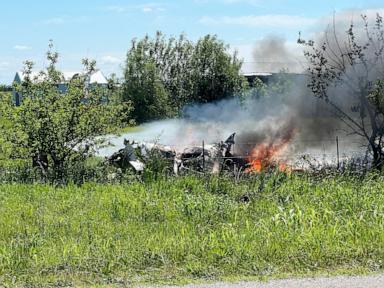
Twelve people are dead after a Pacific Aerospace 750XL turboprop plane operated by Skydive Kansas City crashed moments after takeoff near Butler Memorial Airport in Missouri. The Sunday morning flight, intended to be a routine jump on a clear summer day, quickly turned catastrophic when the aircraft lost altitude during a left turn, stalled, and nose-dived into a field. Eleven skydivers and one pilot perished in the impact and subsequent fire. While the National Transportation Safety Board begins its investigation, the tragedy exposes a deeper crisis within the aviation industry: the remarkably loose federal oversight governing commercial skydiving operations.
Local officials described a brutal scene. The aircraft took off around 11:30 a.m. and immediately appeared to struggle, dropping out of its turn as the pilot seemingly attempted to guide the failing machine toward a nearby highway for an emergency landing. It never made it. Instead, the plane struck the ground nose-first and caught fire, witnessed by horrified family members waiting at the airfield.
First responders canvassed the flight path to see if any divers managed to bail out before impact. No one did. In a matter of seconds, an afternoon of recreation became a mass casualty event.
The Illusion of Airline Standards
Most passengers stepping onto a commercial skydiving flight assume the aircraft is bound by the same rigorous maintenance and operational rules as a commercial airliner or even a regional charter. That assumption is entirely wrong.
In the United States, commercial skydiving operations occupy a regulatory gray area. The Federal Aviation Administration classifies these flights under Federal Aviation Regulations Part 91. This is the same basic set of rules that governs a private hobbyist flying a single-engine Cessna on the weekend. They are not bound by Part 135, which regulates commuter and charter operations, or Part 121, which dictates major airline safety.
This distinction has massive implications for passenger safety. Under Part 91, operators face far less stringent requirements regarding:
- Maintenance tracking: Frequent inspections and mandatory part-replacement schedules are significantly relaxed compared to commercial air carriers.
- Pilot flight hours: Pilots do not need the exhaustive training hours or type ratings demanded by commercial airlines.
- Safety Management Systems: Operators are not forced to implement structured internal programs to track, report, and mitigate safety risks.
The logic behind this regulatory passivity is historical. The FAA fundamentally views skydiving as a sport where participants willingly accept high levels of risk. Because the passengers are intending to jump out of the plane, the agency has historically focused its safety regulations on the parachutes and the instructors, rather than the mechanical soundness of the vessel carrying them to altitude.
Yet, as this tragedy shows, you cannot jump from a plane that fails before reaching altitude.
A History of Ignored Warnings
The disaster in Missouri is not an isolated anomaly. It is part of a documented pattern that safety officials have warned about for years.
Following a horrific 2019 crash in Oahu, Hawaii, which killed 11 people aboard a skydiving plane, the NTSB issued a scathing critique of the FAA's oversight. The safety board explicitly stated that the regulatory system was insufficient to protect the flying public on skydiving excursions. Investigators revealed a history of inadequate maintenance, unaddressed mechanical defects, and a deficient safety culture across the niche industry.
The FAA resisted those findings, maintaining that existing guidelines were sufficient.
Industry data tells a more troubling story. Skydiving aircraft are subjected to unique, brutal operational stress. A typical jump plane performs dozens of flights a week, consisting of rapid, high-power climbs followed by steep, abrupt descents to pick up the next group. This constant cycling puts immense thermal and mechanical stress on engines and airframes, far exceeding the wear and tear seen in typical general aviation.
Without specialized, mandatory maintenance intervals that account for this high-cycle stress, components fail prematurely.
The Mechanics of a Takeoff Stall
The Pacific Aerospace 750XL involved in the Butler crash was built in 2010. It is a rugged, New Zealand-built turboprop designed specifically for short takeoffs and heavy loads, capable of carrying up to 17 skydivers. Flight tracking data indicated the aircraft had already completed two successful flights earlier that morning, with multiple flights recorded on the preceding days.
Aerodynamic realities explain why a sudden loss of engine power during takeoff is almost always fatal.
When an aircraft loses power just after leaving the ground, the pilot faces an instantaneous crisis. The plane is low to the ground, moving relatively slowly, and climbing at a steep angle. If the engine quits, airspeed drops rapidly. To maintain control, the pilot must immediately push the nose down to trade altitude for airspeed.
However, a natural human instinct is to pull back on the controls to avoid the ground. This action proves fatal. Pulling back increases the wing's angle of attack beyond its limit, disrupting the smooth airflow required to create lift. The aircraft stalls, loses all aerodynamic control, and rolls or dives into the earth.
Compounding this danger is the classic aviation trap known as the "impossible turn." When an engine fails after takeoff, pilots are trained to land straight ahead, even if it means hitting trees or a field. Attempting to turn back to the runway increases the aerodynamic load on the wings, raises the stall speed, and rapidly depletes remaining altitude. Preliminary reports suggest the pilot in Butler attempted a left turn to reach a highway or return to the field, a desperate maneuver that likely triggered the final stall.
Structural Hurdles to Reform
Fixing the safety deficit in commercial skydiving is not as simple as passing a new law. The industry operates on razor-thin margins.
Imposing full commercial airline maintenance and pilot certification requirements would instantly bankrupt a significant portion of small-scale drop zones across the country. Operators argue that the cost of compliance would destroy the sport. Furthermore, the FAA faces chronic staffing shortages, leaving it poorly equipped to enforce more complex rules on hundreds of localized skydiving schools.
This leaves consumers in a difficult position. When booking a skydive, individuals must vet the operator themselves, an impossible task for a layperson who does not know how to read aircraft logbooks or assess a pilot's training record.
The NTSB will likely take a year or more to dissect the wreckage in Missouri, analyze the fuel lines, and evaluate the turbine blades to determine the exact mechanical trigger of the failure. But the systemic trigger is already evident. Until federal regulators treat commercial skydiving planes as public commercial transports rather than private recreational toys, the industry will continue to experience these catastrophic structural failures.