Power in the Middle East has always been measured in stone and silence. Palaces crumble, flags burn, but the men who whisper into the ear of the state often outlast the walls built around them. Until they do not.
Step onto the dusty, sun-baked streets of old Damascus during the height of the Assad era, and you would hear the air thick with two sounds: the distant thrum of military checkpoints and the carefully modulated voice of Ahmed Badreddin Hassoun. As the Grand Mufti, he was not merely a religious official. He was the spiritual architect of absolute rule. When Bashar al-Assad needed a theological shield against a rising tide of fury, Hassoun provided the rhetoric, turning sacred verses into armor for a beleaguered regime.
Now, the rhetoric has fallen silent.
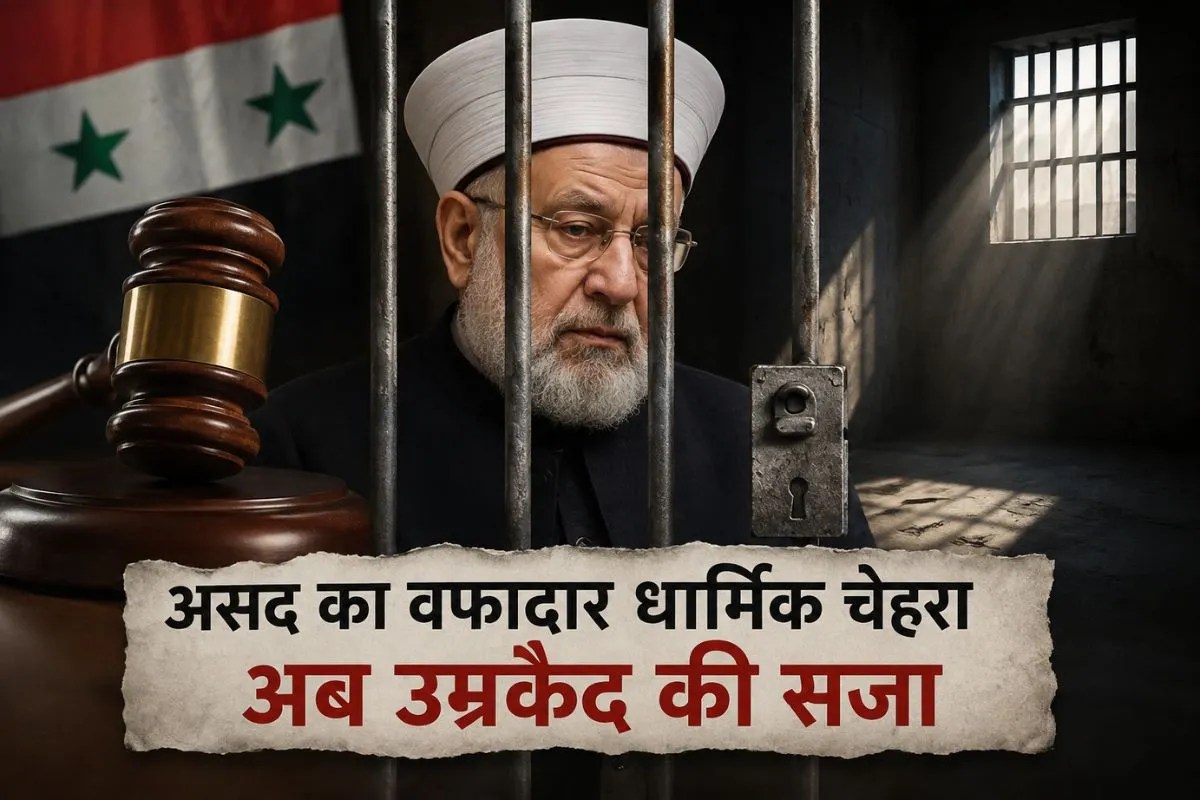
News has broken that a heavy sentence has been handed down. Life imprisonment. For a man who once commanded obedience from vast assemblies and dictated the moral posture of a nation, cell walls are a sudden, violent contraction of reality. This is not just a legal decree. It is the definitive closing of a brutal chapter in modern Syrian history, a stark reminder that history eventually collects its debts.
The Architecture of Loyalty
To understand why this sentencing matters, one must look past the dry language of courtrooms and understand the currency of survival in a police state.
Imagine walking into a room where every word is weighed on an invisible scale. You do not speak truth to power because power is the only truth available. Hassoun mastered this environment with chilling precision. Appointed as Grand Mufti, he possessed a rare gift for eloquence. He could stand before international cameras and project an image of a modern, enlightened Syria, while simultaneously backing the iron-fisted suppression of dissent at home.
During the darkest years of the civil conflict, his sermons were weaponized. Every tragedy was reframed, every protest labeled as foreign conspiracy, every loyalist bullet justified through the lens of divine necessity. He was the voice that gave the regime a clear conscience while the country burned.
This is the hidden cost of absolute alignment. When you hitch your soul to a falling star, you do not simply lose influence when the star crashes. You burn with it.
The Turning Tide
Regimes do not vanish overnight; they erode from the inside out, hollowed out by economic ruin, endless conflict, and the quiet exhaustion of a people who have suffered too much. The downfall of the Assad government was seismic, shaking the foundations of institutions that had seemed eternal for half a century.
When the dust settled, the reckoning began. It is easy for outsiders to view these trials through the comfort of geography, treating foreign courts and fallen clerics as characters on a screen. But for those who lived through the barrel bombs, the midnight knocks, and the endless mourning, justice is a complicated, aching landscape.
A life sentence for Ahmed Badreddin Hassoun represents a profound legal milestone, but it also triggers a deeper national question: Can a society heal when the architects of its division are locked away, or are they merely scapegoats for a collective trauma too vast to comprehend?
Consider what happens next. The courtroom doors close. The flashbulbs fade. The former Mufti sits in a cell, stripped of the velvet robes and the microphone that once amplified his every syllable. The contrast between his past omnipotence and his present isolation is total. It is a reminder that human authority is remarkably fragile, easily swept aside when the foundational terror that holds it together finally collapses.
Echoes in the Stone
History is written by the victors, but it is felt by the survivors.
The sentence handed down to Damascus's former spiritual leader is more than a judicial outcome. It is a psychological watershed. It tells the remaining power-brokers across the region that impunity has an expiration date. Words matter. Ideology has consequences. And the men who bless the sword will eventually face its edge, even if that edge is simply the cold, grey reality of a prison cell.
As the sun sets over the scarred minarets of Damascus, casting long shadows across a city still learning how to breathe again, the silence left behind is profound. The grand voice of the regime is gone, reduced to a whisper behind bars.
The stones of the old city remain. They have seen empires rise, tyrants fall, and prophets of convenience come and go. They demand nothing, and they forgive nothing. They simply endure, waiting for the next chapter to be written.