The mainstream defense media is currently suffering from its biennial bout of collective hysteria. Nineteen nations. Over a hundred aircraft. Thousands of personnel descending on India successfully deploying Su-30MKIs or Rafales to the Australian outback. The headlines write themselves. They scream about "power projection," "interoperability," and "strategic signaling" in the Indo-Pacific.
It is a comforting narrative. It is also entirely hollow.
The lazy consensus surrounding Exercise Pitch Black 2026 treats massive international aerial war games as the pinnacle of modern combat readiness. We are told that flying fourth-generation fighters in complex, large-force employments (LFE) across the Northern Territory is how modern wars are won.
Having analyzed air defense architectures and deployment budgets for over a decade, I can tell you the reality is far less glamorous. Pitch Black has evolved into a hyper-expensive, logistically bloated bureaucratic photo-op. It is an exercise designed for the era of Top Gun, operating in a world that has already moved on to drone swarms, distributed electronic warfare, and long-range asymmetric denial.
We are burning millions of liters of aviation fuel to train for a type of conflict that will never happen again.
The Interoperability Myth
The loudest praise for Pitch Black centers on "interoperability." The narrative claims that because an Indian Rafale can share a runway with an Australian F-35A or a Singaporean F-15SG, these air forces can seamlessly fight as a unified entity tomorrow.
This is a dangerous misunderstanding of modern network-centric warfare.
True interoperability is not about pilots sharing a beer at RAAF Base Darwin or flying in the same airspace without crashing. It is about data. It is about machine-to-machine data links, real-time sensor fusion, and shared cryptographic architectures.
When a fifth-generation platform like the F-35 flies alongside a legacy fourth-generation asset like the Su-30MKI, they are effectively speaking different languages. The F-35 relies on the Multifunction Advanced Data Link (MADL) to create a highly secure, low-observable picture of the battlefield. Legacy aircraft cannot natively ingest this data. To bridge the gap, air forces resort to airborne gateways or degraded Link 16 protocols.
The moment you drop to the lowest common denominator to achieve "interoperability" in a public exercise, you strip away the exact technological advantages that make fifth-generation platforms lethal. You are not training to fight at the cutting edge. You are training down to a consensus baseline so everyone feels included in the group photograph.
The Tyranny of the Logistics Tail
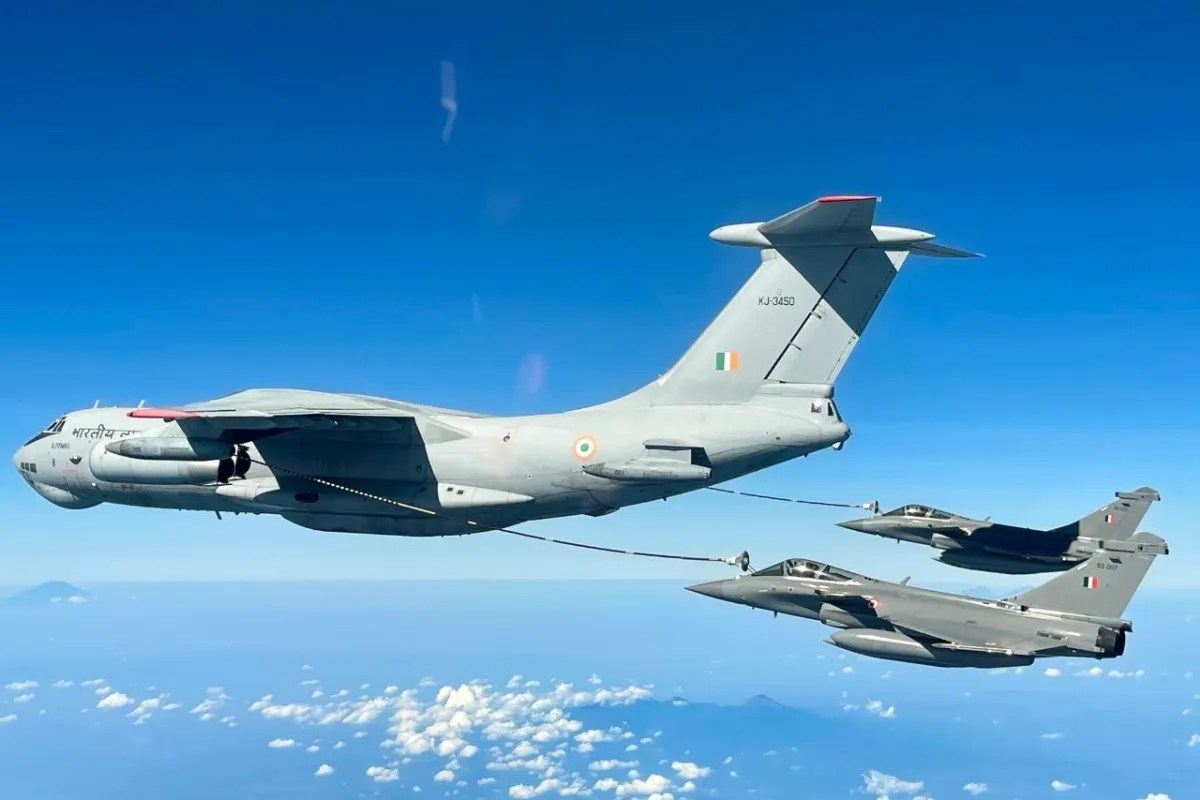
Mainstream reporting loves to marvel at the sheer distance traveled by international contingents. Look at the Indian Air Force, they say, flying mid-air refueled sorties across the Indian Ocean to reach Australia. What an incredible display of expeditionary capability.
Let us look at the ledger instead.
Moving a squadron of high-performance fighter aircraft across continents requires an absurdly massive logistical footprint. For every fighter jet that touches down in Darwin, multiple heavy transport aircraft like the C-17 must carry tons of spare parts, specialized diagnostic equipment, diagnostic computers, and hundreds of ground crew support personnel.
Imagine a scenario where a real high-intensity conflict breaks out in the Indo-Pacific. The concept of relying on concentrated, static airbases like Darwin or Tindal—which are highly vulnerable to modern long-range ballistic and cruise missile salvos—is an operational nightmare.
While Pitch Black operates on the assumption that these massive hubs will remain pristine and unmolested, modern peer adversaries are actively building doctrines to crater those exact runways on day one. Training to deploy massive logistical tails to predictable, fixed geography teaches air forces exactly the wrong lesson. It reinforces a culture of centralized reliance when the future demands radical decentralization and agile combat employment.
The Air Combat Reality Check
The core training value of Pitch Black is supposedly its Large Force Employment missions. Blue Force versus Red Force. Dozens of aircraft entering the airspace simultaneously to simulate a massive theater campaign.
It looks spectacular on a radar screen in a control room. It makes for incredible cockpit footage. But it fundamentally misrepresents the physics of a modern peer-to-peer conflict.
In a real confrontation against a sophisticated adversary, the airspace will not be a clean arena for visual or even standard beyond-visual-range (BVR) dogfights. It will be an absolute electromagnetic wasteland. Every sensor will be jammed. GPS will be degraded or entirely unavailable. Communication networks will be severed within minutes.
Pitch Black operates within tightly constrained safety parameters and regulatory frameworks. You cannot unleash true, unrestricted electronic warfare during a multi-nation peacetime exercise without exposing your most sensitive electronic intelligence (ELINT) signatures to anyone listening in the region. Consequently, the electronic warfare simulated in these games is a sanitized, watered-down version of reality.
We are training pilots to win a clean fight, while the next war will be unimaginably dirty.
The Opportunity Cost of the Skies
Every dollar, rupee, or euro spent on shipping legacy fighter jets across the globe to participate in Pitch Black is a dollar diverted from the actual future of aerial warfare.
While traditionalists obsess over fighter hours and aerial refueling certifications, the true disruption in air power is happening at the lower end of the cost curve. Autonomous collaborative platforms, loitering munitions, and low-cost attritable unmanned aerial vehicles are redefining air superiority.
Look at the arithmetic of modern air defense:
- A modern air superiority fighter costs anywhere from $80 million to $120 million to procure.
- The cost per flight hour ranges from $20,000 to over $40,000.
- A single advanced air-to-air missile costs upwards of $1 million to $2 million.
Against a massed swarm of low-cost, autonomous drones, traditional air superiority doctrines collapse under the weight of terrible economic math. Pitch Black does nothing to solve this calculus. It treats the fighter pilot as the center of the universe, ignoring the reality that the future of air defense belongs to integrated ground-based missile systems and unmanned autonomous networks.
The Political Theater
If the tactical training value is compromised by safety parameters, data incompatibilities, and unrealistic logistical assumptions, then why does Pitch Black persist?
Because it is a political theater masquerading as defense policy.
For the host nation, it is a way to signal regional relevance and validate expensive procurement decisions to a domestic audience. For participating nations like India, it serves as a highly visible diplomatic tool to demonstrate strategic alignment without committing to binding mutual defense treaties. It is defense diplomacy via aviation fuel.
There is undeniable value in military diplomacy. Building relational trust between air forces matters. But we must stop confusing diplomatic messaging with genuine combat capability.
The danger of exercises like Pitch Black is that they induce a false sense of security. They allow defense establishments to check a box labeled "advanced readiness" while avoiding the brutal, painful structural reforms needed to prepare for the future of warfare. They perpetuate the worship of the platform—the shiny, expensive fighter jet—rather than the cold, hard integration of distributed systems.
Stop looking at the spectacular formation photos coming out of the Australian skies. Stop believing the press releases about unprecedented multi-nation synergy. The nineteenth-century Prussian military theorist Carl von Clausewitz noted that everything in war is simple, but the simplest thing is difficult. Pitch Black makes the incredibly complex look simple by removing the very variables that make modern warfare difficult.
Air superiority will not be won by a massive, visible coalition of legacy jets flying into a predictable outback sunset. It will be won by the nation that figures out how to make those exact jets obsolete before the first shot is even fired.