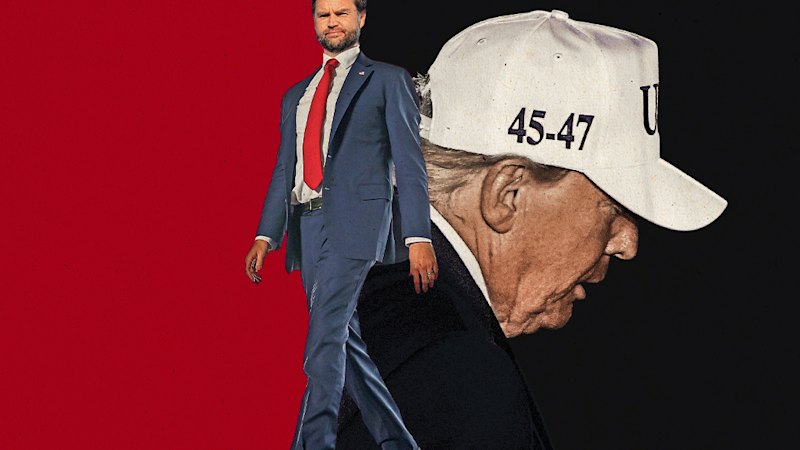
When a competitor article claims that "Vance's message is loud and clear – Trump got it wrong," it treats a multi-variable political dynamic as a simple binary: one speaker is right, the other is wrong. That framing misses the structural mechanics of executive messaging. An administration does not operate with a single voice; it operates with a principal (the president) and an agent (the vice president) managing different constituencies, timelines, and policy trade-offs.
To understand where Vice President JD Vance and President Donald Trump align, where they diverge, and why outside commentary frequently misreads the friction between them, this analysis maps the underlying strategic architecture. We separate verified public actions from analytical hypotheses, examine the cause-and-effect chains driving their public statements, and evaluate the operational trade-offs of their messaging choices.
Deconstructing the "Loud and Clear vs. Got It Wrong" Narrative
Articles built around the premise that a vice president has a clearer message than the president—or that the president's call was simply a mistake—rely on three recurring analytical shortcuts.
The Singular-Voice Fallacy
The first shortcut treats executive leadership as a monologue rather than a division of labor. A vice president often speaks to coalition segments, ideological flanks, or domestic grievances that require sharper doctrinal framing, while a president holds formal command authority, negotiates from positions of leverage, and absorbs blame for immediate market or military outcomes. When Vance frames an issue bluntly—whether criticizing trade partners in North America or attributing post-election setbacks to the economic fallout of conflict with Iran—observers often read that clarity as a rebuke of Trump's broader posture. Trump's subsequent acknowledgment that Vance's point about war-driven price increases had merit, even while maintaining he would not have acted differently, illustrates how two positions can coexist inside the same political coalition without constituting a clean rupture.
The Hindsight-as-Diagnosis Trap
The second shortcut confuses an outcome with a single causal mechanism. After an electoral setback or a spike in consumer prices, attributing the result to one factor—such as foreign entanglement or tariff friction—gives readers an immediate villain. Yet political and economic outcomes are multi-causal. Energy prices respond to supply chokepoints, shipping insurance, strategic reserves, and broader global demand; voter behavior responds to real wages, housing costs, candidate quality, and turnout mechanics. Treating a post-mortem critique as proof that the alternative path was cost-free is an educated hypothesis at best, not a settled fact.
The Rhetorical-Volume Bias
The third shortcut equates rhetorical force with strategic correctness. A sharp soundbite feels "loud and clear" because it compresses a complex trade-off into a memorable line. A president's shifting emphasis—pushing hard on tariffs or military pressure at one moment, then pivoting attention toward domestic enforcement or keeping diplomatic and economic leverage open at another—can look inconsistent on paper while reflecting ongoing bargaining. High decibels do not automatically equal superior execution.
The Principal-Agent Messaging Framework
In organizational economics and political strategy, principal-agent theory explains why leaders and their deputies frequently send signals that appear to pull in different directions. The principal carries ultimate accountability and institutional authority; the agent acts as an extension of the principal while often serving as a signal to specific internal or external audiences.
In the Vance-Trump dynamic, messaging friction emerges across four distinct variables:
- Audience targeting: Vance frequently speaks to populist, non-interventionist, and domestic-focused constituencies who prioritize border security, industrial protectionism, and avoiding prolonged foreign entanglements. Trump speaks to that base as well, while simultaneously projecting unpredictability, maximalist leverage, and direct personal dealmaking to adversaries, allies, and markets.
- Time horizon: A sharp critique of a policy's near-term political cost—such as warning that military conflict drives up prices and hurts midterm performance—focuses on immediate electoral feedback loops. A commander-in-chief weighing coercive pressure, blockades, or deterrence may be optimizing for strategic leverage or regime concessions over a longer horizon, even at steep short-term economic cost.
- Portfolio assignment: When a leader shifts a deputy's visible focus—such as directing attention away from external negotiations and toward domestic issues like urban crime or fraud—outside analysts often interpret the move as a demotion or a policy split. Operationally, it can also be a portfolio reallocation aimed at saturating different media lanes simultaneously.
- Error tolerance: Public remarks carry asymmetric risk. A vice president's off-script slip or blunt phrasing can be walked back or framed as tactical candor, whereas a president's statement directly moves markets, diplomatic expectations, and adversary calculations.
How Cause and Effect Actually Operates
Competitor commentary often skips the causal chain between a statement and a real-world outcome. Consider how policy messaging interacts with markets and voter coalitions in practice:
- Policy action alters real constraints: Tariffs change import costs and supply-chain routing; regional conflict or maritime blockades raise energy and freight risk premiums.
- Price and risk signals reach households and firms: Higher fuel, transport, or input costs squeeze household budgets and business margins.
- Coalition strain surfaces in public commentary: When economic friction collides with voter dissatisfaction, internal messengers face pressure to name the cost openly to preserve credibility with skeptical voters.
- Rival narratives exploit the gap: Opponents and commentators amplify any nuance between the principal and the agent as proof of disarray, even when both share the overarching goal of keeping the coalition intact.
Facts Versus Educated Hypotheses in Current Coverage
Rigorous analysis requires separating what is documented in the public record from what analysts infer behind closed doors.
Established facts: Public reporting and official statements show instances where Vance has voiced blunt assessments—including blaming GOP midterm losses on the war in Iran driving up prices, delivering confrontational remarks on trade and allies, and experiencing high-profile verbal slips. Reporting also indicates friction over foreign policy positioning and shifts in emphasis toward domestic priorities, alongside Trump publicly validating the accuracy of Vance's point on war-driven price increases while defending his own decision-making.
Educated hypotheses: Claims that Vance possesses a cleaner grand strategy than Trump, or that Trump "got it wrong" on a given decision, are interpretive judgments rather than proven facts. Analysts can reasonably hypothesize that prolonged Middle East escalation creates inflationary drag that alienates cost-sensitive voters, and that overt daylight between top officials risks confusing allies and emboldening rivals. However, counterfactuals—what inflation, trade balances, or geopolitical outcomes would have looked like under a softer posture—cannot be observed directly.
Operational Trade-Offs and Strategic Limitations
Anyone advising an administration—or evaluating its communications—must account for hard trade-offs. There is no messaging formula that maximizes populist toughness, diplomatic ambiguity, market calm, and coalition unity all at once.
- Candor versus discipline: Admitting that a policy drove up prices can build short-term honesty points with frustrated voters, yet it can also undercut the administration's own case that the policy is succeeding.
- Leverage versus predictability: Keeping adversaries guessing about escalation or negotiation keeps pressure on counterparts, but unpredictability raises risk premiums for businesses and allies who need clear rules of the road.
- Division of labor versus mixed signals: Assigning Vance to domestic themes while Trump drives external pressure can broaden reach, but without tight message coordination, rivals will frame every shift in emphasis as a turf war or retreat.
Even disciplined message routing has limits. Rhetoric cannot repeal supply-and-demand arithmetic in global energy or trade markets, nor can clever framing erase pocketbook pain if households feel squeezed over months rather than weeks.
Tactical Playbook for Evaluating Executive Messaging
For strategists, investors, and observers who want to cut through hot takes like "loud and clear vs. got it wrong," a structured four-step audit provides a more reliable signal:
- Identify the speaker's assigned lane: Determine whether the speaker is addressing domestic coalition voters, foreign capitals, market participants, or legal/enforcement audiences.
- Separate rhetoric from binding action: Track executive orders, tariff schedules, sanctions, military deployments, and budget actions ahead of speeches or interviews.
- Map the transmission lag to prices and voters: Trace how a policy moves through energy costs, interest rates, retail prices, and polling before assigning blame or credit.
- Test for actual policy reversal: Treat a statement as a true strategic pivot only when operational posture changes—such as altered negotiations, lifted or tightened restrictions, or reassigned authority—rather than relying on a single soundbite.
Strategic Action
Stop treating every rhetorical contrast between Vance and Trump as a zero-sum scorecard of "right versus wrong," and instead track the gap between public blame-shifting and actual policy execution. Watch whether economic pressure from trade and regional conflict forces concrete operational adjustments—such as recalibrated sanctions, narrower military exposure, or targeted domestic relief—because real shifts in policy constraints, not headline clashes over who spoke more bluntly, will determine both economic stability and future electoral performance.