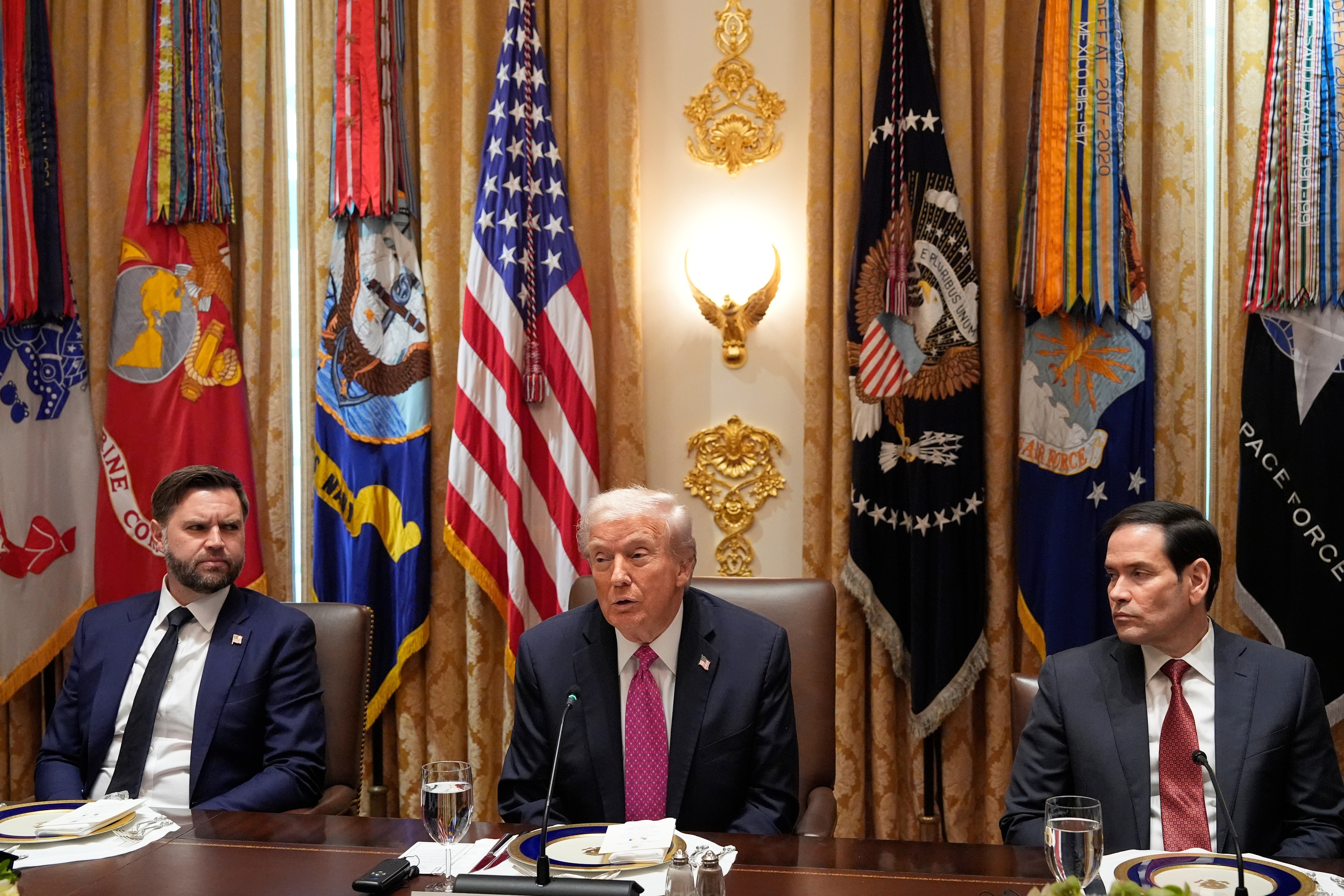
The political press corps is salivating on cue. Donald Trump sits down with Miranda Devine, muses that a 2028 ticket featuring Vice President JD Vance and Secretary of State Marco Rubio would be "very hard to beat," and suddenly the entire commentariat falls into a collective trance. They start running data spreadsheets on Ohio-Florida cross-tabs, analyzing the optics of Rubio’s recent White House podium appearances, and drafting premature obituaries for the Democratic Party’s 2028 chances.
It is the classic lazy consensus.
The pundits look at Vance and see the absolute vanguard of the rust-belt populist base. They look at Rubio and see a smooth, establishment-friendly foreign policy hawk who can lock down Latino voters. Together, the narrative goes, they form an ideologically flawless, electorally bulletproof juggernaut.
They are wrong. They are misreading the room, misreading the history of political successions, and completely misinterpreting Donald Trump’s actual motivations.
I have watched political operations spend tens of millions of dollars building strategy around "dream team" tickets, only to watch them disintegrate the second they face actual contact with voters. The Vance-Rubio 2028 ticket is not an electoral guarantee; it is a structural impossibility that ignores how coalition mechanics work once the primary figurehead leaves the stage.
The Succession Illusion
Political movements built around a singular, charismatic figure do not seamlessly hand over the keys to a committee.
When a dominant leader tries to manufacture an inheritance, the result is almost never an "unbeatable" dynasty. It is a civil war. History is littered with the political corpses of hand-picked successors who discovered that you cannot inherit a personal brand.
- The Cohesion Fallacy: Pundits assume that because the MAGA base loves Trump, and Trump loves Vance and Rubio, the base will naturally love Vance and Rubio. This ignores the reality that coalitions are held together by the leader, not the subordinates.
- The Policy Split: Vance represents an economic nationalist, protectionist faction that is highly skeptical of foreign intervention. Rubio, despite his recent alignment, is historically rooted in traditional, interventionist GOP foreign policy. Right now, they are unified under Trump's banner. Without him, those underlying factions will tear each other apart.
- The Iran War Variable: Rubio and Vance are currently taking turns at the White House briefing lectern defending an increasingly unpopular conflict in Iran. The idea that this defense won't leave deep, permanent scars on their electoral viability by 2028 is pure fantasy.
The "Apprentice" Trap
People frequently ask whether Trump’s praise constitutes a definitive endorsement for 2028.
Let's dismantle that premise entirely. Trump is not drafting a succession plan; he is producing a television show.
Just weeks before the Devine podcast, Trump stood in front of a crowd of law enforcement officials and literally polled the audience, pitting Vance against Rubio to see who got the louder applause. Vance himself cracked a joke about it, noting it looked like a televised competition for who would succeed the president as his apprentice.
When a leader runs succession like a reality TV elimination challenge, the goal isn't to build a stable ticket for the next decade. The goal is to maximize current leverage, keep subordinates hungry, and ensure that everyone remains dependent on the leader's favor. By dangling the "unbeatable ticket" carrot, Trump ensures both his Vice President and his Secretary of State remain fiercely loyal and competitive through the remainder of his term. It is an exercise in management, not strategy.
The Real 2028 Math Doesn't Add Up
To understand why this ticket fails on paper, you have to look at the mechanics of voter behavior, not the aesthetic appeal of a press briefing.
The media loves Rubio's recent performances—praising his smooth delivery, his quick quips, and his 1990s hip-hop references used to mock foreign adversaries. But elite media approval does not move the needle in a populist primary.
Imagine a scenario where Trump exits the scene and the 2028 primary begins. The primary electorate does not vote for a pre-packaged ticket; they vote for an individual. For a Vance-Rubio ticket to exist, one of them has to willingly take the back seat to the other before a single primary vote is cast. Neither man, given their current trajectory and national profile, is going to sign up to be the junior partner without a fight.
If Vance takes the top spot, he inherits the burden of defending every single policy liability of the administration without possessing Trump's unique ability to deflect criticism through raw personality. If Rubio takes the top spot, the populist base will instantly flag him as an establishment insurgent trying to hijack the movement. The ticket creates an ideological friction point, not a solution.
Stop Planning for a Post-Trump Dynasty
The unconventional reality that no one in Washington wants to admit is that the 2028 election will not be fought on the terms of the current administration's successes or failures. It will be an open-field scramble.
Democrats are already jockeying for position, preparing for an environment where they are no longer running against Trump himself. The moment the ballot lacks the name "Donald Trump," the entire alignment of American politics shifts. The voters who show up purely for the man will not automatically show up for his staff.
If you are a political operative or a strategist betting the house on a smooth transition of power to a Vance-Rubio vanguard, you are setting money on fire. Instead of trying to build strategy around a hypothetical "dream team" that only exists in podcast interviews, look at the structural fractures widening underneath the surface of the current coalition. The future belongs to whoever figures out how to rebuild the pieces after the current era ends, not the people trying to copy-paste it.