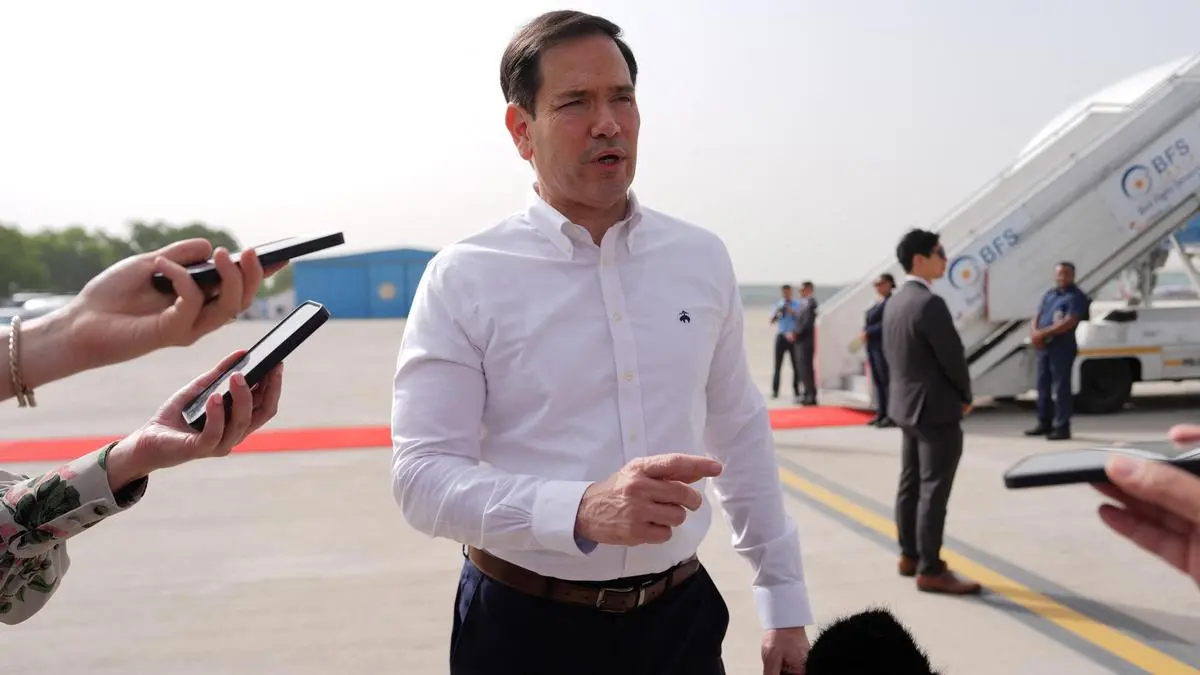
US Secretary of State Marco Rubio just landed in New Delhi on a frantic four-day damage control mission, desperate to convince the world that Donald Trump is a "big fan" of Indian Prime Minister Narendra Modi. The mainstream press is eating it up, running lazy headlines about a "strong foundation" and leader-to-leader chemistry.
It is a comforting bedtime story for geopolitical novices. It is also completely wrong.
When Rubio brushed off recent anti-India rhetoric and Trump's "hellhole" comments by claiming "every country has stupid people," he wasn't speaking as a clear-eyed strategist. He was operating as a high-priced corporate PR agent trying to paper over structural cracks with personal flattery. I have spent years tracking Washington's foreign policy maneuvers, and if there is one hard truth the global business and political elite refuse to admit, it is this: Personal rapport between heads of state is a lagging indicator of geopolitical stability, not a guarantee of it.
The establishment media wants you to believe that if two nationalist leaders share a stage and exchange hugs, their nations' economic and military alignment will follow naturally. The reality is far more brutal. Relying on a transactional bromance to anchor a bilateral relationship is like relying on a volatile stock market tweet to build a pension fund. It looks good on a screen for five minutes, but it leaves you entirely exposed when the fundamentals shift.
The Flawed Premise of "Leader Chemistry"
The core argument driving current coverage is that the personal connection between Trump and Modi can bypass the friction points of diplomacy. This is a profound misunderstanding of how nationalist administrations actually function. Both leaders operate on strict, domestic-first mandates. Trump’s "America First" agenda and Modi’s "Make in India" initiative are not complementary; they are structurally destined to collide.
Look past the theater of Rubio’s press conferences and examine the actual mechanics of the relationship over the last year. We are witnessing severe economic friction masked by diplomatic pleasantries:
- Aggressive Tariffs: The US administration has slammed India with aggressive trade penalties, directly targeting New Delhi's manufacturing sectors.
- Geopolitical Collateral Damage: Washington's escalating conflict with Iran has thrown West Asia into chaos, directly threatening India's energy security and forcing New Delhi to scramble for alternative supplies.
- The Russian Oil Friction: The US Treasury was forced to issue a last-minute, 30-day sanctions waiver extension for Russian seaborne oil just to keep energy-vulnerable partners like India afloat.
If the relationship were truly anchored by a deep personal bond, these major policy moves wouldn't keep blindsiding New Delhi. The reality is that Trump treats international relations as a series of zero-sum business deals. In that framework, a "friend" is just a counterparty who hasn't been squeezed for concessions yet.
Imagine a corporate scenario where a CEO publicly declares his absolute adoration for a critical supplier, right before demanding a 20% price cut and threatening to terminate the contract. You wouldn't call that a partnership; you would call it leverage. Rubio delivering an official invitation for Modi to visit Washington isn't a reward for alignment; it is a tactical summons to negotiate structural disputes that hugs can no longer fix.
Dismantling the PAA Consensus: Is the US-India Alliance Unshakeable?
If you look at public queries around this bilateral dynamic, the same flawed assumption appears repeatedly: Does the personal friendship between Trump and Modi strengthen the Quad? Or How does US-India chemistry counter China?
Let's answer that bluntly: It doesn't.
The strategic alignment between the United States and India exists because of geography and the rise of Beijing, not because two politicians happen to share an ideological brand. The Quad forum—comprising the US, Japan, Australia, and India—is a cold, calculated maritime coalition designed to protect trade routes in the Indo-Pacific. It is driven by military bureaucracies and long-term intelligence-sharing frameworks, not by the shifting moods of the Oval Office.
In fact, prioritizing personal politics over institutional agreements actually weakens these alliances. When the State Department posts a video of Rubio defending the relationship and then panics and deletes it hours later because of domestic political blowback, it reveals extreme institutional fragility. Foreign policy built on the fly via social media defense mechanisms creates massive unpredictability.
For India, this unpredictability has exposed the danger of over-relying on Washington. I have watched foreign policy teams blow years of diplomatic capital building rapport with specific Western administrations, only to see those networks vaporize during the next election cycle. New Delhi is already learning this lesson the hard way. Notice the subtle shift: while Rubio and US Ambassador Sergio Gor bragged loudly to the press about a productive meeting and a future US visit, the official Indian readouts remained notably quiet on the invitation. New Delhi is no longer biting on the hype. They are waiting for concrete policy shifts, not more rhetoric.
The Cost of the Transactional Foreign Policy Model
To understand the downside of this contrarian reality, we must look at what happens when transactionality replaces long-term institutional commitments. The recent dismissal of US criminal fraud charges against Indian billionaire Gautam Adani is a prime example. The Department of Justice dropped the bribery and fraud case only after Adani pledged a massive $10 billion investment in US infrastructure.
While the administration views this as a textbook victory for its transactional model, it sends a highly volatile signal to global markets. It tells international partners that legal frameworks, strategic partnerships, and regulatory consistency are all negotiable if the check is large enough.
The downside of this approach is obvious: it destroys institutional trust. When long-term defense frameworks—like the 10-year Major Defence Partnership Framework Agreement that was recently renewed—are treated with the same transactional weight as a corporate investment pledge, foreign policy becomes completely commoditized.
| Diplomatic Illusion | Geopolitical Reality |
|---|---|
| Personal leader chemistry guarantees bilateral stability. | Structural domestic priorities always override personal rapport. |
| Diplomatic invitations signify deep strategic alignment. | Invitations are tactical leverage points used to demand concessions. |
| Public praise eliminates systemic trade friction. | Tariffs and energy sanctions continue regardless of rhetorical warmth. |
Stop Misreading the Rhetoric
The actionable takeaway here for analysts, investors, and policymakers is simple: stop reading the geopolitical weather based on press conference transcripts. When a Secretary of State has to spend his time telling reporters that his boss is a "big fan" of another world leader, it is a clear sign that the actual policy machinery is stalling.
True strategic partnerships operate quietly, through deep institutional integration, intelligence sharing, and integrated supply chains. They do not require a four-day public relations charm offensive across Kolkata, Agra, Jaipur, and New Delhi to convince the public that everything is fine.
The US-India relationship will survive, but it will do so because of hard, cold mutual needs in the Indo-Pacific—not because of personal admiration. The sooner Washington and New Delhi ditch the theater of political fandom and focus on building predictable, institutional frameworks, the safer the global trade landscape will be. Until then, the high-profile hugs are just noise masking a very complex, volatile negotiation.


