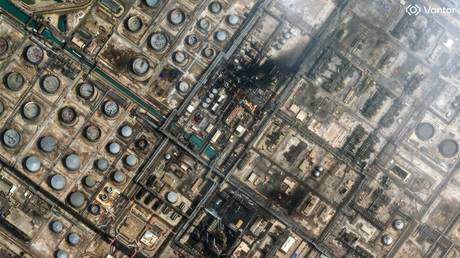
Mainstream legacy media loves a good crisis narrative. When US Central Command announces it shot down two Iranian one-way attack drones over the Strait of Hormuz, the headlines practically write themselves. "Fresh escalation," they scream. "The war creeps into its 100th day with no end in sight."
They want you to look at the smoke, the sirens in Manama, and the dramatic mid-air interceptions over Kuwait. They want you to think we are witnessing a sudden geopolitical flashpoint driven by raw aggression. Read more on a related topic: this related article.
It is a complete misreading of modern conflict.
What the press calls a "fresh escalation" is actually something far colder, calculated, and terrifying. It is an asymmetric economic squeeze where the West is hemorrhaging money to intercept dirt-cheap lawnmower engines in the sky. If you think the Pentagon is "winning" because the intercept rate is high, you are missing the entire point of the exercise. More journalism by The New York Times highlights related views on this issue.
The Broken Math of Modern Air Defense
Let's look at the financial reality of this exchange. I spent years analyzing defense procurement and logistics bottlenecks before the current crisis boiled over. The open secret in military tech is that we are on the wrong side of a brutal cost-curve inversion.
Iran is deploying delta-wing loitering munitions, primarily variations of the Shahed series. These things are slapped together using off-the-shelf commercial components, civilian GPS chips, and basic fiberglass bodies. The unit cost of a single Iranian attack drone hovers anywhere from $20,000 to $40,000.
To bring down those two cheap drones over the shipping lanes, what did the US military use? They fired standard ship-borne air defense missiles or deployed multi-million dollar fighter jets flying at thousands of dollars per flight hour. A single RIM-162 Evolved SeaSparrow Missile (ESSM) or a Standard Missile 2 (SM-2) costs between $1.5 million and $2.5 million per shot.
Do the arithmetic.
$$Cost\ Ratio = \frac{Intercept\ Missile\ Cost}{Target\ Drone\ Cost}$$
$$\frac{$2,000,000}{$20,000} = 100$$
Every single time a US destroyer successfully neutralizes an Iranian drone, the Western defense apparatus spends up to 100 times more than the adversary spent to launch it. That is not a strategic victory. It is a slow-motion economic bleed disguised as a successful defensive operation.
Dismantling the Safe Narrative
The public continually asks the same anxious questions every time CENTCOM updates its feed. Let's look at the real answers to what people are asking, stripped of defense-contractor spin.
Is the US successfully protecting the global supply chain?
No. The goal of international shipping is predictability and low insurance premiums. The moment the US has to strike coastal radar installations on Qeshm Island or in Goruk to stop drone swarms, the Strait of Hormuz is effectively non-operational for standard commercial traffic. A container ship or an oil tanker does not care if the US intercept rate is 99%. If there is a 1% chance a $20,000 drone punctures a multi-million dollar hull, maritime insurers skyrocket their rates or refuse coverage entirely. The shipping lanes are choked not because the drones are hitting every target, but because they exist.
Does striking Iranian radar sites degrade their capabilities?
Barely. The traditional military mindset says: destroy the sensor, disable the weapon. But cheap drones do not need sophisticated, centralized coastal radar networks to cause havoc. They can be programmed with fixed coordinates before launch or utilize alternative, commercial-grade tracking methods. Blowing up a static radar site looks impressive on a briefing slide, but it does not stop a mobile truck from rolling out of a hidden garage and launching another half-dozen loitering munitions twenty minutes later.
Are these drone strikes a sign of desperation from Tehran?
It is exactly the opposite. It is extreme efficiency. By forcing the US Fifth Fleet to continuously burn through its premium missile inventory, Iran is executing a classic attrition strategy. They do not need to sink an American aircraft carrier to win this round. They just need to keep the US burning through munitions faster than Western manufacturing lines can replace them.
The Inventory Bottleneck
Here is the downside to pointing out this reality: there is no quick, cheap fix. The Western defense industrial base is built around exquisite, low-volume, high-margin hardware. We build exquisite defense systems designed to intercept supersonic anti-ship missiles, not slow-flying flying bathtubs made of lawnmower parts.
The real crisis isn't the physical damage caused by the one or two missiles that slipped through to Kuwait or Bahrain. The crisis is the depth of the US missile magazine.
Imagine a scenario where an adversary launches fifty of these cheap drones simultaneously alongside a handful of ballistic missiles. Even if the defensive systems work perfectly, you empty the vertical launching cells of every ship in the area. Rearming those ships requires pulling them out of the theater into a specialized port. That is the real vulnerability. The enemy is using cheap plastic to force the expenditure of irreplaceable premium kinetic interceptors.
The media keeps waiting for a declaration of a wider war, completely oblivious to the fact that the architecture of warfare has permanently shifted beneath their feet. The era of projecting absolute power through massive, expensive naval platforms is facing a structural crisis.
When a $20,000 drone can consistently bait a $2,000,000 response, the side with the cheaper weapon dictates the duration of the conflict. Stop looking at the intercept percentages. Start looking at the ledger.