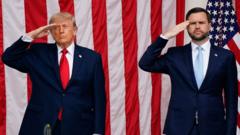
The lazy consensus of the Washington press corps has collectively decided on its favorite new narrative: JD Vance is either a naive puppet being setup as Donald Trump’s foreign policy fall guy, or he is a walking contradiction who just sold out his own "America First" principles to sign an Obama-style surrender with Tehran.
They are calling him "Hillbilly Obama." They are writing breathless obituaries for his presumed 2028 presidential ambitions, claiming the newly minted memorandum of understanding with Iran is a political suicide pact.
It is a comforting bedtime story for neoconservatives and beltway liberals alike. It is also completely, fundamentally wrong.
I have spent years watching the political class misread the shifting mechanics of global trade, energy corridors, and populist foreign policy. They always apply twenty-year-old frameworks to a completely rewired world. What the establishment mistakes for a desperate capitulation is actually a cold, calculated restructuring of American leverage. Vance isn’t the fall guy for a bad deal. He is the architect of a brutal macroeconomic pivot that the D.C. blob is too blind to see.
The Blind Spot of the Hawkish Right
The main critique bubbling up from the establishment—shared by traditional hawks like Senator Ted Cruz and conservative commentators—is that this temporary memorandum of understanding is a rehashed version of the 2015 Joint Comprehensive Plan of Action (JCPOA). They complain that it offers Iran early breathing room while leaving its nuclear aspirations buried under the rubble of a four-month conflict.
This comparison ignores the foundational laws of economic warfare.
The 2015 deal was built on the assumption that integrating Iran into the global liberal order would magically neutralize its regional ambitions. It was a diplomatic fantasy. This new framework, driven by Vance’s deep-seated skepticism of endless sub-surface wars, treats Iran exactly for what it is: a crippled energy node that needs to be managed, not a democracy-in-waiting that needs to be saved.
The establishment insists that the only victory is total regime collapse. But I have seen defense insiders and corporate strategists burn billions of dollars betting on the imminent collapse of rogue states, only to watch supply chains fracture and energy prices skyrocket. Reality check: total chaos in the Persian Gulf does not benefit Ohio factory workers or Texas oilmen. It benefits speculators.
By leading the negotiations alongside Steve Witkoff and Jared Kushner, Vance achieved exactly what the economic core of the populist movement demanded: an exit runway from an energy-draining quagmire before it turned into another multi-trillion-dollar mistake like Iraq or Afghanistan.
The Macroeconomic Mechanics the Media Ignores
To understand why this agreement is actually a masterclass in aggressive pragmatism, you have to look past the political theater and analyze the structural reality of the global energy market.
When the conflict effectively closed the Strait of Hormuz, it choked a corridor responsible for transiting roughly 20% of the world’s petroleum liquids. The resulting inflationary spike was a direct tax on the American consumer. The establishment’s brilliant solution? Keep fighting a hot war until Tehran turns into a Western-style democracy.
Vance understood that the real threat to American security isn't just an adversarial state's unrefined uranium; it's the domestic rot caused by uncontained inflation and fractured supply lines. Consider the raw mechanics of the deal:
- Upfront Stabilization: Reopening the Strait of Hormuz immediately deflates global energy premiums, driving down input costs for domestic manufacturing.
- Enforcement via Denial: Unlike the 2015 deal, which released frozen assets unconditionally up front, this interim agreement ties economic relief directly to verification. If the international inspectors cannot verify the dilution of highly enriched uranium, the economic trapdoor snaps shut instantly.
- Strategic Repositioning: It shifts America’s military and diplomatic bandwidth away from a secondary theater in the Middle East, allowing a hard focus on real structural competitors.
Imagine a scenario where the U.S. remained locked in a perpetual hot war with Iran for another twelve months. The military-industrial complex would thrive, yes. But core domestic inflation would remain sticky, the interest rate environment would paralyze American real estate, and the public's appetite for national defense would hit zero. Vance chose to take the temporary political hit from hawkish pundits to secure the underlying economic foundation of the populist coalition.
The 2028 Fall Guy Myth
Then there is the purely political critique: Trump’s public joke that he will "blame JD" if the deal goes south. The media ran with this as definitive proof that Vance is being set up for slaughter.
This displays a profound misunderstanding of modern political signaling. Trump’s public teasing is his standard method of lowering expectations while testing his subordinates' resilience. Vance’s willingness to step out front, do the tough interviews on hostile turf, and own the fallout is exactly how he solidifies his position as the undisputed heir to the populist movement.
If the deal holds for the next two months and morphs into a permanent structural framework, Vance takes credit for stopping a war, stabilizing the economy, and lowering gas prices just in time for the midterms. If Iran breaks its promises, the administration pivots back to crushing sanctions with total moral authority, having proven to a war-weary electorate that they exhausted every diplomatic avenue first. It is an asymmetric bet where the structural upside far outweighs the temporary noise from radio hosts.
The establishment can keep calling him names and praying for a return to the neoconservative consensus of 2004. But the reality is already locked in. The old way of running foreign policy—where America spends trillions to smash regimes with no plan for the macroeconomic aftermath—is dead. Vance just buried it.


