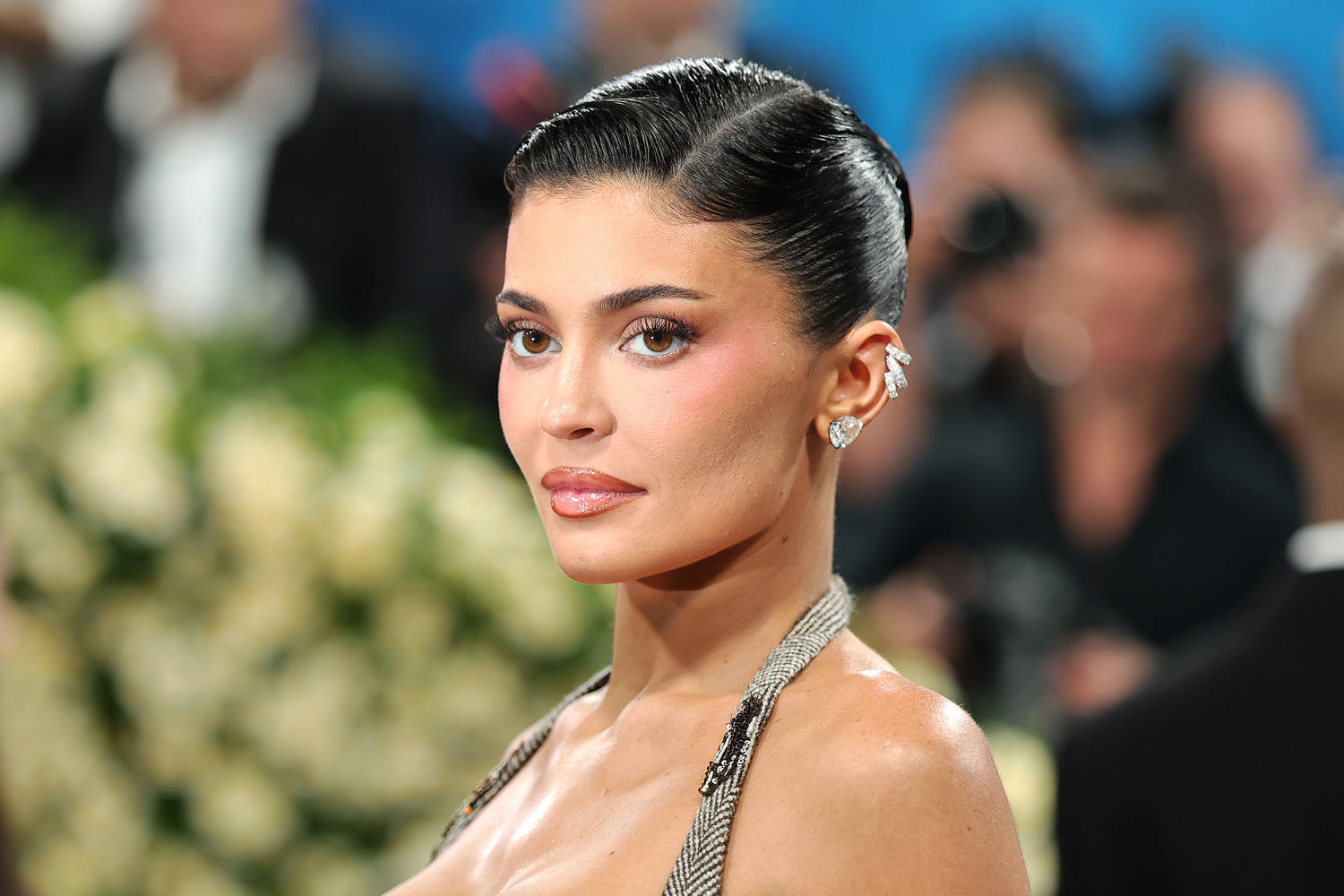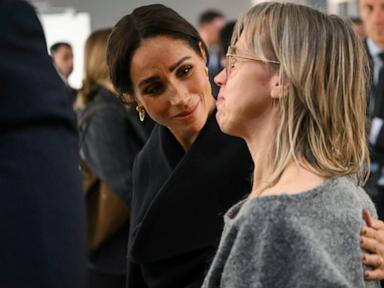
The flashbulbs go off, the tabloids lose their minds, and suddenly a routine public appearance turns into a global referendum on a woman's character. When news breaks that Prince Harry's wife, Meghan, has made her first public appearance since her father's arrest, the internet does what it always does. People pick sides before they even know the basic facts of the event.
Honestly, watching the media cycle spin up around Meghan Markle and Thomas Markle feels like a broken record that nobody knows how to turn off. You've seen this movie before. A headline drops linking Meghan's latest outing to whatever legal or personal chaos is happening in her estranged father's life, and millions of readers click expecting a dramatic statement or a visible breakdown. Instead, they usually get a woman doing her job, smiling for cameras, and refusing to take the bait.
If you want to understand why this specific dynamic keeps dominating search trends and tabloid covers, you have to look past the clickbait. The real story isn't about a single photo op. It's about how modern celebrity crisis management works, why the estrangement between Meghan and Thomas Markle remains such a massive lightning rod, and what the public constantly misreads when high-profile figures step into the spotlight during personal turmoil.
Why Meghan Markle's First Public Appearance Always Sparks a Frenzy
Let's be real about how the celebrity press operates. When a major personal scandal or legal issue hits a family member of the Duke and Duchess of Sussex, editors immediately start counting the days until Meghan steps outside. That first sighting becomes a high-stakes commodity. Paparazzi agencies camp out near Montecito, California, or outside scheduled charity events in Los Angeles, waiting for a single frame they can sell around the world.
Why does that first photo matter so much? Because the public loves to play body language detective.
If she smiles, critics accuse her of being cold and unbothered by family crisis. If she looks serious or tired, the headlines claim she's crumbling under the pressure. It's a classic lose-lose trap that public relations experts have studied for decades. Having worked around media strategy and high-profile reputation management, I can tell you that the worst thing a public figure can do in that situation is hide indefinitely. Hiding signals guilt or panic. Showing up—calm, composed, and focused on a pre-planned commitment—is the textbook move to regain control of the narrative.
Yet, every single time, commentators treat her composure like some kind of shock. They shouldn't. Since stepping back from senior royal duties in 2020, Meghan and Prince Harry have operated under a strict communication playbook. They rarely react to breaking family drama in real time. Instead, they stick to their scheduled appearances—whether that's a charity gala, a panel discussion for their Archewell Foundation, or a community event—and let the visuals do the talking.
The Complicated Reality of the Meghan and Thomas Markle Estrangement
To understand why any news involving Thomas Markle immediately gets tied back to Meghan's public schedule, you have to look at the timeline of their relationship. The rift didn't happen overnight, and it certainly didn't happen in private.
Before Meghan married Prince Harry in May 2018, Thomas Markle lived a relatively quiet life in Rosarito, Mexico, after a long career as a television lighting director in Hollywood. Everything changed once the royal engagement went public. In the weeks leading up to the wedding at Windsor Castle, a major tabloid scandal erupted when it was revealed that Thomas had staged paparazzi photos of himself getting fitted for a suit and reading books about Britain. Days later, he suffered heart issues and announced he wouldn't attend the wedding to walk his daughter down the aisle.
That was the breaking point. Since 2018, Meghan and her father have been completely estranged.
What makes this situation uniquely toxic compared to normal family fallouts is that Thomas Markle has repeatedly taken his grievances directly to morning television shows and British tabloids. He has given dozens of paid and unpaid interviews criticizing Meghan and Harry, even going so far as to leak portions of a private, handwritten letter Meghan sent him in August 2018—a move that led to Meghan's successful privacy and copyright lawsuit against Associated Newspapers in the UK courts.
When you put that history into context, the idea that Meghan would suddenly halt her public life or rush to issue a sympathetic press release every time her father makes headlines for the wrong reasons is completely disconnected from reality. You don't maintain strict boundaries for nearly a decade only to throw them out the window because the press demands a reaction.
How PR Strategy Dictates Every Move During a Family Scandal
People love to think celebrities wake up, check Twitter, and decide on a whim whether to go to an event. That's not how it works at the Sussex level. Every appearance is planned weeks or months in advance, vetted by security teams, and coordinated with communications directors.
When a negative news cycle hits—especially one involving an estranged relative's legal trouble—a PR team generally looks at three options.
- Cancel everything and go dark. This almost always backfires. Cancellation turns a secondary story into a primary crisis because the media reports that the celebrity is "in hiding" or "devastated."
- Release an official statement. Once you comment on a relative's legal issues, you own that story forever. Every follow-up development requires another comment.
- Business as usual. You keep the scheduled appearance, dress appropriately for the venue, engage warmly with hosts and attendees, and completely ignore shouted questions from the press line.
Option three is basically the gold standard for crisis containment. Look at how Meghan handles red carpets and public engagements. She arrives, greets the organizers, keeps her remarks tightly focused on the cause or event at hand, and exits cleanly. By refusing to acknowledge the noise, she deprives the tabloids of the one thing they desperately need to keep a story alive for a second week: a direct quote or a reactive facial expression.
I've seen this play out with dozens of public figures over the years. The public thinks silence means indifference, while PR pros know silence is the only way to starve a media fire of oxygen.
What Critics and Fans Both Misread About Meghan's Public Demeanor
The internet has a massive blind spot when it comes to analyzing celebrity behavior. Both die-hard fans and obsessive critics tend to project their own emotions onto every photo of Meghan Markle.
Critics look at photos from her first appearance after bad family news and see calculation. They point to her styling, her posture, and her smile as proof that she's staging a performance. On the flip side, supporters look at the exact same images and see a triumphant warrior rising above generational trauma.
The truth is usually much more mundane. Public appearances are work. If you've ever had a terrible week in your personal life—maybe a family member got into trouble or you had a massive argument at home—you still had to show up to your office on Monday morning, put on your professional face, and get through your meetings. Meghan is doing the exact same thing, just with telephoto lenses pointed at her face from fifty yards away.
Another huge misconception is that Prince Harry and Meghan are constantly orchestrating counter-programming to overshadow royal or family news. While PR teams definitely pay attention to the news calendar, most charity events, summits, and brand launches are locked in months ahead of time due to venue contracts and sponsor schedules. A coincidence in timing is almost always just a coincidence, even if social media turns it into a conspiracy theory within ten minutes.
How to Spot Clickbait When Reading Celebrity News
If you clicked on a headline about Meghan's public appearance hoping for juicy details, only to find a vague recap of old news, you fell for one of the oldest tricks in digital publishing. Understanding how these articles are built will save you a ton of time and frustration.
First, pay close attention to vague attribution in headlines. Notice how many articles avoid naming the exact event or date in the title, opting instead for phrases like "makes first public appearance since..." That's a classic SEO tactic designed to capture breaking search traffic without committing to specific details until you click.
Second, look at the gap between the headline and the actual body text. If the first three paragraphs talk about the father's arrest, and the fourth paragraph casually mentions an appearance Meghan made at an unrelated event days earlier—or relies entirely on anonymous "sources close to the couple"—you're reading a repackaged filler piece. Real journalism leads with the who, what, when, and where of the actual event.
Third, watch out for "body language experts." Whenever a celebrity makes an appearance during a sensitive moment and doesn't say anything controversial, tabloids hire freelance body language commentators to invent drama out of thin air. A tilt of the head becomes "suppressed tension." A hand in a pocket becomes "defensive posturing." Take all of it with a massive grain of salt.
Following the Story Without Falling for the Spin
Media literacy matters just as much in celebrity gossip as it does in politics or finance. The next time a viral headline claims Meghan Markle is "sending a message" with her outfit, her smile, or her attendance at an event following family drama, pause before sharing it.
Check the primary source of the photos to see what the event actually was and when it took place. Look for official statements from Archewell or legitimate press releases rather than relying on tabloid interpretations of a split-second camera flash. Most importantly, separate the actions of an estranged relative from the professional schedule of someone who hasn't spoken to them in years. Once you strip away the manufactured outrage, you'll see the story for what it really is—just another day at the office in the relentless machine of modern celebrity media.