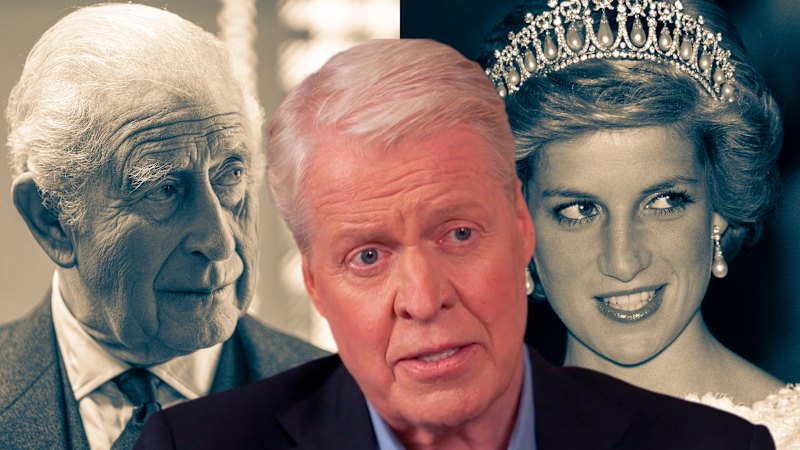
We have an endless appetite for royal secrets. Every time someone with a famous last name releases a book promising the absolute truth, the publishing machine spins into overdrive. Charles Spencer recently stepped back into the cultural crosshairs, positioning himself as an eyewitness to history in his memoir-writing efforts regarding his late sister, Princess Diana. But slapping a grand historical label on your childhood memories doesn't automatically make you a reliable narrator. In fact, it often signals the exact opposite.
Writing about a global icon who happens to be your sibling creates a massive conflict of interest. You aren't just recounting public events. You're defending your own place in the narrative, settling old scores, and trying to heal childhood wounds under a glaring spotlight. When Earl Spencer claims a unique duty to speak on Diana's behalf, he ignores a fundamental truth about human memory. We remember what protects us. We misremember what hurts too much to keep intact.
The Trap of Parochial Perspective
Growing up inside a grand estate like Althorp sounds glamorous from the outside. To a child, it's just home. Charles and Diana shared a chaotic, emotionally fraught childhood defined by their parents' bitter divorce and an aristocratic system that packed young children off to boarding schools remarkably early.
Yet, shared parentage doesn't equal shared experience. Diana was older, more exposed to the immediate domestic fallout, and navigating a completely different set of social expectations than her younger brother. When a sibling steps forward decades later to declare that an account of a troubled childhood is wrong because their own version was sunny or different, they're erasing lived reality. They're substituting personal coping mechanisms for objective fact.
History requires distance, cross-examination, and external evidence. Memoir relies on subjective emotion and self-justification. When these two genres collide, the result is rarely accurate history. It's usually mythology dressed up as testimony.
Why the Eyewitness Label Falls Apart
Claiming to be an eyewitness to history sounds impressive on a book jacket. It implies you were standing in the control room when the world changed. But being present during a person's formative years doesn't mean you understand their adult public trajectory.
Charles Spencer knew Diana as a sister, a playmate, and a fellow survivor of a cold aristocratic upbringing. He didn't know her as the global phenomenon besieged by the press, navigating high-stakes royal diplomacy, or fighting a lonely psychological war inside the House of Windsor. Confusing proximity with deep institutional insight is a classic trap.
We see this pattern constantly across celebrity memoirs. A close relative assumes that because they shared Sunday roast, they hold the copyright on the subject's entire psychological universe. They mistake their own grief and protective instincts for absolute authority.
The Business of Family Nostalgia
Publishers love these projects for obvious reasons. A grieving brother offering a corrective to the historical record sells books. It triggers our collective fascination with untangling royal myths.
Yet readers need to ask a harder question. What purpose does this memoir actually serve? Is it an objective record, or is it an exercise in emotional curation? Spencer has spent years carving out a public persona as a historian and a guardian of family heritage. Protecting his sister's memory and maintaining Althorp are tied directly to his personal brand and public identity.
When your entire life's work is intertwined with an estate and a tragic legacy, maintaining control over the narrative becomes an existential need. That doesn't make the author a liar. It makes them an interested party. Believing an interested party without question is a rookie mistake in historical analysis.
Reading Between the Lines
You can appreciate a personal tribute without swallowing every claim as gospel. Charles Spencer delivered one of the most famous eulogies of the twentieth century. That speech was fueled by raw grief, righteous anger, and a desperate protective impulse that resonated globally. Decades later, the impulse to protect and define remains.
The problem arises when personal grief is marketed as definitive history. Diana's life belongs to the public domain because of its immense cultural footprint, but her inner life remains contested terrain. No single sibling can capture the entirety of who she was, especially when their own vantage point was obscured by privilege, distance, and time.
Take every royal memoir with a heavy dose of skepticism. Eyewitnesses see through a glass darkly, shaped by their own traumas, blind spots, and motivations. Stop looking to family members for objective truth. Look for the human flaws instead, because that is where the real story actually lives.