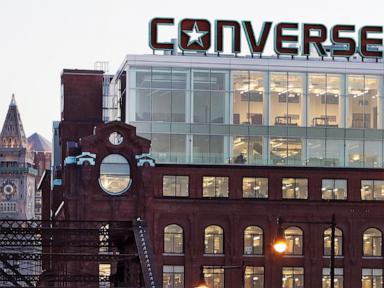
Another week, another corporate grovel. Converse pulls a sneaker ad because a handful of terminally online critics discovered microscopic traces of offense, and the executive suite immediately folds like a cheap lawn chair. PR teams scramble, crisis communications playbooks open to page one, and a billion-dollar brand issues a statement dripping in performative contrition.
We have turned commercial panic into a spectator sport. In related news, take a look at: The Map Beneath Our Feet And The Race To Find What Is Left.
The lazy consensus says this is accountability in action. The lazy consensus claims that when an ad sparks backlash, pulling it and issuing a public mea culpa proves a company listens to its audience. It is a comforting narrative. It is also entirely, dangerously wrong.
I have watched brands burn millions of dollars and decades of brand equity on self-inflicted execution errors, not because the original creative work was inherently evil, but because leadership panicked the second the engagement metrics turned negative. When you apologize for a shadow, you validate the ghost. The Economist has provided coverage on this critical issue in great detail.
Let us look at what actually happens when a brand pulls an ad under social media pressure.
First, let us define terms precisely. A genuine corporate crisis involves product failure, safety hazards, legal violations, or systemic negligence. A marketing controversy over an aesthetic choice, a model's posture, or a prop in a background shot is not a crisis. It is a Tuesday on the internet. Treating a design dispute like a corporate catastrophe is a failure of governance, plain and simple.
The mainstream narrative treats every piece of user-generated outrage as a democratic referendum. It is not. It is an algorithmic echo chamber where the loudest five hundred accounts on any given platform dictate the terms of engagement for five million passive observers. When Converse pulled that sneaker campaign, they did not correct a social wrong. They outsourced their creative direction to a digital mob that wasn't going to buy their shoes anyway.
Let us run a simple thought experiment. Imagine a scenario where a footwear brand launches a deliberately provocative campaign. It challenges aesthetic norms. It makes people slightly uncomfortable. Within three hours, complaints spike on social media. Under the traditional playbook, the brand panics, deletes the assets, and posts a black graphic with a white text apology.
Now, imagine the alternative. The brand turns off its notifications, looks at its actual sales data, realizes that seventy percent of its target demographic has never heard of the Twitter controversy, and keeps running the ad. Within seventy-two hours, the outrage cycle collapses under its own weight because the internet has the attention span of a goldfish. Which company survives with its brand integrity intact? The one that stands its ground.
The dirty secret of modern brand management is that outrage is often a lagging indicator of nothing at all. You can generate fifty thousand angry posts from accounts based in four different time zones who have never owned a pair of high-tops in their lives, while your conversion rates in your core retail markets remain completely unaffected.
Corporate leaders confuse noise with signal. They look at a spiking hashtag and assume their core market is evaporating. It rarely is. What evaporates is the fragile ego of a marketing director who cares more about the front page of an industry blog than the bottom-line health of the enterprise.
Let us dismantle the mechanics of the modern apology tour.
The Economics of Capitulation
Every time a brand folds under pressure, it establishes a clear economic incentive for outrage. You train the internet. If you bark loud enough, the corporate treats come flying out of the pantry.
When an ad is pulled, three things happen simultaneously:
- The Creative Class Demoralizes: Your internal design and marketing teams learn a devastating lesson. They learn that originality is a liability and bland conformity is safety. Why take a creative risk when any rogue frame can trigger an executive meltdown? You end up with a sea of sterile, focus-grouped visual wallpaper that nobody remembers and nobody buys.
- The Critics Embolden: The professional outrage machine realizes its power. They did not win a philosophical debate; they extracted a scalp. They will be back next week with a bigger list of demands.
- The Shareholders Lose: Every time you retreat from a public stance, you destroy millions in brand equity. Consistency is the only currency that matters in consumer goods. If your brand identity changes based on which way the algorithmic wind is blowing today, you do not have a brand. You have a weather vane.
I have sat in boardrooms where executives debated whether a single negative comment thread warranted pulling a quarter-million-dollar media buy. The anxiety in the room was palpable. They were terrified of the headlines. They were terrified of being labeled insensitive.
Here is what I told them then, and here is what I am telling you now: nobody ever built a legendary brand by trying not to offend people on the internet.
The Real Problem With Modern Marketing
The question isn't whether an ad crossed an arbitrary line of cultural sensitivity. The real question is why companies are outsourcing their risk tolerance to people who contribute zero revenue to the bottom line.
People ask: "How can brands avoid controversy in an interconnected global marketplace?"
The premise of that question is flawed from the jump. You cannot avoid controversy if you stand for anything. If your sneaker ad looks like it could have been generated by a risk-averse compliance committee in 1994, you have already lost. The entire point of footwear marketing is cultural resonance, and cultural resonance requires friction. Friction creates heat. Sometimes that heat singes your fingers. That is the cost of doing business in a vibrant market.
When you try to sterilize your creative output until it satisfies every possible critic on Earth, you create something much worse than offensive: you create something boring. And boring is fatal.
Let us look at the downside of this contrarian stance, because intellectual honesty demands it. Standing your ground when an ad sparks genuine backlash can backfire. If an execution is genuinely tone-deaf or clumsy, doubling down makes you look callous rather than courageous. There is a razor-thin line between conviction and stubbornness.
The distinction lies in intent and execution. If your work challenges norms thoughtfully, hold the line. If your work was just lazy, sloppy execution masquerading as edge, own the mistake and fix it quietly without the melodramatic public theater.
Stop Apologizing For Existing
The next time a brand gets caught in the crosshairs of a digital storm, the correct response is almost never what the PR manuals suggest.
Stop issuing statements that sound like they were drafted by a legal department under federal investigation. Stop apologizing for creative choices that had no malicious intent. And above all, stop treating social media noise as consumer gospel.
If you make shoes, make great shoes. If you run ads, make them memorable. If the internet gets upset because a model wore the wrong expression or a background prop triggered a collective sigh, let them vent.
The market remembers products that changed the game. It forgets companies that apologized for playing it.