The headlines are predictably hysterical. "Everest climbers left hanging." "Death zone gridlock." Every time a chunk of ice shifts or a fixed rope bottlenecks at the Hillary Step, the world gasps at the supposed tragedy of it all. They point to the "traffic jams" as evidence that the mountain has been ruined by commercialism.
They are wrong.
The chaos on Everest is not a failure of logistics; it is the inevitable result of a demographic that values the badge of achievement over the craft of mountaineering. If you are stuck behind 200 people on a knife-edge ridge because a "giant ice chunk" blocked the path, you aren't a victim of circumstance. You are the circumstance.
The Myth of the Innocent Climber
The standard narrative paints these climbers as heroic underdogs battling the elements. Let’s strip that back. Most people on the South Col in May have paid between $45,000 and $160,000 for the privilege of being managed. They are not climbing a mountain; they are being guided through a high-altitude theme park.
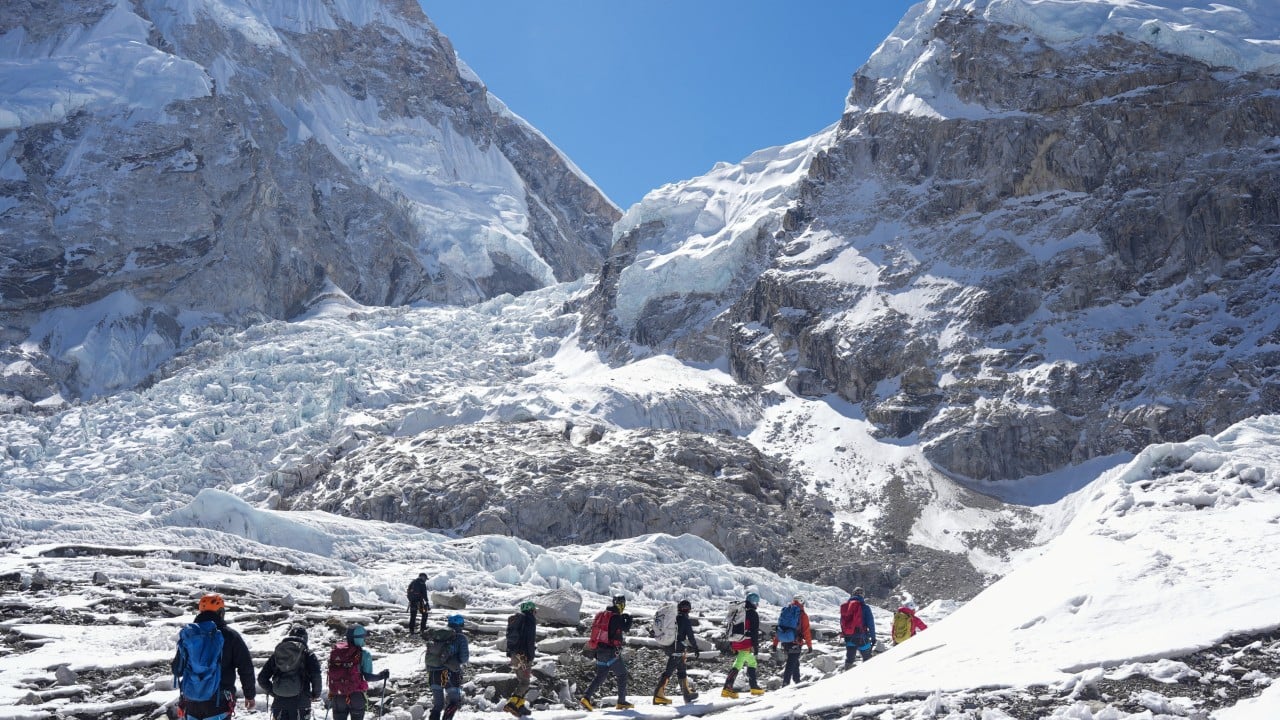
When a natural obstacle—like a collapsing serac or an ice blockage—occurs, the "bottleneck" happens because the vast majority of these clients lack the technical autonomy to bypass it. They are tethered to a single line like pearls on a string. If the string stops, the pearls stop.
True alpinism involves finding a line, assessing the risk, and moving. If you can’t navigate a path around a block without waiting for a Sherpa team to re-fix three hundred meters of rope, you aren't an elite athlete. You're a tourist in a dangerous zip code. The "blockage" isn't the ice. The blockage is the skill gap.
The Logistics of the Ego
We hear constant calls for "regulation" and "permit caps." Critics argue that the Nepalese government is greedy for issuing hundreds of permits. This is a distraction.
Even with 100 permits, you would still have a bottleneck. Why? Because the weather windows on Everest are shrinking. Modern forecasting is so precise that every expedition leader on the mountain sees the same forty-eight-hour gap of low wind. Naturally, everyone pushes at once.
The industry has optimized for success rates. In the 1980s, the summit-to-death ratio was a grim gamble. Today, oxygen technology, high-flow regulators, and the sheer density of support staff have made the summit "accessible." But accessibility is not safety. It is a mask.
By making the climb "easier" through infrastructure, the industry has invited a class of participant that relies entirely on that infrastructure. When the infrastructure breaks—as it did with this recent ice block—the panic sets in. The "hang" happens because the participants have no Plan B. Their Plan B is "Wait for the Sherpas to fix it."
Nature is Not a Managed Asset
The outrage over the ice block reveals a fundamental misunderstanding of geology. The Khumbu Icefall and the upper reaches of the mountain are in constant flux. Expecting a "clear path" to the summit is like expecting no waves in the middle of the Atlantic.
The commercialization of Everest has birthed a sense of entitlement. Clients feel that because they paid the fee, the mountain owes them a summit. When the mountain refuses to cooperate, they blame the "crowds."
I have watched expeditions pour money into luxury base camps with espresso machines and heated rugs. This comfort creates a psychological buffer that disappears the second they hit 8,000 meters. The ice block is a reminder: you are in a place that wants to kill you. If you are surprised that nature obstructed your $100,000 vacation, your ego has outpaced your intelligence.
The Sherpa Subsidy
Let's talk about the labor that keeps these "hanging" climbers alive. The only reason the recent blockage didn't turn into a mass casualty event is the invisible labor of the Icefall Doctors and the high-altitude porters.
While Western media focuses on the "brave" climbers stuck in line, the real story is the guys carrying 30kg of gear who had to climb into the danger zone to re-route the path. The current model of Everest climbing is a massive transfer of risk from the wealthy to the local workforce.
The bottleneck is a symptom of a system where the "climber" is the least competent person on the rope. If we want to solve the Everest problem, we don't need fewer permits. We need higher entry requirements.
The Requirement for Autonomy
Imagine a scenario where to get an Everest permit, you had to prove you could climb a 7,000-meter peak unguided. Not "with a guide," but as the lead.
The queues would vanish overnight.
The reason the queues exist is that the majority of current Everest hopefuls cannot "lead" anything. They follow. They follow the boots in front of them. They follow the rope. They follow the oxygen gauge. When you have a line of followers and the leader hits a wall, the whole line stagnates.
The industry won't do this, of course. There is too much money in the "Follower Model." It is far more profitable to sell a dream to a CEO who has six weeks of training than to wait for a seasoned mountaineer who doesn't need to buy a $100,000 package.
Stop Crying About the Crowds
If you choose to go to Everest during the primary weather window, you are choosing the crowd. Complaining about the queue at the Hillary Step is like complaining about the traffic on the 405 at 5:00 PM. You are the traffic.
The "pure" experience people crave still exists. There are thousands of peaks in the Himalayas that offer total solitude, technical challenge, and zero queues. But they don't have the brand name. You can't put "Scaled an unnamed 6,500m peak in the Hindu Kush" on a LinkedIn bio and get the same dopamine hit as "Summited Everest."
The bottleneck isn't a tragedy of the commons. It is a vanity tax.
Those "hanging" on the ridge are there because they prioritized the trophy over the craft. They chose a path that was pre-built, pre-vetted, and pre-sold. When that product failed because a piece of ice did what ice does, the "adventure" became a nightmare.
The solution isn't better ropes or more ladders. The solution is for the people on the mountain to look in the mirror and realize they aren't explorers. They are consumers. And sometimes, the store is closed.
If you can't climb around the block, you shouldn't be on the mountain. If you're waiting for someone else to fix your path at 29,000 feet, you aren't a mountaineer. You're a passenger.
Get off the rope or get out of the way.