Nuclear fusion research frequently encounters a communications gap between scientific capability and milestone reporting. When announcements emerge regarding reactors achieving milestones with alternative fuels like hydrogen-boron, evaluating the underlying physics requires separating distinct operational regimes. This analysis examines the mechanics of proton-boron eleven fusion, the thermodynamic barriers involved, and the engineering reality behind recent reactor announcements.
The Thermodynamic Cost Function of Proton Boron Fusion
The appeal of hydrogen-boron fusion, specifically protons reacting with boron eleven nuclei, lies in its aneutronic nature. Unlike deuterium-tritium fuel cycles that release high-energy neutrons capable of degrading reactor vessel materials and creating radioactive waste, proton-boron reactions yield alpha particles—helium nuclei—carrying kinetic energy that can theoretically be converted directly into electricity. You might also find this similar story interesting: Why Calling Starships First Flight a Success Is a Massive Delusion.
The nuclear equation appears straightforward:
$$p + ^{11}\text{B} \rightarrow 3 , ^4He + 8.7 \text{ MeV}$$ As highlighted in latest reports by The Next Web, the implications are notable.
However, realizing this reaction in a controlled environment introduces severe thermodynamic penalties. The cross-section for proton-boron fusion peaks at a center-of-mass energy of approximately six hundred kiloelectronvolts. In thermal terms, this corresponds to temperatures exceeding six hundred million degrees Kelvin, nearly forty times hotter than the core temperature required for deuterium-tritium fusion.
At these extreme thermal states, Bremsstrahlung radiation losses escalate exponentially. Bremsstrahlung occurs when free electrons decelerate upon interacting with atomic nuclei, emitting X-rays that escape the plasma core and carry away thermal energy. For proton-boron fuel, the bremsstrahlung radiation emitted by the hot plasma often exceeds the total fusion power generated unless specific non-thermal distribution functions or advanced confinement configurations are maintained.
Confinement Mechanics and Plasma Stability
Achieving the triple product of density, confinement time, and temperature necessary for net energy gain with proton-boron fuel demands advanced magnetic or inertial confinement architectures. Standard tokamak designs struggle with proton-boron fuel because the high ash accumulation and severe radiation losses chill the plasma core before sustainable burn conditions establish.
Alternative approaches, such as laser-driven inertial confinement or field-reversed configurations, attempt to bypass traditional tokamak limitations. In pulsed laser systems, ultra-short, high-intensity pulses interact with solid targets containing hydrogen and boron. These interactions can accelerate protons to mega-electronvolt energies over short spatial scales, initiating localized fusion reactions without maintaining a bulk thermal plasma at six hundred million degrees.
This distinction is critical for evaluating reactor announcements. A system that detects alpha particles or observes fusion events during a pulsed laser experiment has demonstrated nuclear reactions, but it has not achieved net energy gain or self-sustaining ignition. The energy required to fire the high-power lasers typically exceeds the total energy released by the resulting fusion reactions by several orders of magnitude.
Deconstructing Reactor Claims
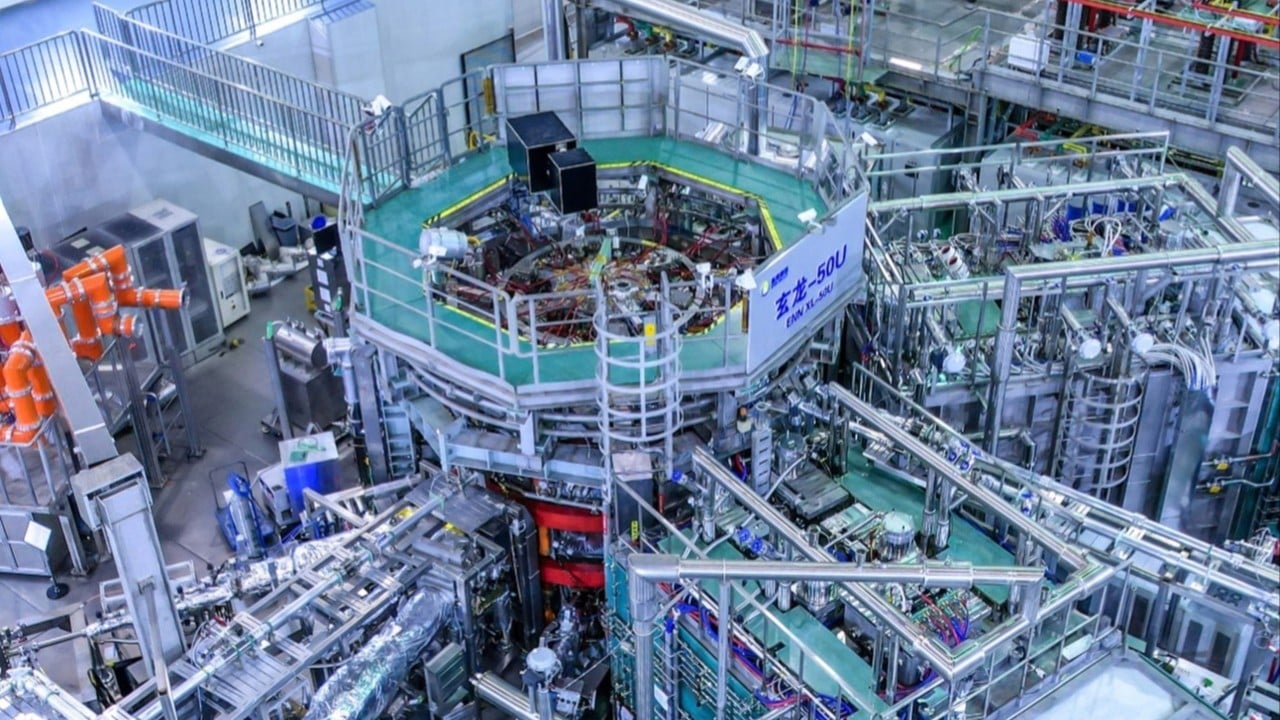
When public communications state that a commercial or experimental reactor has achieved fusion using hydrogen-boron fuel, analysts must isolate three distinct operational states:
- Proof of Principle: Detecting reaction products such as alpha particles confirms that the constituent nuclei collided with sufficient energy to fuse. This validates cross-section physics models but carries no implications for net power production.
- Energy Breakeven: The total fusion energy output equals the external energy applied to heat and confine the fuel. Proton-boron requirements make this threshold exceptionally distant for thermal plasmas.
- Engineering Net Gain: The electrical power generated by the reactor exceeds the total electrical power consumed by all auxiliary systems, cooling pumps, and drivers.
Recent announcements regarding hydrogen-boron milestones typically occupy the first category. Researchers utilize advanced diagnostic tools to map reaction pathways or optimize target preparation, which advances materials science and diagnostic instrumentation without solving the net energy deficit.
System Bottlenecks and Scaling Limitations
Scaling a proton-boron system from an experimental pulse chamber to a continuous power plant involves overcoming distinct mechanical and physical hurdles.
The primary bottleneck is driver efficiency. Inertial electrostatic confinement and laser-driven systems rely on intermediate energy conversion steps—converting electrical grid power into laser light or magnetic fields—each introducing efficiency losses. If a laser system operates at ten percent wall-plug efficiency, the fusion yield must exceed input energy by a factor of ten merely to break even at the primary system level, before accounting for thermal-to-electric conversion losses.
A secondary challenge involves fuel preparation and target longevity. Solid-state targets containing bonded hydrogen and boron degrade rapidly under intense particle bombardment and high thermal loads. Maintaining a continuous fuel feed in a pulsed architecture requires automated target replenishment mechanisms capable of operating within high-vacuum, high-radiation environments.
Strategic Outlook and Operational Reality
Hydrogen-boron fusion remains a compelling long-term objective due to its environmental and safety advantages over deuterium-tritium cycles. However, treating proof-of-concept reaction data as commercial viability misrepresents the underlying physics.
Organizations evaluating fusion technology portfolios must decouple short-term diagnostic milestones from long-term power plant economics. Capital allocation should prioritize fundamental research into non-thermal plasma distributions and high-efficiency drivers rather than developmental scaling of architectures unsuited to the extreme thermal demands of proton-boron fuel.