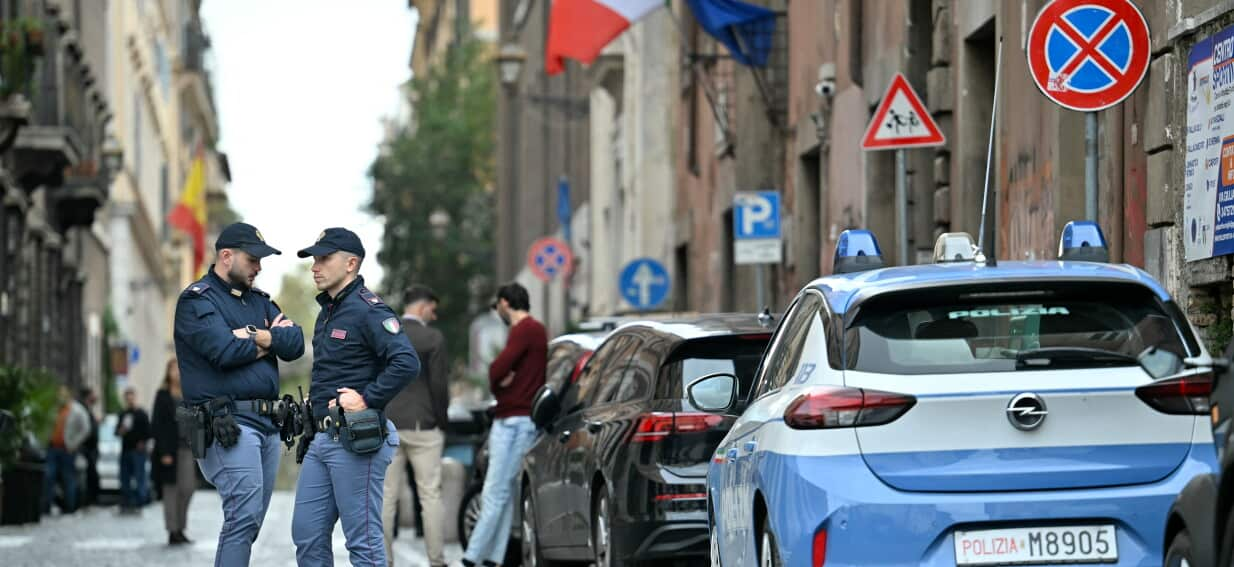
Every time an anonymous email hits a school administrator's inbox in Milan, Manchester, or Dublin, the exact same script plays out. Alarms blare. Thousands of terrified children file out onto freezing asphalt. Armed tactical units sweep empty hallways. Local news outlets publish breathless wire copy tallying the closures.
And somewhere behind a VPN, a fourteen-year-old sitting in a bedroom laughs.
The mainstream press treats these coordinated European school bomb hoaxes like natural disasters—unavoidable waves of malice that authorities heroically endure by following standard evacuation protocols. That framing is dangerously backwards. Our rigid, zero-discretion evacuation policies are not protecting students. They are the exact mechanism that makes low-effort digital terrorism work.
When an institution treats an unverified, mass-blasted email with the exact same operational panic as a physical suspicious package left by a boiler room, that institution has surrendered control of its own perimeter. Worse, it has created an asymmetric weapon where the cost of attack is zero and the cost of defense is measured in millions of lost instructional hours, traumatized kids, and burned-out emergency responders.
The Anatomy of a Zero-Cost Weapon
Let us be brutally precise about what is actually happening during these waves of European school disruptions. Security professionals distinguish between a targeted threat—which contains specific, verifiable details, credible delivery vectors, or corroborating physical evidence—and a mass-distributed hoax (often executed via automated scripts or "swatting-as-a-service" networks).
Traditional physical security doctrine was built in an era when delivering a bomb threat required physical risk. You had to use a payphone, send a physical letter, or call an operator who could trace the line. Because the friction to make the threat was high, the probability that the threat was real was statistically significant. Protocols developed by national security agencies—like the UK’s National Counter Terrorism Security Office (NaCTSO) or the U.S. Cybersecurity and Infrastructure Security Agency (CISA)—originally assumed a high-friction threat environment.
The internet erased that friction. Today, an attacker can scrape ten thousand school email addresses across Italy, the UK, and Ireland, spin up a disposable encrypted email account, and send a copy-pasted extortion or terror script in under four minutes.
Yet school boards and local municipalities continue to apply 1980s physical-threat protocols to 2020s algorithmic spam. I have sat in crisis-management post-mortems where administrators proudly boasted that they evacuated 1,500 students within six minutes of receiving an email written in broken, machine-translated syntax—an email sent simultaneously to four hundred other buildings. They viewed that evacuation as a triumph of preparedness. In reality, it was an operational failure. They allowed a script kiddie to achieve total institutional paralysis without leaving their chair.
Why Evacuation Is Often the More Dangerous Choice
The lazy consensus says: "Better safe than sorry. You can never take a chance with children's lives."
That sounds noble on a press release. On the ground, it ignores basic risk calculus. Evacuating a massive building is not a risk-free reset button; it is an active, hazardous maneuver that introduces immediate physical vulnerabilities.
Consider the mechanics of an emergency evacuation:
- Concentration of Targets: Inside a modern school, students are dispersed behind solid walls, locked doors, and controlled access points. When you pull the fire alarm and march two thousand children onto an open sports field or a public sidewalk, you strip away every layer of physical cover and concentrate the entire population into a single, soft, unguarded mass. In actual historical attacks—such as the 1998 Westside Middle School shooting in Arkansas—attackers deliberately triggered alarms to force targets out of fortified classrooms and into the open.
- Traffic and Transit Hazards: Rushing hundreds of panicked teenagers across urban streets, mobilizing frantic parents who gridlock access roads with their cars, and exposing young children to severe weather creates statistically guaranteed physical hazards. Every time a city triggers mass evacuations across dozens of schools simultaneously, emergency room admissions for minor injuries, asthma attacks, and traffic collisions spike.
- Responder Exhaustion and Normalization of Deviance: Emergency services operate on finite capacity. When bomb squads and armed police spend fourteen hours sweeping empty classrooms across three counties because of an email blast, they are unavailable for genuine emergencies. Even worse, students and staff suffer from alarm fatigue. By the fourth hoax in a semester, nobody takes the drill seriously. If a real crisis ever hits, people will casually stroll out while checking their phones, assuming it is just another email.
The Behavioral Economics of Swatting
To understand why these hoaxes keep spreading across Europe, stop looking at counter-terrorism manuals and start looking at behavioral psychology.
Mass hoaxers—whether they are bored teenagers in Discord servers, ideological agitators, or state-aligned information warfare units looking to sow civic chaos—are driven by a single metric: visible disruption. They watch local news sites. They monitor municipal Twitter feeds. They refresh live blogs waiting to see their handiwork confirmed in headlines.
Every time a newspaper runs a breathless alert detailing how many schools shut down, how many bomb dogs were deployed, and how chaotic the morning commute became, the media acts as the attacker's scoreboard. The attacker gets an immediate dopamine hit and undeniable proof of concept. They see that a three-line email can force a major European city to its knees.
If a spam filter blocks an email, the attacker gets nothing. If a school administrator receives an email, quietly verifies it with local intelligence, keeps students safely in class, and refuses to feed the news cycle, the attacker gets zero return on investment. Right now, European institutions are offering the highest possible return on investment for the lowest possible effort.
What Threat Assessment Actually Looks Like
Critics of my stance immediately ask: "What if the one email you ignore is the one that actually blows up?"
That is a false binary. The choice is not between "evacuate everyone immediately" and "ignore the email and hope for the best." The alternative to panic is structured threat triage—a discipline that intelligence agencies and major corporate security teams use every single day, yet somehow fails to trickle down to public school systems.
Real threat assessment relies on specific, verifiable indicators rather than reflexive fear. When a threat arrives, trained security personnel evaluate it against concrete criteria before moving a single person:
- Specificity of Detail: Does the message name a specific room, a specific device type, a plausible delivery method, or a unique architectural feature of the building? Mass hoaxes use vague, sweeping language ("I have placed explosives in your building").
- Distribution Vector: Was the email sent exclusively to one institution's private internal address, or was it blasted to a publicly scraped
info@oroffice@inbox alongside hundreds of other recipients? - Digital Forensics and Metadata: Modern email headers tell a story. Security teams and law enforcement can rapidly identify known anonymizing relays, recycled templates, and identical message hashes circulating across regions.
- Physical Verification (The Quiet Sweep): Instead of pulling the fire alarm, trained staff and school resource officers conduct a discreet, targeted visual inspection of high-risk common areas—unlocked restrooms, lobbies, exterior perimeters, and deliveries—while students remain safely behind locked classroom doors.
I have watched major financial institutions and logistics hubs handle dozens of bomb threats a year without halting operations for a single second. They rely on strict access control, camera analytics, and silent verification protocols. They know that if they evacuated every time an angry customer or internet troll sent a threat, they would go bankrupt by Tuesday. Public institutions deserve that same operational maturity.
The Structural Failure Inside School Administration
If structured threat triage is so obvious, why do schools in Italy, the UK, and Ireland keep falling into the exact same trap?
Because public bureaucracy rewards compliance, not competence.
A school principal operates under a brutal asymmetric incentive structure. If a principal follows the rigid protocol, evacuates the building, cancels classes, and wastes six hours of everyone's time on a fake email, nobody gets fired. The principal followed the checklist. Liability is zero.
Conversely, if a principal exercises professional judgment, consults with police, determines a mass email is a hoax, keeps the school open, and a parent finds out about the email later, that principal will be crucified by angry parents and local politicians for "gambling with children's lives." Even when the principal is 100% right and nobody is harmed, the political backlash is career-ending.
So administrators choose self-preservation over rational security. They outsource their judgment to a laminated flowchart. They turn schools into fragile, easily disrupted targets because the bureaucratic penalty for overreacting is zero, while the personal penalty for calm, rational leadership is massive.
Admitting the Trade-Offs
Let us be completely honest about the downside of shifting away from automatic evacuations: human judgment is fallible.
Threat triage requires training, clear communication channels between local police and school leaders, and the courage to accept residual risk. In a decentralized system with thousands of underfunded schools, not every administrator has the background to assess threat credibility on the fly. If a municipality adopts a nuanced triage model without investing in rapid police-to-school intelligence sharing, a miscommunication could delay an evacuation when a genuine physical anomaly actually exists.
Furthermore, parents have been conditioned for decades to expect immediate lockdowns and evacuations. Shifting a community away from panic-driven protocols requires transparent communication before a crisis hits. If you change the rules quietly and parents find out mid-incident that their kids were kept in class during a threat, trust evaporates instantly.
How to Actually Break the Cycle
Stopping the wave of European school hoaxes does not require arresting every teenager with a VPN—that is a game of whack-a-mole law enforcement will never win. It requires removing the reward.
- Centralize Digital Triage at the Municipal or National Level: Individual school principals should not be making isolated threat assessments at 7:45 AM. Police cyber units and education ministries need automated ingestion pipelines. When a known hoax template hits one school, every other school receiving that same hash should receive an instant automated advisory: Known mass hoax. Do not evacuate. Conduct silent perimeter check.
- Mandate Shelter-in-Place Over Evacuation for Unverified Digital Threats: Unless physical evidence of a suspicious device is found, or intelligence confirms a targeted, credible threat, students are safer inside locked classrooms than standing in open parking lots. Flip the default posture from frantic exit to quiet containment.
- Starve the Scoreboard: Police departments and school districts must stop issuing dramatic press releases every time a spam email triggers a sweep. Confirm incidents briefly, label them immediately as unverified mass spam, and refuse to publish the exact wording of the threats or the precise number of deployed tactical units.
- Indemnify Rational Decision-Making: Education ministries must explicitly back administrators who follow verified threat-triage guidelines and keep schools open during mass hoax waves. Protect the leaders who refuse to let trolls dictate the academic calendar.
Security is not measured by how fast you can empty a building. It is measured by how well you protect your people without letting an adversary dictate your reality. Until European schools stop treating automated spam like an imminent detonation, the hoaxes will keep coming—and the trolls will keep winning.


