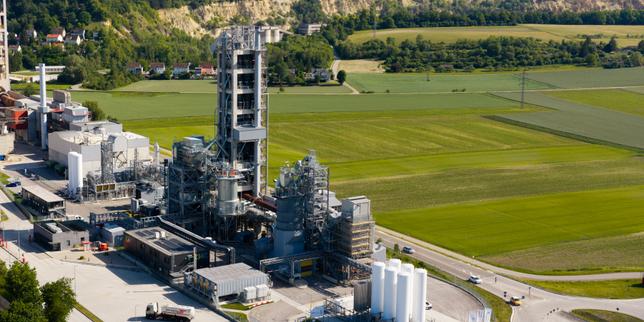
Four European cement giants just shook hands on a joint carbon capture initiative in Germany, and the industry is busy applauding itself. The press releases promise a greener horizon. The executives look heroic in hard hats. The PR machine is running hot.
It is a massive, capital-draining distraction.
Watching four industrial heavyweights pool resources for point-source carbon capture and storage (CCS) feels like watching mainframe manufacturers in 1982 investing heavily in cleaner diesel generators for their data centers. It addresses a symptom while doubling down on an obsolete thermodynamic architecture.
I have watched industrial conglomerates pour tens of millions into pilot capture plants only to realize the parasitic load of the capture process eats up their margins before a single ton of carbon reaches a permanent sink. The math behind giant, centralized point-source amine scrubbing on traditional rotary kilns is fundamentally broken. Celebrating these joint ventures is not celebrating innovation. It is celebrating the financialization of industrial inertia.
The Parasitic Energy Trap Nobody Mentions
The PR surrounding the German consortium talks about volume, partnership, and ambitious timelines. What it conspicuously skips is enthalpy.
To understand why this four-way union is built on quicksand, you have to look at the chemistry of Portland cement. Roughly 60% of the emissions from a standard cement kiln do not come from burning fossil fuels to heat the kiln; they come from the chemical reaction itself—calcination. When you heat limestone ($\text{CaCO}_3$) to turn it into lime ($\text{CaO}$), carbon dioxide ($\text{CO}_2$) is liberated as an inescapable chemical byproduct:
$$\text{CaCO}_3 \xrightarrow{\Delta} \text{CaO} + \text{CO}_2$$
Traditional post-combustion capture attempts to catch this gas out of the flue stack. Flue gas is dirty, hot, and diluted with nitrogen. Scrubbing $\text{CO}_2$ from that stream requires massive volumes of liquid solvents, usually alkanolamines, which bind to the carbon dioxide.
Then comes the trap.
To strip the trapped $\text{CO}_2$ out of the solvent so you can compress and bury it, you have to boil that solvent. This requires tremendous thermal energy—known as the parasitic thermal load. A standard cement plant retrofitted with amine scrubbing requires up to 30% to 40% more energy just to run the cleanup system.
Where does that extra energy come from? In modern Europe, energy is expensive, volatile, and scarce. Increasing the energy consumption of an energy-intensive process by one-third just to achieve net-zero metrics on paper is thermodynamic madness. You are burning more fuel or consuming massive amounts of clean grid power—power that could actually decarbonize heat pumps or electric vehicles—just to wash the exhaust of a 19th-century manufacturing process.
The Pipeline Phantom and the Transport Fallacy
Let us assume the German consortium magically solves the parasitic energy problem. Let us assume they run their capture plant on pure, free green hydrogen or abundant geothermal heat.
Where does the carbon go?
This is the second fatal flaw in the collective CCS narrative: transport infrastructure that does not exist and likely will not exist at scale for decades.
Capturing gas is only 20% of the operational challenge. Moving gas is the real bottleneck. To move millions of metric tons of $\text{CO}_2$, you need high-pressure pipelines that keep the gas in a supercritical state.
- Permitting nightmares: Building a linear chemical pipeline across multiple European jurisdictions makes building a transmission line look like child's play. Local opposition to $\text{CO}_2$ pipelines is fierce, driven by legitimate safety concerns regarding rapid decompression events.
- Geological luck: Germany lacks immediate, unlimited onshore storage capacity due to political moratoria and localized resistance. That means piping the supercritical carbon offshore to depleted gas fields in the North Sea.
- The cost stack: Liquidating, compressing, piping, shipping, and injecting carbon adds $40 to $90 per ton on top of the capture costs.
When you stack the real-world operational expenditures, point-source capture and offshore sequestration for landlocked or inland German cement plants pushes the total cost per ton into absurd territory. It relies on a speculative network of European pipelines that exist mostly on PowerPoint decks presented in Brussels.
If your industrial strategy depends entirely on three different governments building cross-border supercritical pipelines by 2030, you do not have a strategy. You have a prayer.
Why Joint Ventures Are Often Corporate Risk-HEDGING, Not Innovation
When four major competitors form a consortium to tackle an infrastructure problem, the public relations department frames it as unprecedented collaboration for the good of the planet.
As an insider who has sat in these corporate strategy rooms, I read it differently: it is a liability-sharing mechanism.
When the capital expenditure of a clean technology is prohibitively high and the return on investment is fundamentally negative without government subsidies, no single chief executive wants to put their balance sheet on the line. By splitting the cost four ways, each player buys a cheap insurance policy:
- Regulatory Air Cover: They signal to European Union regulators that they are taking action, shielding themselves from immediate legislative penalties under the Emissions Trading System (ETS).
- Subsidized Capex: They position themselves as the premier candidate for regional and federal decarbonization grants. Taxpayers end up funding the capital expenditure of a system that serves to prolong the lifespan of aging assets.
- Deterrence of Real Disruptors: By sucking up the available media space and government grant money, the consortium creates the illusion that "the adults are handling it." This starves radical alternative technologies of capital.
It is risk mitigation dressed up as radical leadership. If the project stalls five years from now due to pipeline delays or unviable solvent regeneration costs, all four participants can shrug, blame regulatory bottlenecks, and write off a fraction of what a solo venture would have cost them.
The Elephant in the Room: Alternative Chemistry
The most frustrating aspect of Europe’s obsession with mega-CCS projects is that it preserves the fundamental chemistry of Portland cement—a material designed in the 1820s.
We are spending billions trying to capture the carbon coming out of limestone kilns instead of changing the recipe.
The industry argues that Portland cement is the only material with the structural integrity, code approvals, and volume capacity to build modern civilization. That argument is fast becoming an excuse for intellectual laziness.
Look at what is actually happening in chemistry labs and early-stage commercial deployments outside the legacy consortiums:
Supplementary Cementitious Materials (SCMs)
By substituting clinker with calcined clays, blast furnace slag, or pozzolans, companies can immediately slash the carbon intensity of cement by 30% to 50% without capturing a single molecule of gas. Calcined clay is abundant worldwide, does not rely on dying heavy industries like steel for slag, and burns at lower kiln temperatures.
Non-Portland Chemistry
Startups and forward-thinking material scientists are developing binders based on magnesium oxides, calcium silicates, or geopolymers that either cure by absorbing $\text{CO}_2$ permanently from ambient air or skip the calcination step entirely. Some of these formulations achieve structural strength equal to or greater than standard concrete in a fraction of the time.
Direct Separation and Electrification
Instead of washing dirty exhaust gas with toxic amines after the fact, direct separation kilns heat limestone indirectly or through electric arcs, yielding a pure stream of $\text{CO}_2$ straight out of the reactor without needing energy-intensive chemical scrubbing.
Why are the major European players not funneling those billions directly into scaling alternative chemistries or completely redesigning the kiln geometry? Because changing the material means altering supply chains, rewriting building codes, retraining structural engineers, and accepting that legacy manufacturing facilities are stranded assets.
Fitting a giant chemical filter onto the back of an old kiln allows companies to keep their existing supply chains, balance sheets, and operational mindsets completely intact. It is comfortable. It is safe. And it is fundamentally the wrong vector of development.
The Harsh Economics of the EU ETS Game
To understand why this is happening now, look at the financial pressures driving European heavy industry. The European Union Emissions Trading System (EU ETS) is slowly stripping away free carbon allowances. As the cap tightens, the price per ton of carbon emitted creates a direct threat to profit margins.
At €80 to €100 per ton of emitted $\text{CO}_2$, a cement plant emitting millions of tons a year faces an existential tax bill.
+-------------------------------------------------------------------+
|                     THE TRADITIONAL CCS LOOP                      |
|                                                                   |
| [Limestone + Fuel] -> [High-Temp Kiln] -> [Dirty Flue Gas (CO2)]   |
|                                                     |             |
|                                                     v             |
| [Underground Storage] <- [Pipeline] <- [Amine Solvent Capture]    |
|   (High Risk/CapEx)     (No Access)     (30-40% Energy Penalty)   |
+-------------------------------------------------------------------+
The executive calculation looks simple: pay the ETS penalty every year, or build a capture plant partially funded by EU innovation grants and offset the liability.
Under this narrow lens, CCS looks like a logical financial hedge. But it is a financial hedge built on regulatory arbitrage, not on superior engineering or product value.
What happens when green-field cement plants in North Africa, the Middle East, or Asia—built with low-carbon binder technology or direct-electrified kilns—start producing structural materials at half the energy cost? European manufacturers will be left holding ultra-expensive, energy-hungry CCS retrofits on aging plants, producing an inherently expensive commodity that requires tariff walls to remain competitive.
Trade protections can only shield an inferior technological stack for so long.
What Real Decarbonization Looks Like
If an industrial leadership team actually wanted to disrupt the cement carbon cycle rather than manage public relations, the roadmap would look radically different:
- Stop funding post-combustion retrofits on traditional kilns. Stop trying to scrub dirty gas at the end of a long, hot pipe. Redirect that capital toward zero-emission core processes.
- Mandate clinker replacement immediately. The fastest way to reduce carbon in concrete is not to capture it at the stack; it is to use less clinker in the mix today. Accelerate the regulatory approval of calcined clays and alternative pozzolans across all municipal and state infrastructure projects.
- Invest in electrified, direct-separation kilns. If you must process limestone, process it in a reactor designed from day one to yield a pure, unmixed stream of $\text{CO}_2$ using renewable electricity, eliminating the solvent-scrubbing phase entirely.
- Redesign the end product. Pivot from selling tons of grey powder to selling performance solutions. Carbonated concrete curing, mineralized aggregates, and high-performance geopolitical binders require a fraction of the raw material to achieve identical compressive loads.
The four-cementier alliance in Germany is not a historic turning point for sustainable industry. It is a monument to corporate conservatism—a high-stakes effort to keep a 200-year-old chemical process on life support using public money and complex infrastructure that is years away from reality.
True industrial progress does not look like four giants agreeing to bolt an expensive vacuum cleaner onto an old smokestack. It looks like making the smokestack completely obsolete.