For decades, economists treated climate change as an abstract spreadsheet entry for the distant future. That illusion shattered completely this summer. Record-shattering heatwaves, prolonged droughts, and massive wildfires swept across the continent, instantly erasing growth projections and rewriting the financial realities of the European Union.
If you think this is just about uncomfortable weather, you are missing the entire financial picture. Financial institutions like Triodos Bank and Allianz estimate that extreme heat and compound climate disasters will wipe out roughly 1% of the EU's total GDP this year alone—amounting to a staggering €180 billion in lost economic output. Stagnation has arrived early.
The Hidden Supply Chain Chokepoints
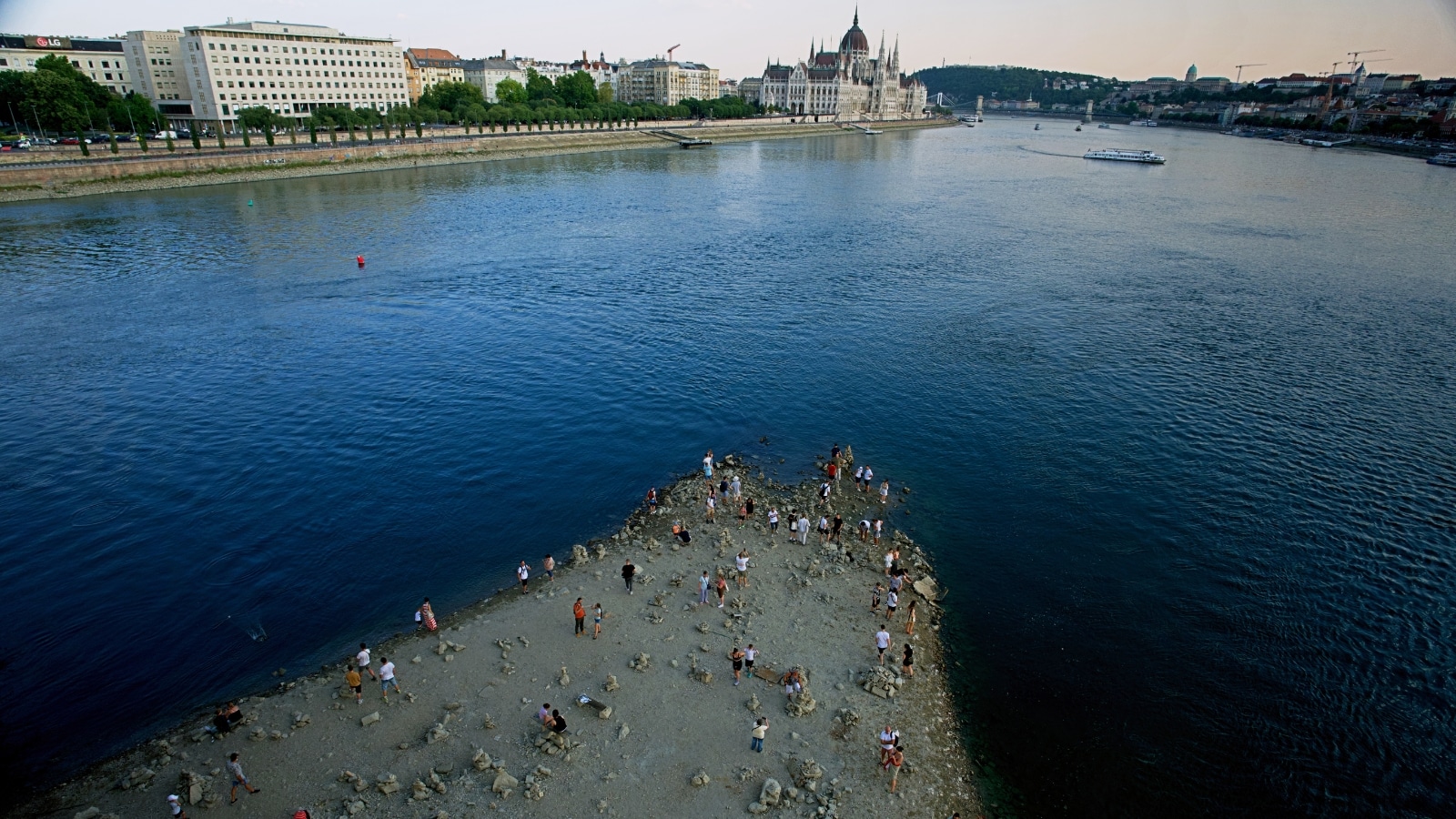
When rivers dry up, commerce grinds to a halt. It is that simple. This summer, vital cargo arteries like the Rhine and the Danube dropped to critically low water levels, crippling inland shipping. Barges hauling raw materials, fuel, and manufactured goods could only run at partial capacity.
The economic fallout from this logistics bottleneck is immediate. Analysts at ING point out that shipping disruptions on the Rhine alone will shave 0.3 percentage points off Germany’s GDP this year. When the industrial engine of Europe sneezes, the rest of the bloc catches a cold.
Energy production took an equally brutal hit. Nuclear power plants across the continent had to curtail output or shut down completely because river water used for cooling grew too warm. In Hungary, bank models show that every single week the country's largest nuclear generator stays offline eats another 0.1 percentage point from national GDP.
Why Labour Productivity is the Real GDP Killer
Most people assume crop failures drive climate-related economic losses. While agriculture took a 6% to 7% hit on late-harvested crops like maize and sunflowers, agriculture is only part of the equation.
The single largest economic drain is plummeting human productivity. According to recent labor market analyses, lost worker output accounts for roughly 0.6% of the EU's total GDP loss. You cannot hammer steel, pave asphalt, or manage warehouse floors efficiently when temperatures cross safe biological thresholds.
Public health costs are skyrocketing alongside lost hours. Germany alone reported more than 10,000 heat-related deaths, a grim statistic that highlights the human toll underlying these macroeconomic indicators. Healthcare systems are strained, emergency response budgets are depleted by historic wildfire seasons, and public finances are buckling under the weight of constant crisis management.
Inflation Pressures and Regional Divides
Southern Europe faces an entirely different tier of economic friction. Countries like Spain, Italy, and Greece are seeing traditional tourism models threatened as summer temperatures climb past 40 degrees Celsius. Tourists are beginning to rethink peak-summer travel, shifting their habits toward cooler northern destinations or off-season months.
At the same time, extreme weather acts as an invisible tax on groceries. Agricultural shocks in southern regions push food prices higher, complicating the European Central Bank’s mandate to control inflation. Research from the Barcelona Supercomputing Center shows that past heatwaves directly spiked eurozone inflation by over 0.3 percentage points through food costs alone.
Governments with high debt-to-GDP ratios—particularly France and Italy—now face a cruel fiscal trap. Tax revenues shrink automatically during economic slowdowns, leaving treasuries with less money precisely when they need massive investments in grid modernization, flood defenses, and green energy transitions.
Businesses operating in Europe can no longer treat weather volatility as a temporary anomaly. Supply chains require redundancy, industrial cooling infrastructure needs immediate capital injection, and labor laws must adapt to protect workers from extreme thermal stress. Ignoring these shifts means watching profit margins evaporate year after year.
:max_bytes(150000):strip_icc()/ar-American-Cheese-taste-test-horizon-4x3-54cc339550cd44b9a818c17bdfd5428d.jpg)