The ground is shifting rapidly across the Arabian Peninsula. If you are only watching the diplomatic posturing between Washington and Tehran, you are missing the real fire burning on the ground.
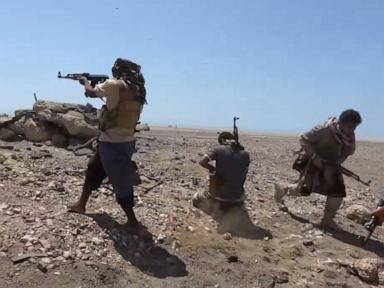
Yemen is sliding back into a brutal military phase. Houthi forces are pressing hard toward Aden, government-aligned coalitions are retreating from strategic Red Sea choke points, and regional command structures are fracturing. At the same time, direct friction between the United States and Iran continues to boil over across vital maritime corridors.
This is not just another localized flare-up. This is a complete unraveling of the fragile status quo that held for years. Let's break down what is actually happening and why it matters.
The Ground War in Yemen Breaks Loose
For a long time, the conflict in Yemen felt locked in an exhausting stalemate. The UN-brokered 2022 ceasefire kept total disaster at bay, even if daily life remained miserable for millions. That illusion is gone.
Houthi forces have launched aggressive pushes across multiple fronts, including Marib, al-Jawf, and the approaches to Taiz. Facing heavy pressure and poor inter-faction coordination, Yemeni government-aligned forces recently made a strategic withdrawal from key coastal positions near the Bab al-Mandeb Strait. They pulled back to defend Aden, leaving the crucial shipping corridor exposed.
The political fallout inside the internationally recognized government is just as messy. The Yemeni parliament recently approved legislation designating the Houthis as a terrorist organization, aiming to choke off their financing streams. But legislation on paper does little to stop troops moving on the ground. The Southern Armed Forces and various coalition factions are scrambling to secure defensive perimeters as the threat to Aden grows.
Saudi Arabia is feeling the heat directly, too. Riyadh replaced its Joint Forces Commander, bringing in Chief of the General Staff Fayyad al-Ruwaili to fix glaring command-and-control gaps. Despite these leadership shakeups, Houthi drones and ballistic missiles have continued to target critical Saudi infrastructure, including pipelines and facilities near Riyadh.
How US-Iran Friction Fuels the Fire
You cannot separate Yemen’s internal collapse from the wider confrontation between Washington and Tehran. The two tracks feed into each other.
The US military has engaged in rolling operational responses against Iranian-backed proxies and direct targets, including recent strikes around Qeshm Island in the Strait of Hormuz. Meanwhile, shipping lanes face persistent threats from maritime mines, missile attacks, and drone strikes.
Iran’s strategy relies heavily on a network of regional allies. The Houthis act with a high degree of autonomy, but their objectives align directly with Tehran's pressure campaign against Western and Gulf interests. When Washington applies military leverage against Iranian positions, the response often ripples straight into the Red Sea and Yemeni skies.
The White House insists it wants to avoid open-ended military commitments in the region. Yet, the current reality on the ground resembles a cycle of constant retaliation. There is no active diplomacy bridging the gap. Both sides are locked in a dangerous pattern of high alert.
What This Means for Regional Stability
The humanitarian cost of this renewed violence is staggering. Hundreds of thousands of people face fresh displacement, and besieged areas like Taiz are cut off from basic aid and medical supplies. Disease and hunger are climbing upward as supply lines snap under the weight of active combat.
For global supply chains, the stakes are equally high. The Bab al-Mandeb Strait is a vital artery for international trade. When military forces shuffle positions and exchange missile fire right along its coastline, shipping companies absorb immediate risks. Insurance rates spike, routes change, and the cost of global goods ticks upward.
Riyadh wanted an exit ramp from the war it entered a decade ago. Instead, Saudi leadership finds itself forced back into defensive postures while trying to manage fragmented local proxies who struggle to trust one another.
Keep your eyes on the defense posture around Aden and the actual coordination among anti-Houthi factions. If the fragmented government coalition fails to stabilize its lines, the territorial map of Yemen will be redrawn permanently. Watch the maritime updates coming out of the Red Sea and the Strait of Hormuz to gauge whether Washington and Tehran are sliding closer to a wider flashpoint.