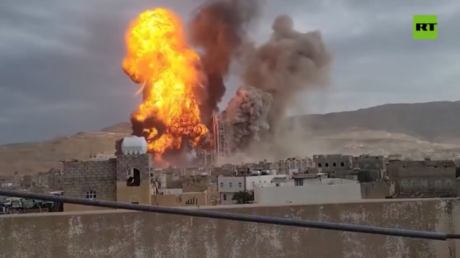
The mechanics of state deterrence depend entirely on the credibility of punitive thresholds and the structural symmetry of enforcement capabilities. When non-state actors engage in asymmetric interdiction against sovereign supply lines, conventional military posturing frequently fails to alter target calculus. Riyadh faces a recurring strategic friction point in the Southern Red Sea, where maritime choke points and cross-border ballistic actions expose the structural limitations of reactive diplomacy. Evaluating this friction requires examining the cost functions governing Houthi tactical choices versus the systemic exposure borne by Gulf security architectures.
The Asymmetry of Strategic Thresholds
Deterrence models assume rational actors calculate the marginal cost of escalation against expected material gains. For decentralized insurgent groups embedded within asymmetric operating environments, traditional economic or infrastructural vulnerabilities do not hold identical weight. The opportunity cost of sustained conflict is absorbed by civilian populations, while leadership fractions preserve operational tempo through decentralized staging and subterranean logistics. You might also find this connected article useful: The Broken Handshake at the End of the World.
When regional powers issue explicit warnings following kinetic strikes, the efficacy of that signaling rests on historical enforcement. If prior violations met restrained responses or protracted diplomatic friction, the target updates its risk matrix downward. This creates a deterrence decay curve. Each subsequent attack that fails to trigger immediate, high-consequence systemic disruption reinforces the insurgent perception that retaliatory boundaries are elastic.
[Operational Event]
       │
       ▼
[Insurgent Cost-Benefit Recalibration]
       │
       ├──> Low-Cost Absorption (Civilian Burden) ──> Continued Interdiction
       │
       └──> Structural Disruption (Regime Risk) ──> Deterrence Threshold Met
A two-word diplomatic warning functions as a binary signal in a continuum of escalation. Without an underlying architecture of active denial or punitive asymmetry, linguistic warnings are processed as bureaucratic noise rather than strategic constraints. The structural vulnerability is not the warning itself, but the credibility gap between the stated red line and the operational capacity to impose prohibitive costs without triggering wider regional contagion. As reported in recent reports by NPR, the results are widespread.
The Economic and Logistical Friction Coefficient
Maritime corridors such as the Bab el-Mandeb strait operate on tight temporal and financial tolerances. Global trade networks rely on predictable transit velocities. When regional actors deploy coastal defense cruise missiles, uncrewed surface vessels, or loitering munitions against commercial tonnage, the secondary economic impacts propagate far beyond the immediate zone of impact.
- Insurance Premium Spikes: Underwriters immediately reprice transit risk, shifting operating costs onto global consumer markets and altering trade routing economics.
- Geographic Diversification Costs: Shipping lines bypass the Suez route for the Cape of Good Hope, introducing transit delays that degrade asset utilization rates and supply chain responsiveness.
- Infrastructure Hardening Requirements: Navigational assets must integrate active countermeasure systems, increasing capital expenditure across commercial fleets.
These friction points generate systemic pressure on international stakeholders, which in turn amplifies the political urgency felt by neighboring states like Saudi Arabia. The strategic dilemma lies in balancing the necessity of safeguarding national security parameters against the hazard of becoming entangled in protracted, attritional engagements that drain fiscal and diplomatic capital.
Mapping the Escalation Ladder
Managing cross-border security threats requires a formalized escalation framework that categorizes state responses by intensity, reversibility, and systemic impact. Without this structure, foreign policy oscillates between diplomatic quiescence and sudden kinetic overextension.
Phase One: Passive Containment
- Reliance on intelligence sharing, diplomatic condemnation, and multinational naval patrols to intercept munitions in transit.
- Limitation: Does not disrupt the adversary's manufacturing or supply chains; treats symptoms rather than structural causes.
Phase Two: Active Denial and Interdiction
- Direct kinetic neutralization of launch platforms, radar installations, and command nodes within the zone of operations.
- Limitation: High risk of operational wear and tear; requires continuous intelligence, surveillance, and reconnaissance assets.
Phase Three: Punitive Asymmetry
- Imposition of severe economic isolation, structural supply blockades, and targeted disruption of financial liquidity networks.
- Limitation: May exacerbate humanitarian friction, drawing international criticism and shifting the narrative advantage to the adversary.
The transition between these phases is governed by the credibility of the state's deterrent posture. When lower phases fail to impose behavioral modifications, the state is structurally compelled to escalate or accept a permanent baseline of vulnerability.
The Operational Reality of Counter-UAS and Missile Defense
Defending territorial integrity and maritime lanes against saturation attacks utilizing low-cost uncrewed aerial vehicles and anti-ship ballistic missiles introduces a brutal economic imbalance. Interceptor missiles, such as Patriot or advanced naval defense batteries, carry unit costs exponentially higher than the inbound threat vectors.
This financial divergence creates a structural vulnerability. An adversary can achieve strategic wins simply by forcing the expenditure of high-end defensive inventories at a fraction of the production cost. Over extended timelines, this attrition dynamic strains defense procurement schedules and forces difficult prioritization matrices regarding asset allocation.
To neutralize this imbalance, strategic doctrine must pivot from pure interception to left-of-launch disruption. Eliminating the capability at its source—targeting assembly facilities, transit corridors, and mobile launch infrastructure before execution—is the only method to restore cost parity. However, doing so requires actionable intelligence networks and political tolerance for sustained operational tempo.
Strategic Forecast and Implementation Playbook
Resolving the security dilemma in the Southern Red Sea requires abandoning reactive declarations in favor of integrated, multi-domain containment architectures. The immediate operational imperative is the establishment of a unified regional command framework that synchronizes intelligence sharing, real-time tracking, and automated defensive countermeasures across all affected jurisdictions.
Concurrently, diplomatic channels must be leveraged not for appeals to restraint, but to codify international maritime protection enforcement mechanisms. By framing the defense of the Bab el-Mandeb as a non-negotiable global public good, regional powers can share the financial and operational burden of deterrence, transforming localized security friction into a universally enforced baseline of international law.