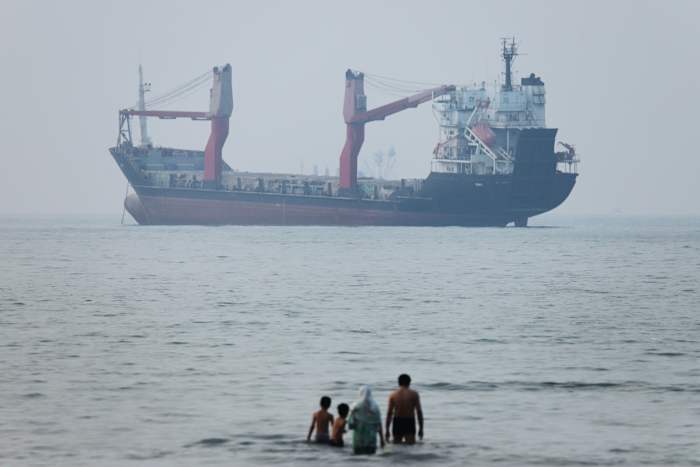
Air raid sirens echoed through Bahrain early Friday morning as local authorities instructed residents to take immediate shelter from incoming fire. The warning came just hours after the U.S. military wrapped up its 13th consecutive night of airstrikes against targets inside Iran. What started as a local dispute over passage rights in the Strait of Hormuz has transformed into a dangerous, widening regional conflict that threatens global energy supply chains.
The core issue isn't just military posturing—it's direct economic warfare over critical maritime chokepoints. With Brent crude breaking past $100 a barrel and alternative trade routes coming under attack, the confrontation between Washington and Tehran has reached a tipping point.
The Fight for Control Over Maritime Chokepoints
The conflict erupted over who gets to dictate terms in the Strait of Hormuz, a narrow waterway that handles roughly a fifth of the world's petroleum and gas shipments in normal times. Iran claims the right to regulate traffic and collect transit fees, targeting commercial vessels that stick to international routes supervised by U.S. forces.
In response, U.S. Central Command has executed targeted strikes across key Iranian military locations. The latest wave focused heavily on disabling Iranian naval capabilities, including drone boat storage on Qeshm Island, command nodes, and coastal defense installations in Ahvaz and Bandar Abbas.
"Under no circumstances will the Iranian armed forces allow interference in the affairs of the Strait of Hormuz, nor will they permit others to manage it," Iranian military officials warned in statement following recent engagements.
The situation compounded when Yemen's Iran-backed Houthi rebels began targeting oil tankers in the Red Sea. By threatening the Bab el-Mandeb Strait—which handles about 12% of global trade—militants are effectively attempting a double-chokepoint lock on international shipping lanes.
Why Alternative Routes Aren't Saving Energy Markets
To bypass the blocked Persian Gulf, exporters have tried rerouting crude overland. Saudi Arabia, for instance, has pushed millions of barrels daily through pipelines to its Red Sea port of Yanbu. But as Houthi strikes zero in on tankers operating off the western coast, that bypass option faces severe security risks.
Insurance premiums for commercial vessels navigating the region have skyrocketed. Many major ocean carriers are simply refusing to enter the Gulf without direct naval escorts, leaving dozens of tankers stuck outside active combat zones.
To understand the broader operational strain, here's how the key chokepoints compare:
- Strait of Hormuz: Handles roughly 20% of global oil and gas exports. Currently facing severe transit restrictions, naval skirmishes, and ongoing airstrikes.
- Bab el-Mandeb Strait: Controls access to the Suez Canal and 12% of global maritime trade. Threat level has surged due to fresh missile attacks on commercial tankers.
- Saudi East-West Pipeline / Yanbu Port: Designed as a bypass route around Hormuz. Vulnerable to regional long-range strike capabilities and Red Sea naval threats.
Economic Consequences and Asset Seizures
The White House has signaled a direct financial strategy to offset the cost of commercial ship damages. Administration officials announced plans to utilize sanctioned Iranian funds currently held in American financial institutions to pay for vessel repairs and lost cargo.
Tehran fired back legally and politically. Iranian Foreign Minister Abbas Araghchi publicly condemned the proposed asset seizures, warning that normalizing the confiscation of foreign reserves sets a dangerous international legal precedent.
Meanwhile, regional allies like Iraq are attempting diplomatic intervention. Prime Minister Ali al-Zaidi visited Tehran to advocate for a ceasefire, promising that Iraqi soil won't be used as a launching pad for attacks against Iran. Yet, with air defense systems actively firing across Gulf nations, diplomatic efforts face massive headwinds.
Commercial operators looking to navigate these supply disruptions should take immediate tactical steps:
- Re-evaluate route risk profiles: Audit all shipping charters passing through the Arabian Sea and Red Sea. Divert non-essential transit around the Cape of Good Hope despite extended transit times.
- Review marine insurance policies: Confirm war-risk coverage limits and ensure active compliance with updated maritime security advisories.
- Diversify fuel Sourcing: Energy buyers should lock in long-term hedging strategies and secure alternative deliveries from non-Gulf producers to manage price volatility.
Monitor maritime traffic advisories closely through UK Maritime Trade Operations (UKMTO) and US Naval Forces Central Command for real-time safety updates.


