Midnight in Hong Kong usually feels like an invitation rather than a closing bell. In November 2006, it felt like a funeral.
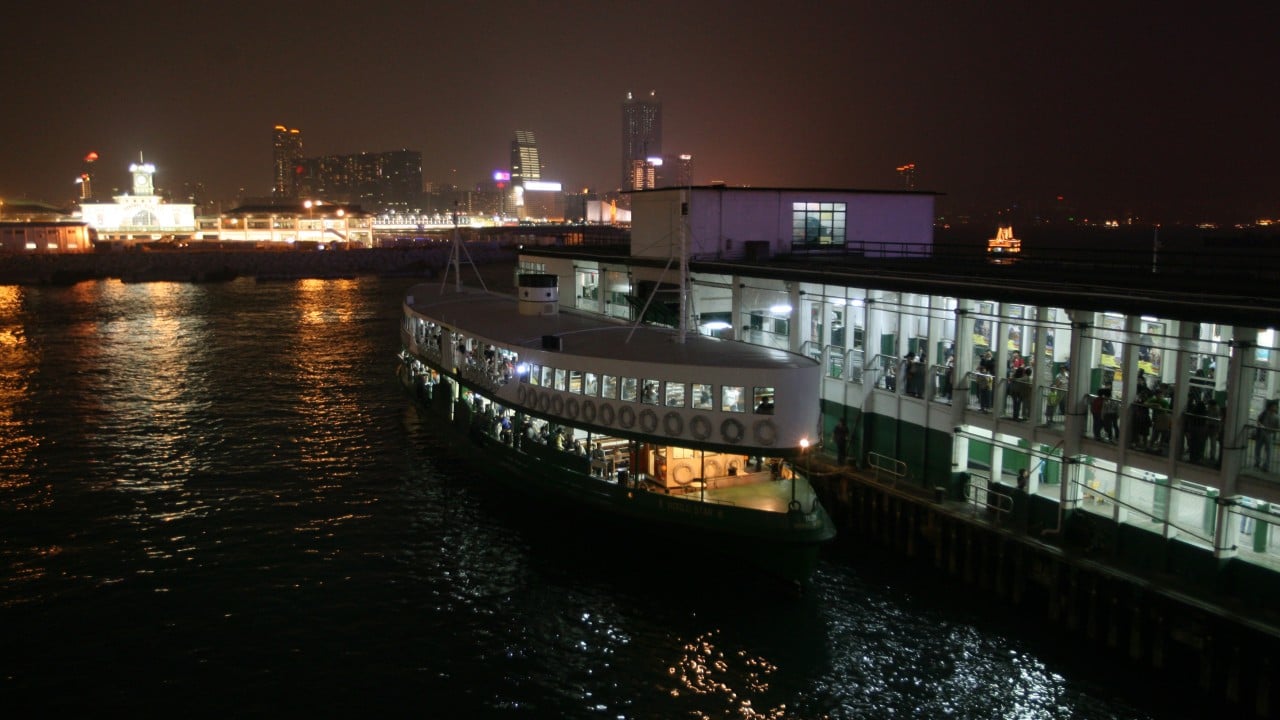
Salt air hung heavy over Edinburgh Place. Diesel fumes mingled with the familiar clang of a ferry bell and the soft thrum of wooden benches worn smooth by four decades of commuters. Hundreds of people—some in sharp office suits, others clutching cameras or wiping their eyes—crowded around the third-generation Central Star Ferry pier. About 1,800 Hongkongers had paid HK$88 each for the final sailings, forty times the ordinary fare, with proceeds earmarked for charity, just to ride across Victoria Harbour one last time before operations shifted north to Central Piers 7 and 8.
Some.
Not all.
When the final ferries pulled away on 11 November 2006, the building did not simply go quiet. It left an ache.
A Clock Tower That Kept More Than Time
Built in 1957 on newly reclaimed land near Edinburgh Place, the pier belonged to a specific, confident chapter of Hong Kong's post-war life. Designed in a Streamline Moderne spirit by assistant architect Hung Yip Chan with a clock tower added by Chief Architect Michael Wright, it stood beside City Hall and the General Post Office as a daily anchor for people crossing between Hong Kong Island and Kowloon. Its Westminster chimes gave the waterfront a pulse you could feel in your chest before you even saw the green-and-white hull.
To understand why losing it stung so deeply, consider a hypothetical commuter—let us call her Mei-Ling—who rode that route every weekday morning in the 1990s as a junior clerk. (Mei-Ling is a composite figure drawn from real commuter habits rather than a single documented individual.) Before mass transit tunnels swallowed every routine journey, the ferry was not a quaint postcard. It was oxygen. You stepped out of crowded streets, felt the harbour breeze cut through humid air, watched sampans and cargo vessels share the channel, and arrived in Central feeling human again.
Cities love to talk about progress in square metres of reclaimed land and kilometres of new road. They rarely measure the emotional tax paid by the people who lived inside the old geometry.
When planners pushed the shoreline outward in successive Central reclamation phases, the old pier went from being a breezy waterfront threshold to an obstacle sitting inland from a newer coast. Officials pointed to engineering plans, harbourfront realignment, and replacement berths at Piers 7 and 8. On paper, the logic looked neat. A modern city updates its piers.
In reality, a pier is not just concrete pilings and ticket gates. It is memory made walkable.
When Concrete Meets Collective Memory
Here is the mistake planners made: they treated a civic landmark like a spare part that could be swapped out without changing the machine.
Think of a family home where everyone knows which floorboard creaks and where the morning light hits the kitchen table. If you build a bigger, shinier house a few hundred metres down the road and burn the old one down, you still have shelter. You do not still have the home. That metaphor—a city trading lived memory for new real estate—captures what felt so jarring to so many residents in late 2006.
By December 2006, tension spilled off the water and onto the pavement. Activists, students, and ordinary residents staged vigils, sit-ins, and clashes around the site as demolition crews moved in on 12 December. Workers removed the clock face and mechanism, lifted the tower away in one piece, and dismantled the rest of the structure once protesters were cleared.
Even government officials later acknowledged that public feeling had outpaced their assumptions. What looked like a routine infrastructure shift from a planning desk looked to thousands of citizens like a quiet erasure of shared identity.
And I will be honest: watching cities wrestle with growth versus preservation is messy and unsettling. There is no magic formula where every historic building stays frozen in amber while a dense metropolis expands. If you preserve everything without adapting, a city suffocates. If you bulldoze everything in the name of efficiency, a city forgets who it is.
What Changed After the Chimes Stopped
Twenty years on, the fourth-generation Central pier—specifically Pier 7 for Star Ferry services, alongside Pier 8 which later housed the Hong Kong Maritime Museum—has its own place in the harbour. Tourists still board the green ferries. Visitors still gaze across the water toward Tsim Sha Tsui.
Yet the debate sparked in 2006 never truly ended. It shifted how people in Hong Kong talked about heritage, public space, and who gets a voice before a wrecking ball arrives. A younger generation of cultural activists cut its teeth defending a pier that many elders assumed was already doomed.
Look closely at what vanished that winter. Not just a 1957 terminal. A daily ritual. A public square by the sea where a working-class ride cost pennies and felt like grace.
Every time a city redraws its map, someone stands on the edge listening for a bell that no longer rings, wondering why progress always seems to ask the living to say goodbye so fast.


