Energy security is the favorite ghost story of the risk-averse. Whenever a missile flies in the Middle East, the same tired chorus starts singing. They tell you we need to "decarbonize fast" to escape the volatility of oil, while simultaneously "protecting our energy base." It sounds logical. It sounds safe. It is also fundamentally wrong.
The standard argument suggests that renewables are a hedge against geopolitical instability. The logic follows that since the sun and wind are free and local, they cannot be embargoed by a hostile regime. This is a surface-level observation that ignores the physical reality of how power grids actually survive a war. If you think switching to solar panels and wind turbines makes a nation immune to the shocks of a conflict with Iran, you haven't been paying attention to the supply chain of the magnets, the chemistry of the batteries, or the sheer fragility of distributed infrastructure.
The Decarbonization Trap
Most analysts treat "decarbonization" and "energy security" as two sides of the same coin. I’ve spent two decades watching policy makers dump billions into projects based on this fallacy. In reality, during a hot war, these two goals often sprint in opposite directions.
True energy security is about density, storability, and redundancy.
Fossil fuels, for all their environmental sins, are incredibly dense. You can store millions of barrels of oil in salt caverns or tanks for years. It doesn't leak away. It doesn't require a complex digital handshake to function. If the grid goes dark, a diesel generator starts with a battery and a turn of a key.
Compare that to a high-penetration renewable grid. To maintain stability, you need a massive, hyper-complex digital orchestration layer. You need synchronized inverters and a constant balancing act of long-duration storage that—frankly—doesn't exist at scale yet. In a conflict scenario, that complexity is a target. A cyber-attack on a centralized gas turbine is hard; a cyber-attack on a million interconnected, IoT-enabled residential solar inverters is a playground for state-sponsored hackers.
The Lithium-Ion Bottleneck is the New Strait of Hormuz
We talk about escaping the grip of OPEC, but we are sprinting headlong into the grip of the mineral cartels.
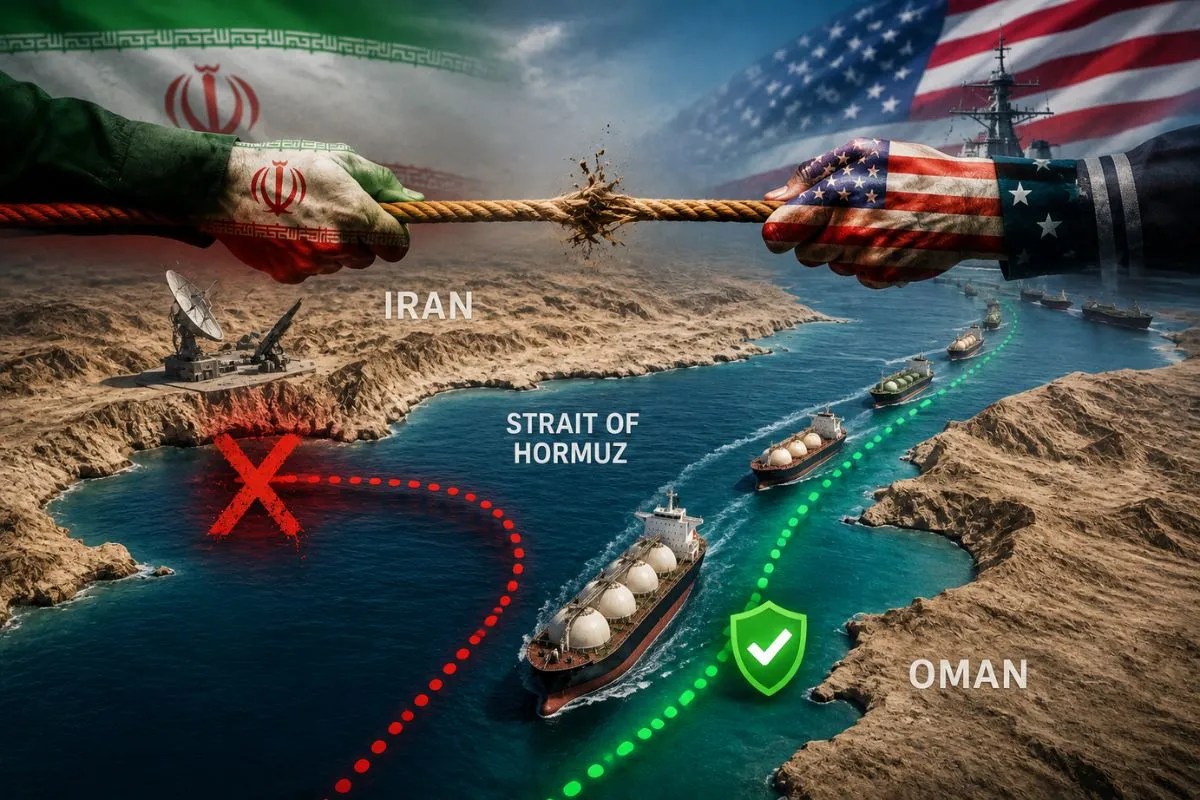
If a conflict in the Middle East chokes off the Strait of Hormuz, oil prices spike. It’s painful. It causes inflation. But the oil still exists. You can buy it elsewhere at a premium.
If the supply chain for rare earth elements or processed lithium is severed—materials required for the "fast decarbonization" everyone keeps preaching—the transition doesn't just get expensive. It stops. You cannot build a "security-focused" green grid if 80% of your photovoltaic supply chain and 90% of your mineral processing sits in a single, potentially hostile geography.
Moving from oil to batteries isn't "securing" our energy. It is simply trading a liquid dependency for a solid one. The liquid one has a global, fungible market. The solid one is a vertical monopoly.
The Intermittency Tax During Crisis
War is a series of peak-demand events. When a nation is under stress, energy consumption doesn't follow a neat "9-to-5" curve. Factories run 24/7. Military logistics require constant uptime.
The "lazy consensus" says that wind and solar are the cheapest forms of energy. This is a half-truth that relies on Levelized Cost of Energy (LCOE) metrics, which are effectively useless in a security context. LCOE doesn't account for the "firming" cost—the price of keeping the lights on when the wind stops blowing during a week-long winter storm or a smoke-filled sky during a conflict.
When you factor in the cost of the backup gas plants that must sit idle (but maintained) or the massive overbuilding of battery capacity required to survive a 48-hour lull, "cheap" renewables become the most expensive insurance policy in history.
Imagine a scenario where a nation has dismantled its coal and gas fleet in a rush to meet 2030 targets. A regional war breaks out. Shipping lanes are mined. Suddenly, that "clean" grid is at the mercy of the weather. If the sun doesn't shine, the tanks don't get manufactured. This isn't a hypothetical risk; it's a structural flaw in the "fast" decarbonization narrative.
The Nuclear Elephant in the Room
If you actually cared about energy security and decarbonization, you would be shouting for nuclear energy from the rooftops. But the people writing these "fast transition" articles rarely do. Why? Because nuclear doesn't fit the narrative of a "nimble, distributed future."
Nuclear is the only technology that provides:
- Carbon-free baseload: It doesn't care if the sun is down.
- Years of fuel on-site: You can store two years' worth of fuel in a room the size of a garage.
- Physical Hardening: A containment building is designed to withstand a direct hit from a jetliner. A solar farm is a field of glass waiting to be shattered by a drone swarm.
The hesitation to go "all-in" on nuclear while claiming to care about "security" proves that most of the current discourse is about optics, not engineering.
Fragility is the Price of Speed
The competitor's article claims we shouldn't "gamble" with energy security. But "decarbonizing fast" with current technology is the gamble.
We are stripping away the old, reliable (if dirty) foundations before the new, clean foundations are structurally sound. We are building a house of cards and hoping the wind doesn't blow—or rather, that the wind blows exactly when we need it to.
True energy independence isn't found in a frantic rush to install more offshore wind turbines that require specialized Chinese vessels to maintain. It’s found in a diversified, high-inertia system that can withstand the loss of major nodes without a total black-start restart.
Stop asking how fast we can switch to "green." Start asking how many days your country can survive if the global supply chain for electronics and specialty chemicals evaporates tomorrow. If the answer is "we'd be back to candles in a month," then you don't have energy security. You have a luxury hobby funded by taxpayers.
Build for the worst-case scenario, not the best-case climate model. Real security is ugly, heavy, and redundant. It isn't a "fast" transition; it's a slow, methodical fortification. If you can't run your military-industrial base on it during a month of cloud cover and zero wind, it isn't a security strategy. It's a fantasy.
Ditch the solar-panel-as-shield metaphors. Buy the nuclear fuel. Store the oil. Harden the gas lines. If you want to save the planet, make sure your civilization is robust enough to actually survive the process.
The lights don't stay on because you have good intentions. They stay on because you have physical, reliable, and dense energy reserves that don't care about geopolitics.
Stop gambling with the grid under the guise of saving it.