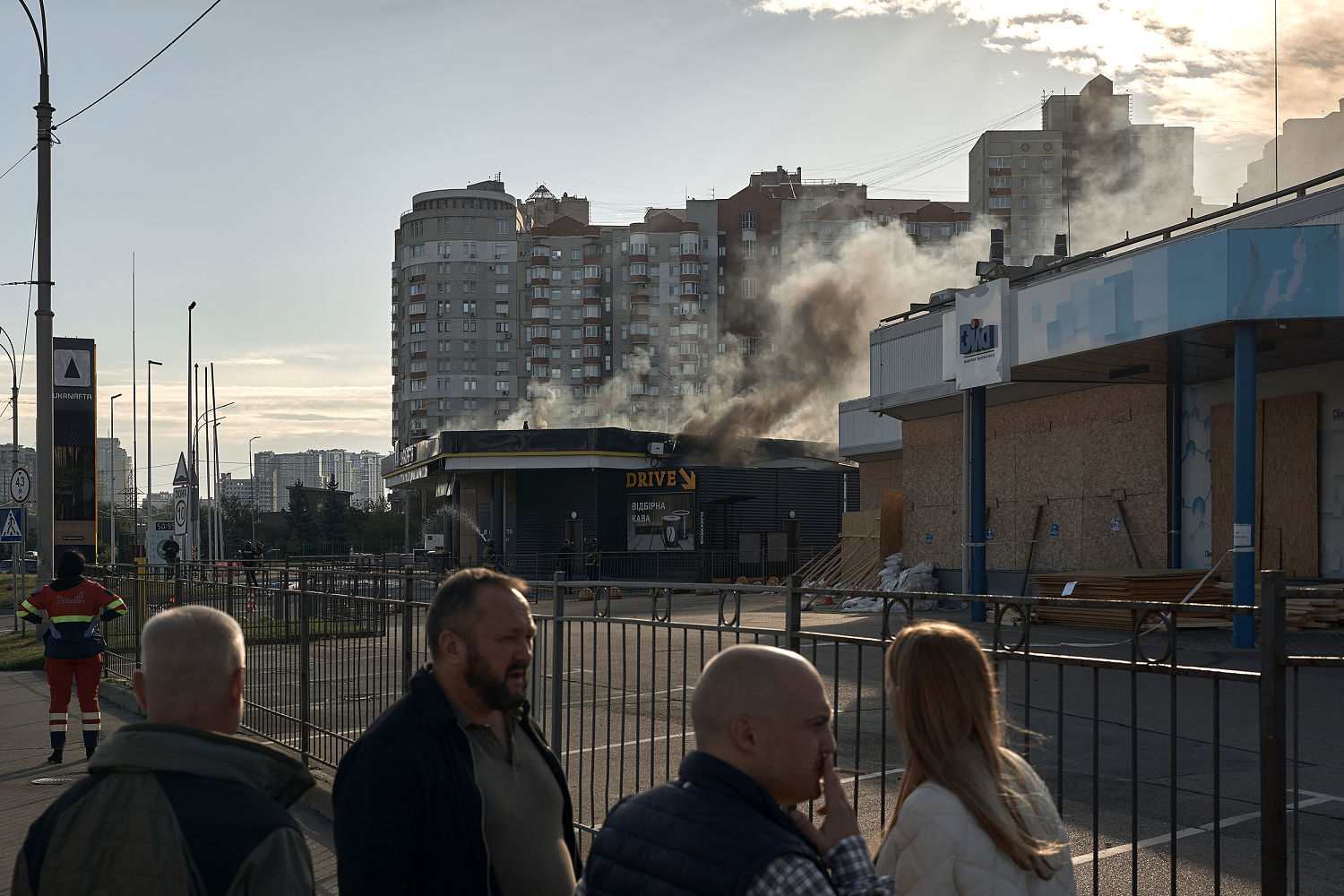
Diplomatic interventions predicated on voluntary energy ceasefires ignore the operational economics of attritional warfare. When external mediators announce unilateral truces without enforceable verification mechanisms or symmetric cost structures, belligerents default to optimization strategies that exploit remaining loopholes. The breakdown of the energy truce between Moscow and Kyiv highlights a fundamental flaw in statecraft: treating critical infrastructure protection as a moral agreement rather than a function of coercive leverage.
To evaluate why the proposed energy moratorium disintegrated, analysts must examine the underlying cost functions driving strategic strikes. Both military command structures view energy grids and petroleum refining capacity not merely as civilian support systems, but as primary nodes of state financing and logistical throughput. Recently making waves recently: The Line Between Mercy and Reckoning in a House of Shadows.
The Asymmetric Value Function of Infrastructure Targets
The strategic calculus governing long-range strikes on energy assets relies on asymmetric vulnerabilities. For Ukraine, targeting Russian oil refineries and storage hubs serves as a capital denial mechanism. Refining facilities represent high-value, fixed-location bottlenecks that generate export revenues funding the Kremlin's military budget. Disrupting these nodes directly impacts liquid fuel availability for tactical aviation and mechanized columns.
Conversely, Russian strikes on Ukrainian electrical generation, substations, and transit grids operate as a societal degradation strategy. The objective centers on inducing cascading failures across municipal heating and water systems, thereby compounding civilian displacement and forcing Kyiv to divert resources toward domestic repair operations rather than frontline defense. Additional information regarding the matter are detailed by NPR.
Because these two operational models serve entirely different strategic aims, an unverified moratorium introduces severe first-mover disadvantages. Whichever side pauses its campaigns first while the adversary maintains clandestine or loophole-compliant launch capabilities suffers an immediate degradation of relative military positioning.
The Mechanics of Enforcement Failure
A sustainable ceasefire requires verifiable inspection regimes, mutual deterrence architectures, and credible penalties for defection. The diplomatic framework attempted to bypass these requirements through public signaling rather than structural architecture.
- Verification Deficits: Neither belligerent possessed real-time telemetry access to the other's long-range drone and missile inventories during the brief pause. In the absence of third-party verification, every stray projectile or air defense interception is interpreted as intentional bad faith.
- Command and Control Friction: Strategic strikes often rely on pre-programmed flight paths and decentralized launch authorizations. Halting complex aerial campaigns requires precise synchronization that multi-layered military hierarchies cannot execute instantaneously without risking tactical paralysis.
- External Market Pressures: The simultaneous interplay of global fuel pricing imperatives—driven by separate geopolitical disruptions in the Middle East—created perverse incentives for political actors to announce premature truces to manipulate domestic energy optics rather than solve foundational security dilemmas.
When the foundational assumptions of a truce collide with active attritional incentives, physical reality reasserts itself rapidly. Kyiv resumed refinery operations after observing continuous grid targeting, demonstrating that operational survival supersedes unanchored diplomatic declarations.
Strategic Forecast and Resource Allocation Dynamics
The immediate aftermath of the collapsed energy moratorium confirms that long-range kinetic exchanges will remain a permanent feature of the operational environment. Future attempts at localized truces will fail unless restructured around immutable technological constraints, such as automated remote monitoring of launchpads or third-party-controlled electronic jamming buffers.
State planners and defense strategists must abandon the premise that voluntary restraint can outpace the cold logic of systemic attrition. Until the structural drivers of the conflict—disputed territorial control and incompatible security architectures—are resolved through binding political settlements, energy infrastructure will remain a primary vector for exerting coercive pressure.
Integrate decentralized micro-grid redundancies into critical regional planning and assume continuous baseline degradation of centralized transmission nodes when forecasting logistical timelines.