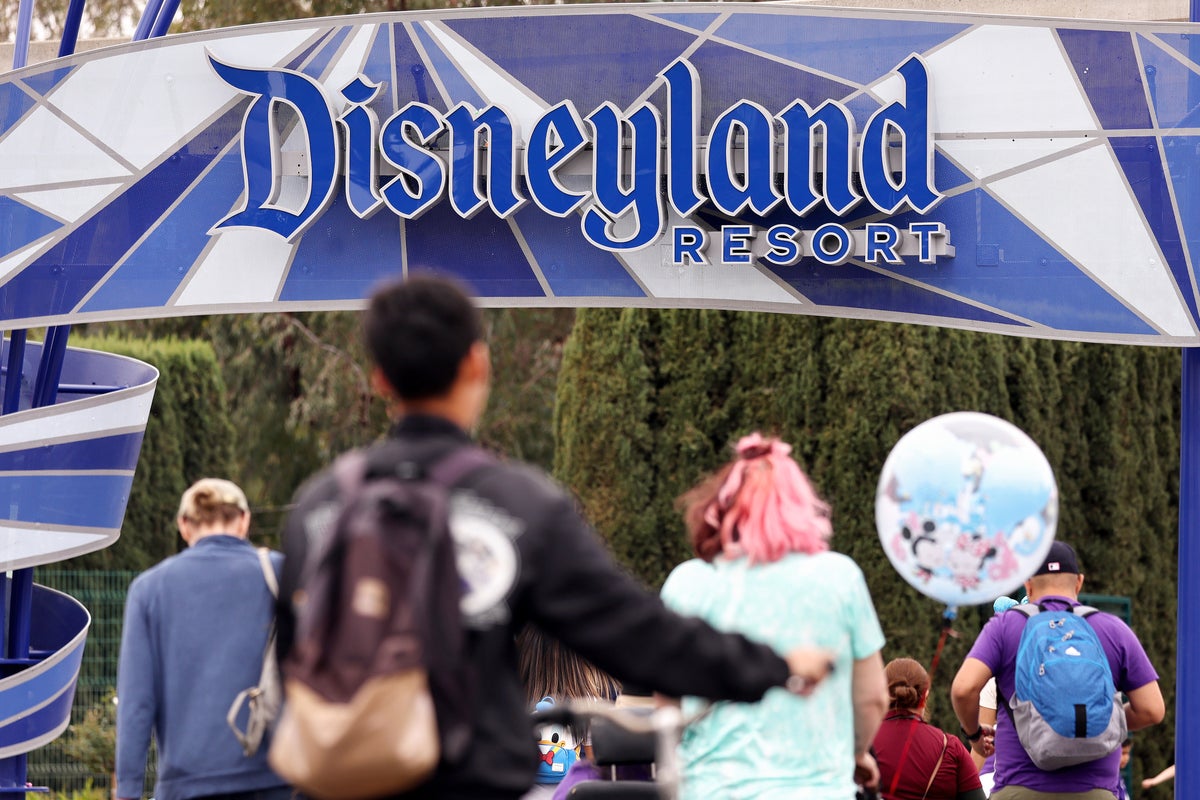
The humidity in Central Florida has a way of turning a crisp paper ticket into a limp, gray rag by noon. You’ve seen it happen. A father stands at the turnstile, his brow furrowed, digging through a soaked cargo pocket for the pass that cost him a week’s salary. Behind him, the line swells. There is a collective sigh of a hundred people whose proximity to a spinning teacup just drifted five minutes further into the future.
This friction is the enemy of the "Most Magical Place on Earth." Disney spends billions to curate an environment where reality is suspended, but nothing snaps a guest back to the mundane faster than a technical glitch or a security line.
To solve this, the house of the mouse is turning toward something more permanent than cardstock and more personal than a plastic wristband. They are looking at you. Specifically, they are looking at the unique geometry of your cheekbones, the distance between your eyes, and the bridge of your nose.
The era of facial recognition has arrived at the theme park gates.
The Ghost in the Machine
Security isn't just about preventing bad actors from entering a space; it’s about ensuring the integrity of the experience for those who paid to be there. For years, the industry relied on a "finger geometry" system. You’d press your index finger against a glowing sensor, and if the data matched your ticket, the light turned green.
But sensors fail. They get smudged with sunscreen and sticky with remains of oversized turkey legs. More importantly, they are slow.
Consider a hypothetical visitor named Sarah. Sarah is traveling with three kids under the age of ten. By the time she reaches the gate at Magic Kingdom, she is already exhausted from the shuttle ride. If the fingerprint scanner rejects her youngest son because his finger was slightly tilted or damp, the magic evaporates. The friction of the "real world" has intruded.
Disney’s new pilot program, which recently moved from a limited test to a broader implementation at various entry points, replaces that tactile struggle with a glance. You walk toward a camera. It captures an image, converts it into a unique numerical code—a "map" of your face—and compares it to the photo taken when you purchased your pass.
The machine doesn't see "Sarah." It sees a string of digits that represent the distance between her pupils and the curve of her jawline. Within milliseconds, the barrier vanishes.
The Invisible Stakes of a Digital Identity
We often talk about data privacy in the abstract, as if it’s a ledger of numbers stored in a cold basement in Utah. But in a theme park, data is the difference between a fluid afternoon and a bureaucratic nightmare.
The move to facial recognition isn't merely a high-tech gimmick. It is a response to a growing problem: ticket fraud. The secondary market for "multi-day" passes used to be a goldmine for scammers. A person would use three days of a five-day pass and then sell the remaining two days to a stranger at a discount. This sounds like a victimless shortcut, but it creates a massive security hole and disrupts the park’s ability to manage crowds effectively.
By tying a ticket to a face, Disney ensures that the person who bought the dream is the one who gets to live it.
Yet, there is a lingering hesitation. We are used to giving our faces to our iPhones to unlock our texts, but giving them to a multi-billion dollar corporation feels different. It feels like a surrender. Disney is aware of this psychological hurdle. They’ve gone to great lengths to explain that the images themselves aren't being stored in a giant digital "mugshot" gallery. Instead, they are discarded once they are converted into those encrypted numerical codes.
Still, the trade-off is clear: we are trading a piece of our anonymity for the promise of a shorter line.
The Logistics of the Digital Entry
How does it actually feel to be "mapped" by a corporation?
The process is deceptively simple. As you approach the entry point, you’re directed to a lane equipped with a small camera mounted at eye level. You remove your sunglasses and hat. You look at the lens.
- The camera captures a high-resolution image.
- The software identifies "landmarks" on the face.
- These landmarks are converted into a mathematical template.
- The system checks this template against the one stored in your guest profile.
- Access granted.
The entire sequence happens faster than you can reach for a wallet. For the park, the efficiency gains are staggering. If you can shave three seconds off the entry time of every guest, and you have fifty thousand guests entering a park in a single morning, you have effectively reclaimed over forty hours of human time.
The Human Resistance to the Lens
Efficiency is the language of business, but it is rarely the language of the soul.
There is an inherent "uncanny valley" feeling when a machine recognizes you before a human does. For some, the transition feels like moving from a guest to a data point. While the pilot program is currently optional—guests can still opt for the old-fashioned MagicBand or physical card—the trendline is obvious. Convenience almost always wins over privacy in the long run.
Think back to the first time you used a self-checkout at a grocery store. It felt clumsy, cold, and a bit like you were doing the store's work for them. Now, most people prefer it because it’s faster. We are creatures of the path of least resistance.
The real tension lies in the "what if." What if the data is hacked? What if the algorithm develops a bias? These are the questions that keep civil liberties advocates awake at night. Disney, for its part, maintains that the system is closed-loop and highly secure. They have a vested interest in keeping it that way. A data breach involving the faces of millions of children would be a PR catastrophe from which no amount of pixie dust could recover.
Beyond the Gates
The implementation of this technology at a theme park is a bellwether for the rest of our lives. If we accept it at the gates of Tomorrowland, we will accept it at the airport, the stadium, and the office.
The stakes are invisible because they are incremental. We don't notice the world changing when it happens three seconds at a time. We only notice when we look back and realize that the paper ticket—the tangible, tactile souvenir of a day spent in the sun—has become a ghost of a previous century.
As the sun sets over the spires of the castle, the cameras continue their silent work. They watch the tired families depart and the excited teenagers arrive for the evening fireworks. They don't see the fatigue or the joy; they see the math.
We are moving into a world where your identity is your key. It is a world where you can never lose your ticket because your ticket is you. There is a profound convenience in that, a liberation from the "limp rag" of a paper pass. But as we walk through those gates, we might want to glance back at the person we were before we became a string of numbers in a database.
The turnstile spins. The light turns green. The machine remembers your smile, even if it doesn't know why you're smiling.