Ink on paper used to mean something. Then came the servers, humming in the cold darkness of suburban warehouses, chewing through petabytes of engineered deception.
We built the modern nervous system of human thought, and immediately set fire to it.
Picture a room in Brussels. High ceilings, the scent of expensive rain coats and stale espresso, the quiet shuffle of papers that will alter the digital geography of five hundred million people. Outside, the gray winter mist clings to the cobblestones. Inside, a diplomatic delegation is adjusting their ties, checking their watches, and staring at an empty chair.
That chair belongs to the European Union. Or rather, it is the seat they abandoned.
When word leaked that European officials had pulled back from a major international conference tackling the industrial-scale manufacturing of lies online, the immediate reaction in Washington and across transatlantic policy circles was a sharp intake of breath. The whispered consensus was swift, heavy, and predictable: Washington leaned on Brussels. The superpower twisted the arm of its oldest ally. The Americans, anxious about their own domestic free speech battles and the political optics of global censorship boards, quietly told Europe to sit this one out.
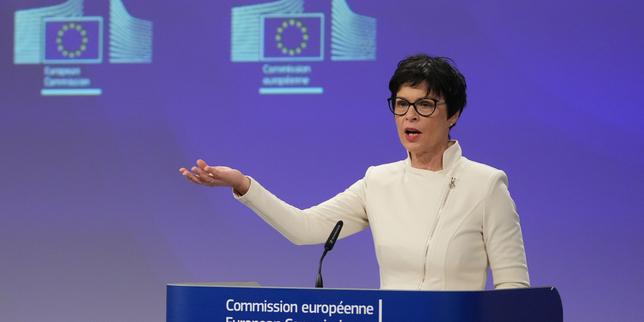
The denial was instantaneous. Official spokespeople stepped to podiums with the practiced, marble-smooth expressions of career diplomats. No pressure, they insisted. No arm-twisting. No transatlantic midnight phone calls. Just a routine scheduling adjustment. A shifting of priorities.
Nobody believed them.
Why would they? In the high-stakes theater of international diplomacy, coincidence is rarely just coincidence. When a major player walks away from the table just as the cards are being dealt, you look for the heavy hand resting on their shoulder.
Yet, to reduce this diplomatic exit to a mere game of geopolitical arm-wrestling is to miss the deeper, more unsettling truth. The real story isn't about whether an American official picked up a red telephone and told a European counterpart to back down. The real story is why a room full of people dedicated to fighting falsehoods is so terrified of each other that they would rather empty their chairs than risk a shared sentence.
Consider what happens when governments attempt to institutionalize truth.
It sounds noble on a slide deck. We will build a coalition, they say. We will harmonize standards. We will establish authoritative clearinghouses to separate the real from the fake, the signal from the noise, the citizen from the bot.
Then you look at who holds the pen.
Truth, in the hands of a bureaucrat, has a habit of bending toward convenience. What starts as an initiative to curb foreign influence operations invariably mutates into a tool for managing domestic dissent. Yesterday's foreign bot farm becomes today's inconvenient political opposition. The line between protecting an election and shielding an administration from criticism blurs until it disappears entirely.
This is the invisible friction that haunts every transnational agreement on information integrity. On one side, you have the genuine, burning panic over the erosion of shared reality. Elections are swinging on waves of synthetic outrage. Deepfakes of candidates circulate faster than corrections can be typed. Entire populations are marinating in algorithmic sewage designed to provoke rage and harvest data.
On the other side, you have the specter of the Ministry of Truth.
When Brussels hesitated, it wasn't just reacting to foreign pressure; it was looking into the mirror and flinching. To partner too closely with an American administration on defining what constitutes disinformation is to invite a crisis of legitimacy. If the public suspects that the people deciding what is true are the same people who benefit from certain falsehoods remaining uncorrected, the entire enterprise collapses into farce.
Trust is a fragile currency. Once inflated, it becomes worthless.
Imagine a journalist sitting in a cramped apartment in Warsaw or a newsroom in Madrid, staring at a government-approved portal designed to flag dangerous narratives. Who vetted the vetters? Who wrote the algorithm that decides my investigation into municipal corruption crosses the line from aggressive reporting into destabilizing disinformation?
These are not abstract philosophical questions. They are the daily operational hazards of trying to govern a global conversation using national tools and bureaucratic committees.
The European Union's retreat from that conference wasn't a sign of weakness. It was a spasm of self-preservation. In the quiet corridors of power, someone finally did the math: the cost of participating in a global consensus that smells faintly of state censorship is higher than the cost of walking away and taking the diplomatic hits for cowardice.
We are living through the awkward, terrifying adolescence of the digital age. The printing press brought a century of religious wars before it stabilized human consciousness. The internet is currently running through its own violent growing pains, and we are still pretending that a few well-funded committees and diplomatic summits can put the genie back into the encrypted bottle.
They cannot.
The denial of pressure matters less than the reality of the pressure we put on ourselves. Every time we look to governments to sanitize the public square, we trade a chaotic freedom for a sterile cage. We ask the state to protect us from lies, and in return, we hand them the keys to our vocabulary.
The chair remains empty in Brussels. The conference went on without them. The servers in the warehouses are still humming, chewing through the night, converting human anger into ad revenue and political power.
And somewhere out there, a new story is being written by a bot, ready to drop into a million feeds before morning. It won't be true, but it will be believable enough to make you look twice. And that is all it ever needs to be.